































Best arm exercises for over 60s: build strength, support joints, stay independent

SIGN UP FOR YOUR FREE DAY PASS TODAY!
 WHATSAPP
 EMAIL
EMAIL
 SHARE VIA
Staying physically independent is a big goal at any age, but once you hit your 60s your strength work becomes non-negotiable.
 Poll
PollWhat's your go-to workout time?
From opening jars and lifting shopping to catching yourself if you trip, your arms and upper body are involved in almost everything you do.
From your 30s onwards, muscle mass naturally starts to decline by an estimated 3–8% per decade, and this drop-off accelerates after 60.
That loss of strength is closely linked to reduced mobility, greater fall risk and loss of independence in later life.
The good news: research shows that strength training in older adults can maintain or even increase muscle, improve mobility and extend healthy, independent years of life.
So yes, arm training still “works” after 60. You just train a little smarter.
Key training principles for arms over 60
Strength coach James Dabbs sums it up well:
You don’t need a totally different programme after 60. You just need to adapt it intelligently.
Whether you’re 30 or 70, the core principles are the same:
-
Strength – choose loads that feel challenging
-
Control – smooth, pain-free movement with good form
-
Progressive overload – very gradually increase weight, reps or difficulty
Guidelines for older adults recommend muscle-strengthening work at least 2 days per week, alongside regular walking or other cardio.
Dabbs and PT Monty Simmons both favour full-body training with compound moves, not isolated “arm days”.
Compound movements use several joints and muscle groups at once, so your arms work harder and in a more functional way.
The key movement patterns for stronger arms
These big movements should be the backbone of your plan:
Compound arm builders
-
Row
-
Press-up (elevated if needed)
-
Overhead press
-
Assisted or banded chin-up
-
Chest press
Accessory “finisher” moves
-
Bicep curl
-
Hammer curl
-
Tricep push-down
-
Tricep extension
-
Face pull
Think of it as: compound first, accessories second.
What muscles are you actually training?
When you do these movements, you’re mainly working:
Upper arm
-
Biceps – front of the arm, bend the elbow
-
Brachialis – deep muscle that helps you flex the elbow
-
Triceps – back of the arm, straighten the elbow
Forearm
-
Flexors group (palm side) – gripping and wrist-curl movements
-
Extensors group (back of forearm) – opening the hand and wrist extension
-
Brachioradialis – helps bend the elbow, especially with neutral grip (hammer curls)
You don’t need to memorise the anatomy. Just know that a mix of rows, presses and curls covers everything nicely.
How to do the best compound arm exercises for over 60s
Focus on a smooth, controlled pace. If any movement causes sharp joint pain, stop and modify.
1. Barbell bent-over row
Why it’s great over 60
Builds your back, biceps and forearms, while reinforcing a strong hip hinge and good posture.
How to do it
-
Stand with feet hip-width apart, barbell on the floor in front of you.
-
Hinge from your hips (push hips back like you’re closing a drawer), keeping your back flat, chest gently up.
-
Grip the bar just outside your knees, about shoulder width.
-
Row the bar towards the lower ribs by driving your elbows back and squeezing your shoulder blades together.
-
Keep elbows close to your sides, then slowly lower the bar until your arms are straight again.
-
Look a little ahead of your feet to keep your neck neutral, exhaling as you pull, inhaling as you lower.
2. Push-up (use elevation if needed)
Why it’s great over 60
Strengthens chest, shoulders, triceps and core with no equipment. Easy to scale using a wall or bench.
How to do it
-
Place hands under shoulders on the floor, bench or wall. Body in a straight line from head to heels, abs and glutes braced.
-
Bend your elbows, letting them travel roughly 45 degrees out from your body, lowering your chest towards the surface.
-
Stop just before your chest touches, pause briefly.
-
Push the surface away, returning to the start without letting hips sag or pike.
If floor push-ups feel too tough, start on a wall, then a kitchen counter, then a sturdy bench as you get stronger.
3. Dumbbell overhead press
Why it’s great over 60
Targets shoulders and triceps and trains you to push loads overhead safely, which is vital for daily tasks.
How to do it
-
Stand with feet hip-distance apart, holding a dumbbell at each shoulder, palms facing forwards or slightly in.
-
Brace your abs and glutes.
-
Press the dumbbells straight up until your arms are almost straight and the weights are above your head.
-
Lower under control back to the starting position.
If balance is an issue, perform this seated on a bench or sturdy chair.
4. Assisted or banded chin-up
Why it’s great over 60
Trains your back and biceps in a big pulling pattern and builds grip strength, which is linked to better health and longevity in older adults.
How to do it (banded version)
-
Loop a strong resistance band around the bar and place one foot or knee into the hanging loop.
-
Hold the bar palms facing you, hands about shoulder-width apart.
-
Lean back very slightly and lift your chest.
-
Pull your body up until your upper chest is close to the bar, drawing shoulders and upper arms down and back.
-
Pause for a second at the top, then slowly lower yourself for a count of 3–4 seconds.
-
Start with low reps, even 1–3 quality reps, and build over time.
5. Dumbbell chest press
Why it’s great over 60
Builds chest, shoulders and triceps while being joint-friendly and easy to control.
How to do it
-
Lie on a bench or on the floor with knees bent. Hold a dumbbell in each hand by your chest, palms facing towards your feet.
-
Press the weights up over your chest until arms are nearly straight, without locking the elbows.
-
Slowly lower the dumbbells for about 2 seconds until they’re just above chest level.
-
Keep your shoulders gently pressed into the bench or floor and your rib cage down, core engaged.
Accessory exercises to finish your arm workout
Use these for 2–3 sets after your main compound moves.
1. Bicep curl
-
Stand tall with a dumbbell in each hand, arms down, palms facing your thighs.
-
Rotate your hands so palms face forwards.
-
Keeping elbows close to your sides and knees softly bent, curl the weights up towards chest height.
-
Avoid swinging your torso or arching your back.
-
Slowly lower back to the start.
2. Hammer curl
-
Stand or sit upright, dumbbells by your sides, palms facing your body.
-
Pull your shoulders back and tuck your elbows close to your torso.
-
Curl the weights up so your thumbs travel towards your shoulders, keeping palms facing in.
-
Pause briefly, then lower with control.
This variation hits the brachialis and brachioradialis for solid upper-arm and forearm strength.
3. Tricep push-down
(Requires a cable machine or resistance band anchored overhead.)
-
Stand facing the machine, holding the bar or rope attachment with hands about 15 cm / 6 in apart.
-
Tuck your elbows into your sides, forearms roughly parallel to the floor.
-
Keeping upper arms still, push the handle down until your arms are straight but not locked.
-
Squeeze the back of your arms, then slowly return to the starting position.
4. Tricep extension (overhead)
-
Stand with feet hip-width apart, holding one dumbbell with both hands.
-
Lift the weight overhead, arms straight.
-
Keeping your upper arms still and elbows pointing forwards, bend your elbows to lower the weight behind your head.
-
When your forearms pass 90 degrees, pause, then press back up.
5. Face pull
Great for rear shoulders and upper back, and for counteracting desk posture.
-
Attach a rope handle to a cable at about face height, or use a resistance band.
-
Hold the ends with thumbs up and step back to create tension.
-
Pull the rope towards your face, leading with your elbows so they stay in line with your shoulders.
-
Squeeze your shoulder blades together, pause, then return with control.
Can you build arm muscle and “tone” at 60?
Short answer: yes.
Muscle tissue responds to resistance training at any age. Studies show that adults in their 60s and 70s can still gain muscle and strength when they lift weights regularly, often with similar relative progress to younger adults.
Dabbs and Simmons both highlight the same fundamentals:
-
Consistent strength work (at least 2 sessions per week)
-
Adequate protein intake across the day
-
Planned recovery between sessions
Progress may be slower than in your 20s, but growth and visible definition are absolutely achievable.
And about that word “toned”:
-
“Toned” simply means having enough muscle plus a moderate body-fat level, so the arm looks lean and shaped.
-
There is no special “toning exercise”. You build muscle with resistance training, and manage overall body fat through nutrition and activity.
How long does it take to see changes in arm fat and shape?
You can’t pick where fat comes off first. Your body decides the order. What you can control is the overall process:
-
Being in a gentle calorie deficit over time
-
Lifting regularly to build and keep muscle
-
Moving daily (walking, light cardio, active lifestyle)
Most people will start to notice changes in arm shape in roughly 8–12 weeks if they:
-
Strength train 2–3 times per week
-
Move daily
-
Keep nutrition consistent
Simmons suggests a realistic target of losing about 3–4 kg over that period for many people, which is a sensible, sustainable pace rather than a crash diet.
Even before the scales change much, building arm muscle often makes your arms look better and feel stronger.
How often should over 60s train their arms?
For most over-60s, a simple and effective target is:
-
2–3 strength sessions per week
-
4–6 exercises per session
-
Around 3 sets of ~8–12 reps per exercise
This fits well with guidelines that recommend at least 2 days of muscle-strengthening activities each week for older adults.
A practical split could look like this:
-
Workout A
-
Row
-
Push-up or chest press
-
Bicep curl
-
Tricep push-down
-
-
Workout B
-
Overhead press
-
Assisted chin-up (or band row)
-
Hammer curl
-
Face pull or tricep extension
-
Alternate A and B across 2–3 days each week, with at least one rest day between strength days so your muscles can recover. On “rest” days, aim to keep moving with:
-
Walking
-
Light cycling
-
Leg and core work
-
Gentle mobility or stretching
Training at the gym vs. at home
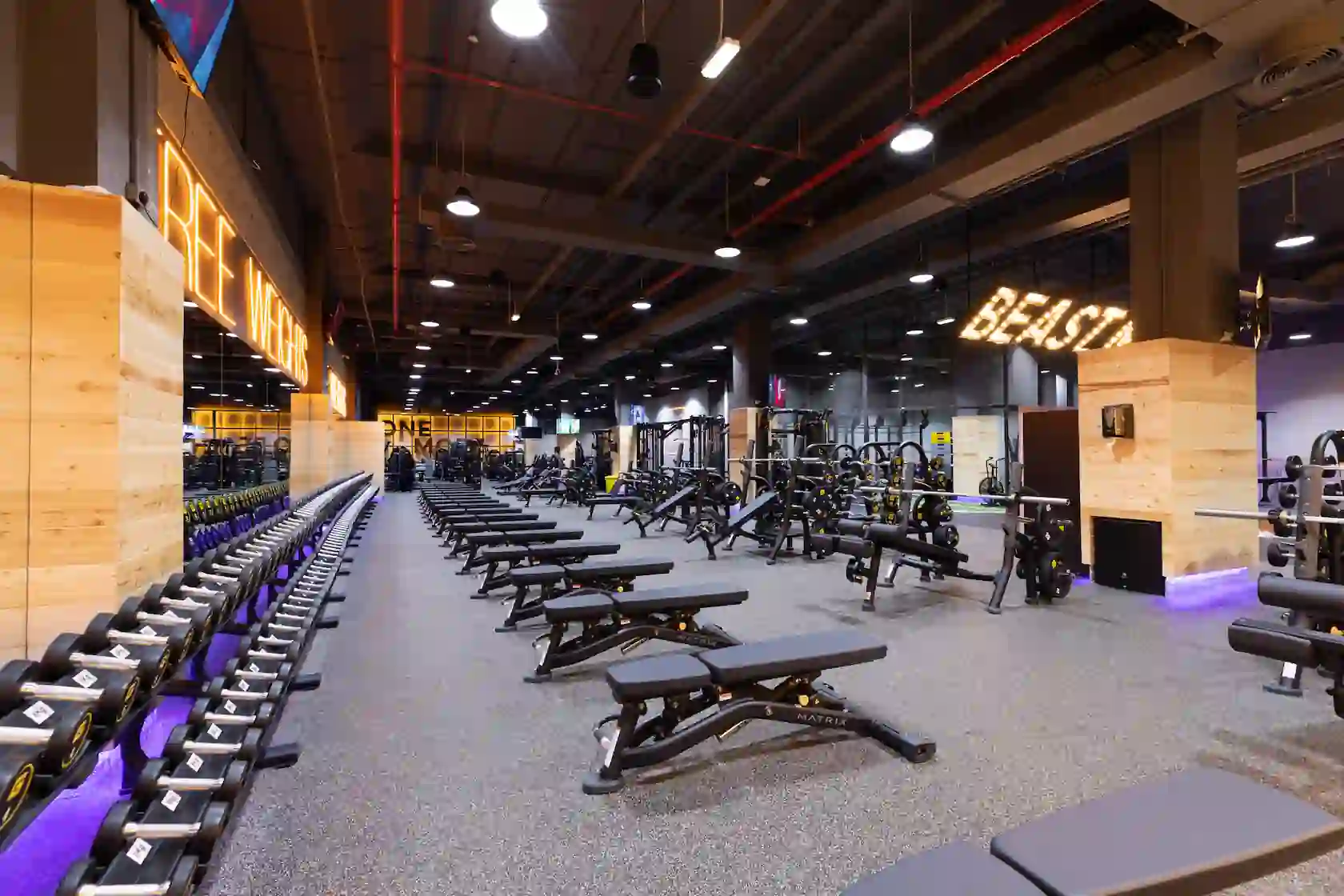
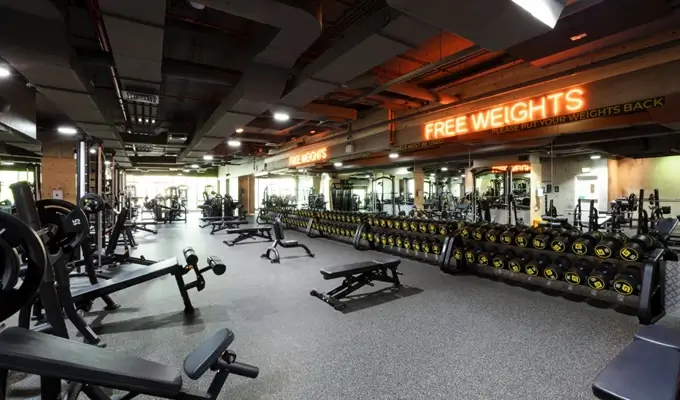
You can do a lot of this with just dumbbells and bands at home. That said, many people in their 60s find they progress faster with:
-
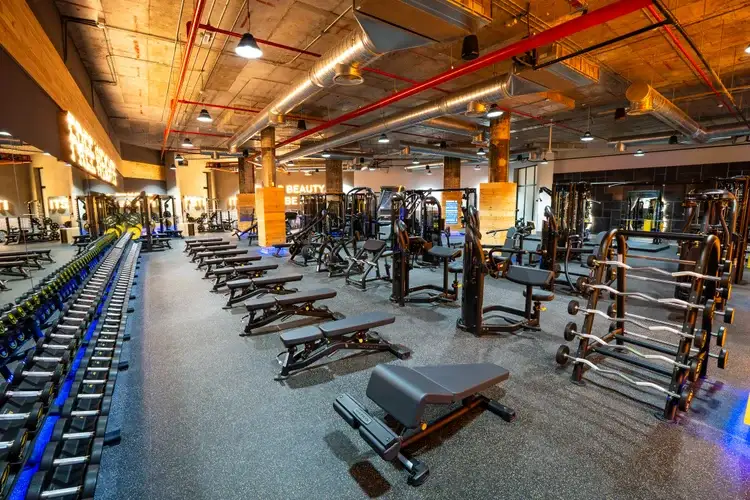
Access to cable machines and benches
-
A wider range of dumbbell weights
-
Guidance from qualified trainers
-
A motivating, social environment
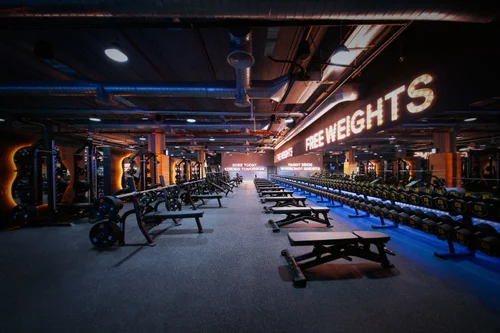
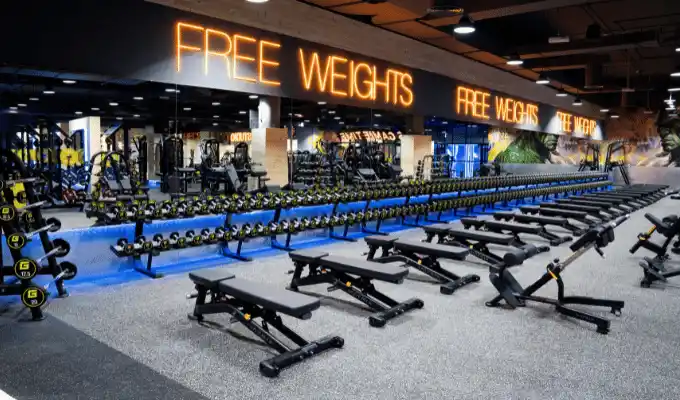
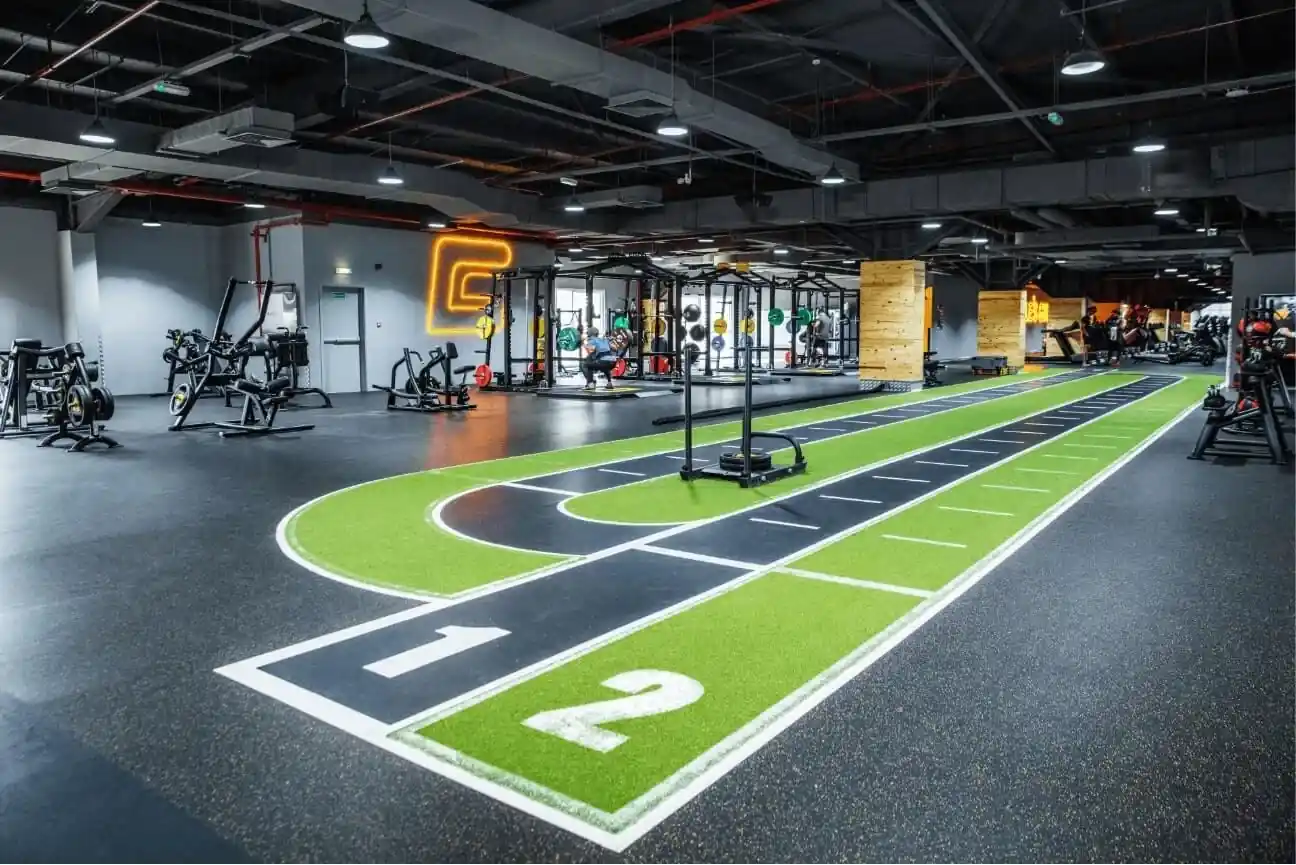
If you prefer training in a gym setting, you can use GymNation’s Gyms Near Me location finder to pick a branch that fits your routine.
Source: womenshealthmag.com
The opinions shared in the blog articles are solely those of the respective authors and may not represent the perspectives of GymNation or any member of the GymNation team.
Top 5 FAQs about arm training over 60


Is it safe to lift weights for my arms after 60?
For most healthy older adults, yes – and it’s strongly recommended. Strength training helps maintain muscle, bone density, balance and independence.
If you have heart, joint or other medical issues, check with your doctor first, then start with light loads and focus on form.
How heavy should my weights be?
Choose a weight where:
-
The last 2–3 reps of a set feel challenging
-
You could maybe do 1–2 more reps with perfect form, but not 5 more
Guidelines for older adults suggest working up to sets of about 8–12 reps, reaching a point where another repetition would be hard without help.
Do I need separate “arm days” to see results?
No. Full-body or upper-body sessions with big compound movements are more efficient, especially over 60. Rows, presses and chin-up variations train your arms very effectively. You can then add 2–3 accessory arm moves (like curls and tricep work) at the end of a session.
Can I build arm muscle if I’ve never lifted before?
Absolutely. In fact, beginners in their 60s often see quick initial progress, because their muscles are responding to a brand-new stimulus. Studies show older adults can still gain muscle and strength with regular resistance training, even into their 70s and beyond.
What if I have sore or “creaky” joints?
-
Warm up with 5–10 minutes of easy walking or cycling
-
Use easier variations (wall push-ups, light bands, higher bench for pressing)
-
Keep movements slow and controlled, avoiding any sharp pain
-
Start with 1–2 sets and build gradually
If pain persists, skip the irritating exercise and get individual guidance from a physio or experienced trainer.
GET YOUR FREE TRIAL TODAY