

Barbell Decline Bench Press for Ladies
Barbell Decline Bench Press for Ladies Video Guide:
The barbell decline bench press for ladies is a bench press exercise that places greater emphasis on the lower chest, specifically the sternal head of the pectoralis major. Compared to the flat bench and incline bench press, the decline bench press shifts more load to the lower portion of the chest, while the incline version targets the upper chest and clavicular head. During the movement, the triceps brachii, anterior deltoids, and shoulder muscles assist the press, with the biceps brachii acting as a stabiliser to a lesser extent. The core is actively engaged, including the internal and external obliques, to maintain body control in the decline position.
The decline barbell bench press is often used as an alternative to the decline dumbbell bench press. The barbell version allows many women to lift more weight with a consistent bar path and strong chest activation, while dumbbell bench press variations provide a greater range of motion and can help address muscle imbalances. Performed with feet secured and proper setup, the decline press may feel more shoulder-friendly for some lifters due to reduced shoulder flexion, which can help limit shoulder strain and rotator cuff stress when proper form is maintained.
As a bench press variation, the decline press works the same muscle groups as other presses with a subtle shift in emphasis. It is an effective exercise for upper body strength, muscle growth, and chest development, and fits well into structured chest workouts and long-term fitness goals. Maintaining contact between the back and bench supports proper form and helps maximise muscle fibre recruitment throughout the movement.
How to Perform Barbell Decline Bench Press for Ladies:
-
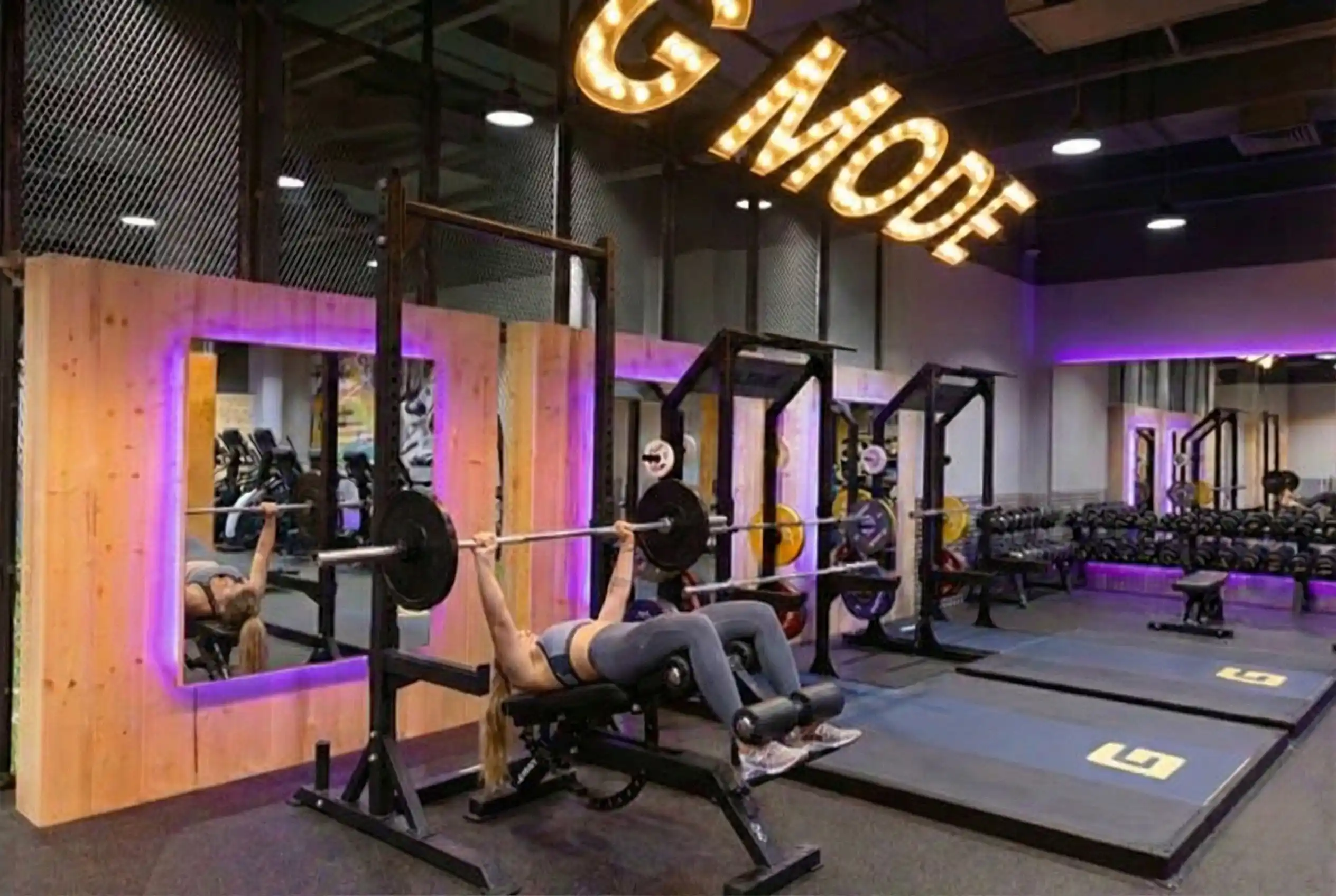
Secure your feet on the decline bench and lie back with the barbell positioned above the lower chest in the starting position. Use an overhand grip at roughly shoulder width.
-
Pin the shoulder blades down and back, brace the core, and keep the upper body stable with the chest lifted and back firmly pressed against the bench.
-
Inhale and slowly lower the bar toward the lower chest, keeping elbows tucked and maintaining proper form.
-
Pause briefly at the bottom to maintain tension and chest activation.
-
Press the bar upward in a controlled motion, fully extending the arms without locking the elbows, and return to the starting position.
Personal Trainer Notes:
-
Keep shoulder blades retracted to protect the shoulder joint and improve muscle activation.
-
Avoid using too much weight, especially when learning the decline bench press.
-
Slowly lower the bar to maximise muscle activity and reduce injury risk.
-
Keep elbows tucked to minimise shoulder strain and maintain proper form.
-
Start with a lighter weight if the decline position feels awkward and progress gradually as confidence improves.
 WHATSAPP
 EMAIL
EMAIL
 SHARE VIA
Alternative Chest Exercises

Dumbbell Fly for Ladies
The dumbbell fly for ladies is a classic dumbbell chest exercise that targets the chest muscles (pecs) while engaging the arm muscles, shoulder region, and stabilising muscles of the upper body.

Dumbbell Decline Bench Press for Ladies
The Dumbbell Decline Bench Press for ladies is a dumbbell exercise that targets your pectorals. It also recruits the anterior deltoids and triceps to keep you stable and moving well from start to finish.

Dumbbell Incline Bench Press for Ladies
The Dumbbell Incline Bench Press for ladies is a dumbbell exercise that targets your pectorals. It also recruits the anterior deltoids and triceps to keep you stable and moving well from start to finish.

Barbell Bench Press for Ladies
The barbell bench press for ladies is a foundational strength training exercise used to build upper body strength and increase muscle mass.

Dumbbell Incline Fly for Ladies
The Dumbbell Incline Fly for ladies is a dumbbell exercise that targets your pectorals. It also recruits the anterior deltoids and triceps to keep you stable and moving well from start to finish.

Barbell Incline Bench Press for Ladies
The dumbbell incline bench press for ladies is a compound chest exercise that places greater emphasis on the upper chest muscles, especially the clavicular head of the pectoralis major.

Dumbbell Bench Press for Ladies
The dumbbell bench press for ladies is a staple chest exercise used to build upper body strength and develop strong, balanced pressing mechanics.

Push-up for Ladies
The Push-Up for ladies is a bodyweight exercise that targets your pectorals. It also recruits the anterior deltoids and triceps to keep you stable and moving well from start to finish. Expect solid strength gains, better control, and improved joint positioning when you perform it consistently with good form.
Barbell Decline Bench Press for Ladies FAQs:
An ideal barbell bench press depends on strength level and experience. Many women aim for 30–40 kg, while 50 kg and above reflects advanced upper-body strength.
The decline bench press targets the lower chest and strongly engages the triceps and shoulders. It can allow heavier loads than flat bench pressing for some lifters.
Bench pressing builds upper body strength, increases muscle tone in the chest, shoulders, and arms, and supports posture and functional pushing movements.
Yes. A 45 kg barbell bench press is strong for many women and reflects intermediate-to-advanced strength.
The decline bench press can complement the flat bench press but does not fully replace it. Flat bench pressing supports more balanced chest development.
Common mistakes include using too much weight, reducing range of motion, flaring the elbows, rushing the lowering phase, and losing shoulder stability.
For many women, decline pressing can feel more shoulder-friendly due to reduced shoulder flexion. Proper setup, controlled motion, and appropriate load are essential.
Yes. A 30 kg barbell bench press is a solid starting benchmark for beginner female lifters.