

Barbell High Bar Squat
Barbell High Bar Squat Video Guide
The Barbell High Bar Squat is a quad-dominant barbell squat variation that builds lower-body strength, muscle mass, and upright squat mechanics. With the bar in the high bar position across the upper back, this squat encourages a more vertical torso, deeper knee flexion, and strong activation of the quadriceps, glutes, and core. It’s widely used in Olympic lifts, strength training routines, and by lifters who prefer a more natural, upright squat position compared to the low bar squat.
How to Perform the Barbell High Bar Squat
-
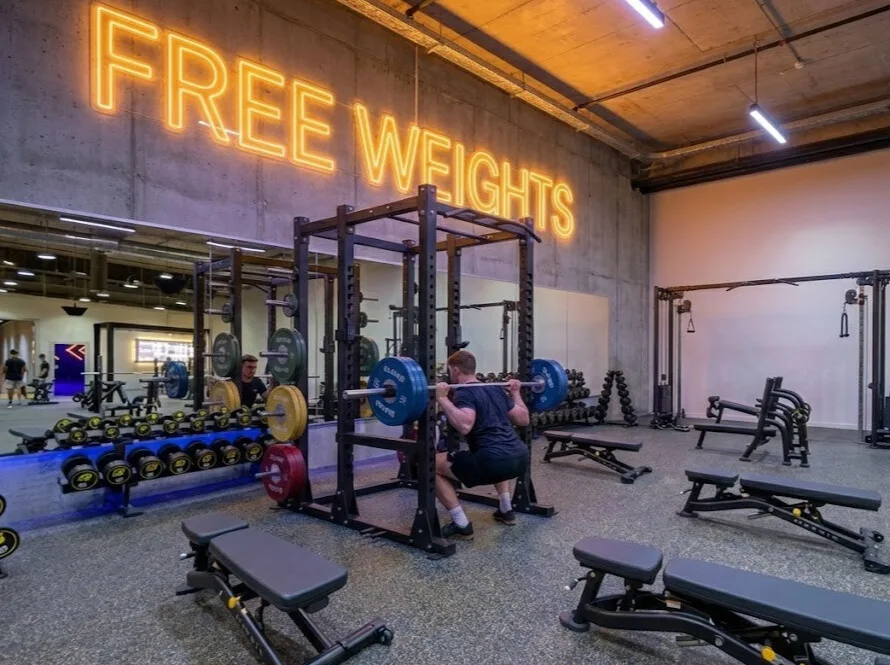
Stand in your starting position with the bar placed high on your traps, hands gripping just outside shoulder width.
-
Keep your chest up and maintain an upright torso.
-
Lower your hips back and down, allowing forward knee travel while keeping the bar path straight over the mid foot.
-
Descend until thighs are parallel or below, maintaining a strong vertical position and neutral spine.
-
Push through your heels to return to standing, keeping your knees tracking over your toes.
GymNation Tip: Let your knees travel forward and keep the bar stacked over mid-foot—fighting that turns a high bar squat into a bad low bar impersonation.
Personal Trainer Notes:
-
Maintain proper form by keeping your torso upright and your core engaged.
-
Avoid excessive forward lean or collapsing at the bottom position.
-
A deep breath before descending helps stabilise the spine.
-
Use a stance just outside shoulder width unless mobility requires a narrower stance.
-
This squat style is ideal when aiming to improve core strength, lower-body control, and overall squat form.
 WHATSAPP
 EMAIL
EMAIL
 SHARE VIA
Alternative Quad Exercises

Sled 45 degrees Leg Press
The Sled 45 Degrees Leg Press develops overall leg strength with focus on the quads, glutes, and hamstrings. The angled platform allows heavy, safe loading while maintaining joint stability.

Kettlebell Goblet Squat
The Kettlebell Goblet Squat strengthens the quads, glutes, and core. Holding the kettlebell close to your chest helps maintain balance and improves form for beginners and intermediates alike.

Dumbbell Goblet Split Squat Front Foot Elevated
The Dumbbell Goblet Split Squat (Front Foot Elevated) targets the quads with support from the glutes and hamstrings. Elevating the front foot increases the stretch and engagement on the working leg.

Barbell Quarter Squat
The Barbell Quarter Squat strengthens the quadriceps and improves top-end strength for heavier lifts. It’s performed with a shorter range of motion to emphasise power development.

Sissy Squat Bodyweight
The Sissy Squat Bodyweight isolates the quadriceps, helping develop balance and strength without heavy weights. It’s ideal for improving knee stability and quad definition.

Lever Leg Extension
The Lever Leg Extension isolates the quadriceps and enhances muscle definition in the front of the thighs. It’s excellent for controlled strength development and pre-exhaust work.

Barbell Front Squat
The Barbell Front Squat targets the quadriceps, core, and upper back. Holding the barbell in front shifts the load forward, demanding greater core stability and upright posture.

Barbell Elevated Heel Squat
The Barbell Elevated Heel Squat isolates the quadriceps by raising the heels, shifting emphasis to the front of the thighs. It’s excellent for developing strength and definition.

Smith Chair Squat
The Smith Chair Squat targets the quadriceps while engaging the glutes and core for stability. The Smith machine supports balance, making it a safe option for beginners aiming to build lower-body strength.
Barbell High Bar Squat FAQs
It targets multiple muscle groups including the quadriceps, gluteus maximus, hamstrings, and core muscles. The upright torso and deeper knee flexion make it excellent for building leg strength, improving squat depth, and increasing muscle mass in the lower body.
High bar squats emphasise the quads, use a more vertical torso, and suit Olympic lifters or anyone wanting balanced lower-body development. Low bar squats shift the bar position lower on the rear delts, use more forward lean, increase posterior chain involvement, and typically allow heavier weight. Both squat styles have benefits depending on mobility, strength goals, and training background.
Often yes. The high bar position supports a more natural squat movement pattern with a neutral spine, easier bar placement, and less technical demand than the low bar back squat. It’s a strong foundation before progressing to other squat variations such as front squats or low bar squats.
Yes, although it is more quad-dominant, the movement still trains the glutes, hamstrings, and lower back muscles. The upright torso reduces moment arm stress on the hips compared to low bar, but it remains a highly effective full-body strength lift.
Aim for thighs parallel or slightly below to maximise muscle activation and squat form. A deep squat helps develop strong quads, improves hip mobility, and benefits everyday movement patterns. Depth may vary depending on ankle mobility, hip mobility, and bar position.