

Barbell Wrist Curl
Barbell Wrist Curl Video Guide
The Barbell Wrist Curl is a staple wrist curl exercise for targeting the wrist flexors and forearm muscles on the underside of the forearms. It improves grip strength, forearm strength, forearm growth, and wrist control—making it a great exercise for lifters, climbers, and anyone who needs stronger forearms for heavy barbell work, pull-ups, or physical therapy–style forearm training. Using lighter weights with full range of motion helps the wrist flexors and small muscles develop evenly while reducing risk of wrist injuries. Whether performed as a seated wrist curl or part of a bigger workout routine, this movement builds stronger wrists, better tension, and balanced upper-body strength.
How to Perform the Barbell Wrist Curl
-
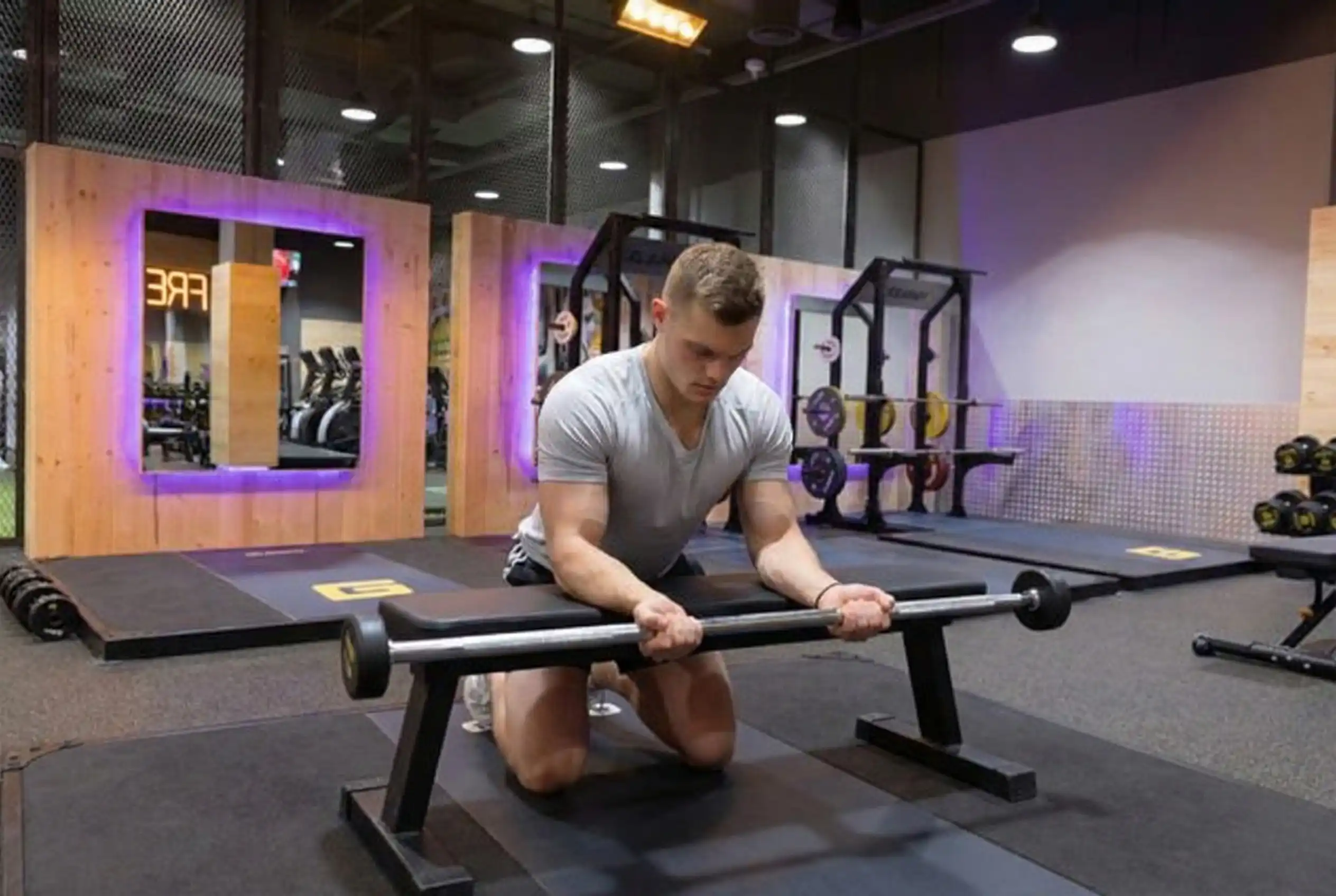
Sit on a flat bench with forearms resting on your thighs and take an underhand grip on the barbell, palms facing up.
-
Let your wrists hang over your knees to reach the correct starting position.
-
Curl the bar upward by flexing only the wrists—keep your forearms and elbows still.
-
Squeeze at the top before you slowly lower the bar through the full range of motion.
-
Repeat controlled reps, maintaining smooth, consistent tension.
GymNation Tip: If your wrists cave or your fingers lose the bar, carefully place a lighter weight on the barbell. More weight doesn’t mean better results—quality wrist curls good, rushed wrist curls useless.
Personal Trainer Notes:
-
Keep forearms resting on your thighs—only your wrists should move.
-
Avoid jerking the bar; slow reps build strong forearms and reduce injury.
-
Don’t rush through the lowering phase; that’s where wrist flexors work hardest.
-
Start tall, brace the upper body, and maintain proper form throughout.
-
Pair wrist curls with reverse wrist curls for balanced forearm muscles.
 WHATSAPP
 EMAIL
EMAIL
 SHARE VIA
Alternative Forearm Exercises

Barbell Standing Back Wrist Curl
The Barbell Standing Back Wrist Curl strengthens the wrist extensors (top of the forearm) and improves grip control. It’s an excellent move for balanced wrist and forearm development.

Wrist Roller
The Wrist Roller builds wrist, forearm, and grip strength by controlling a rolling weight. It’s a classic and effective exercise for total forearm development and endurance.

EZ Barbell Reverse Grip Curl
The EZ Barbell Reverse Grip Curl works the wrist extensors (top of the forearm) and biceps (brachioradialis) simultaneously. It helps build grip strength and balanced arm size.

Dumbbell Seated Palms-up Wrist Curl
The Dumbbell Seated Palms-up Wrist Curl strengthens the wrist flexors and builds the underside of the forearms. It’s great for grip endurance and wrist control.

Barbell Finger Curls
The Barbell Finger Curls strengthen grip and the forearm flexors by isolating finger flexion. It’s excellent for lifters and athletes who need better grip endurance.

Dumbbell Reverse Wrist Curl
The Dumbbell Reverse Wrist Curl targets the wrist extensors (top of the forearm) and improves forearm balance and grip endurance. It’s excellent for reducing wrist strain and enhancing control.

Dumbbell One Arm Wrist Curl
The Dumbbell One Arm Wrist Curl isolates one wrist at a time to strengthen the wrist flexors (underside of forearm). It helps improve balance and grip control between both arms.

Cable Wrist Curl
The Cable Wrist Curl builds the wrist flexors (underside forearm muscles) using constant cable tension for smoother, more controlled reps. It’s ideal for improving wrist strength and endurance.

Barbell Reverse Wrist Curl
The Barbell Reverse Wrist Curl targets the wrist extensors (forearm muscles) and helps balance forearm strength to prevent injury and improve grip. It strengthens the top of the forearm for balanced arm development.
Barbell Wrist Curl FAQs
Yes. This exercise targets the wrist flexors directly, improving grip strength, forearm strength, wrist stability, and overall forearm growth. It trains the small muscles most people neglect, leading to better performance in pulling movements and reduced wrist injuries.
Wrist curls work the wrist flexors, forearm flexors, and supporting forearm muscles. They help strengthen the wrist, fingers, and grip while improving control for barbell lifts, dumbbell movements, and rock climbing.
Start with lighter weights to maintain proper form and full range of motion. Heavier weights often limit movement and cause common mistakes like elbow lifting or using the shoulders instead of the wrist.
Yes. Reverse wrist curls train the wrist extensors on the top of the forearms. Combining reverse wrist and standard wrist curls prevents muscle imbalances and reduces wrist injuries.
They strengthen the flexors responsible for holding bars, dumbbells, and body weight during pull-ups. Stronger flexors and extensors improve grip endurance and reduce fatigue during big lifts.
Controlled wrist curls can help strengthen weak flexors, but if pain worsens, stop immediately. Some people use them as part of physical therapy or rehab, but always follow medical advice.
Using too much weight, lifting the forearms, rushing the motion, not using full range, or letting the bar roll too far into the fingers. Proper form is essential to avoid injury.