

Trap Bar Deadlift
Trap Bar Deadlift Video Guide
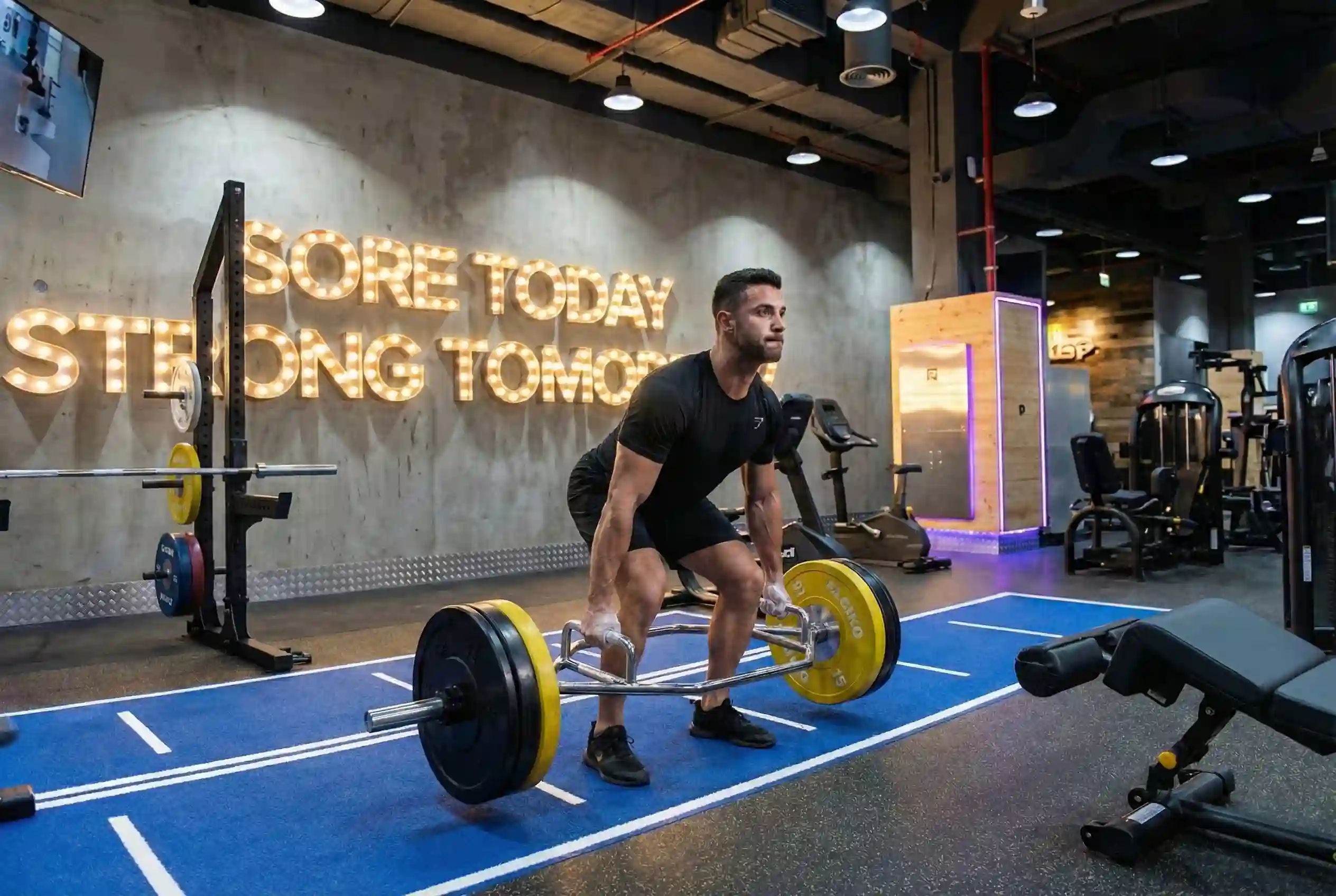
The Trap Bar Deadlift is a powerful deadlift variation that targets the hamstrings, glutes, leg muscles, posterior chain, and upper back muscles while placing less stress on the lumbar spine compared to a conventional deadlift or straight bar deadlifts. Standing inside the trap bar creates a more upright torso position, increased knee flexion, and a centred load, making it a great exercise for lower body strength, hip extension, and overall power output. Many athletes prefer the trap bar deadlift because the neutral grip, natural body position, and reduced spinal flexion improve technique, control, and force production.
How to Perform the Trap Bar Deadlift
-
Stand inside the trap bar with feet hip-width in the starting position.
-
Grip the handles using a neutral grip, brace your core muscles, and set a neutral spine.
-
Drive through your heels, extend your hips and knees together, and lift the bar smoothly.
-
Keep your chest lifted, maintain proper form, and avoid excessive knee movement.
-
Lower the bar under control and repeat for your desired reps.
GymNation Tip: Think push the floor away—if you drive through your heels and keep your chest tall, the bar will move fast without your lower back doing overtime.
Personal Trainer Notes:
-
Maintain a more upright torso position to protect the lumbar spine.
-
Push through your heels and engage your hip extensors.
-
Keep the trap bar close to your body to maximise power output.
-
Avoid yanking — smooth lifting improves muscle groups activation.
-
Ideal for training programs, supplemental lift work, and building lower body strength.
 WHATSAPP
 EMAIL
EMAIL
 SHARE VIA
Alternative Hamstring Exercises

Nordic Hamstring Curl
The Nordic Hamstring Curl is a bodyweight exercise that develops eccentric hamstring strength, reducing injury risk and improving sprint performance.

Barbell Straight Leg Deadlift
The Barbell Straight Leg Deadlift targets the hamstrings and glutes through hip hinging. It’s ideal for building posterior chain strength and flexibility.

Reverse Sliding Leg Curl on Floor with Towel
The Reverse Sliding Leg Curl on Floor with Towel develops the hamstrings and glutes using bodyweight. It’s a low-impact exercise that challenges control and core stability.

Assisted Inverse Leg Curl
The Assisted Inverse Leg Curl strengthens the hamstrings and improves posterior chain control. Assistance allows for better form and eccentric strength development.

Lever Seated Leg Curl
The Lever Seated Leg Curl isolates the hamstrings while supporting the torso. The seated position allows greater range and consistent tension across the movement.

Cable Assisted Inverse Leg Curl
The Cable Assisted Inverse Leg Curl targets the hamstrings and glutes through an eccentric-focused movement. The cable assistance helps maintain control and build strength safely.

Exercise Ball Leg Curl
The Exercise Ball Leg Curl targets the hamstrings and glutes while also engaging the core. It improves balance and coordination through instability training.

Band Lying Leg Curl
The Band Lying Leg Curl strengthens the hamstrings using resistance bands. It’s perfect for home workouts or warm-ups before heavier leg training.

Lever Lying Leg Curl
The Lever Lying Leg Curl isolates the hamstrings (biceps femoris, semitendinosus, semimembranosus). It’s one of the most effective machine-based movements for building muscle and strength in the back of the thighs.
Trap Bar Deadlift FAQs
The trap bar deadlift is great for building strong hamstrings, glutes, quads, and the posterior chain. It reduces spinal load compared to a barbell deadlift, supports proper form, and improves athletic performance thanks to its upright posture and increased knee flexion.
They can be — especially for athletes, beginners, or lifters needing a joint-friendly deadlift variation. The upright torso, neutral grip, and bar path reduce stress and allow many people to lift heavier weight safely compared to a regular deadlift.
No. Standard trap bars typically weigh 20–25 kg, while heavier models reach 60 lbs or more. Always check the bar before lifting.
Mostly — but with a different emphasis. The trap bar deadlift increases knee flexion, improving leg drive, while still training the hamstrings, glutes, erector spinae, and full posterior chain.
Yes. The trap bar deadlift is widely used for athletic performance, power output, and force production. Exercise science research shows high power outputs and strong carryover to sprinting and jumping.