

Barbell Curl
Barbell Curl Video Guide
The barbell curl is a classic bicep curl exercise used to build bigger, stronger arms by targeting the biceps brachii, brachialis, and brachioradialis. Because the barbell curl exercise uses both arms together on a straight bar, it allows heavier loading than most barbell curl variations, helping increase arm size, grip strength, and overall muscle engagement.
Using a shoulder-width underhand grip with palms facing up puts the long head and short head of the biceps muscle under continuous tension throughout the curl motion. Compared with dumbbell curls, the barbell version reduces unnecessary movement, reinforces proper form, and helps lifters isolate the target muscles more effectively.
Lifters can rotate between the straight bar, EZ curl bar, and preacher curl to change joint stress and hit the biceps from different angles. Barbell curl alternatives like the dumbbell curl or incline curl are great options for correcting imbalances or reducing wrist strain, but the barbell version remains the most efficient movement for developing the biceps through a full range of motion.
How to Perform the Barbell Curl
-
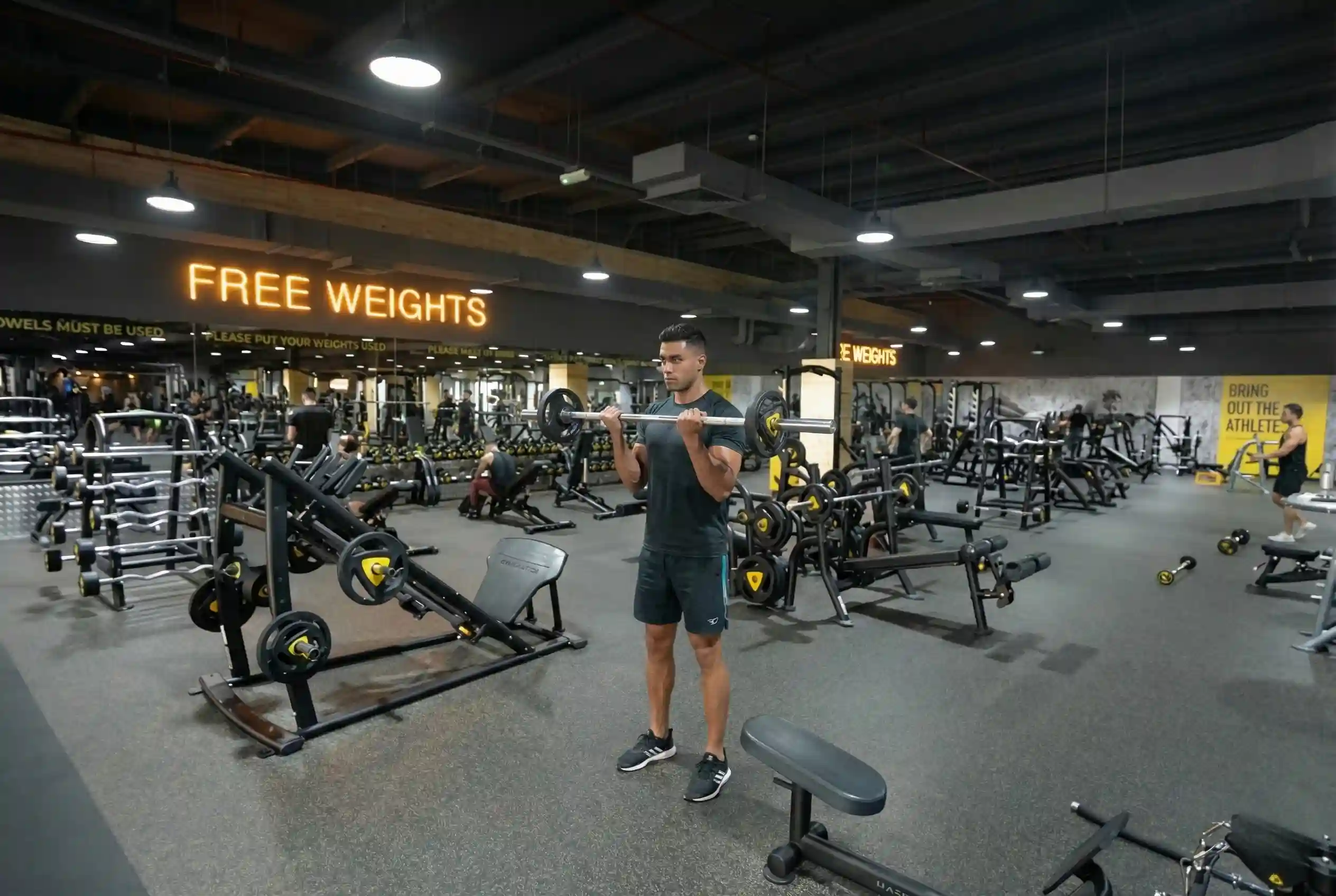
Set the starting position: Stand tall with your feet shoulder width apart, knees slightly bent, and hold the barbell with an underhand grip, palms facing up. Keep your elbows close to your ribs.
-
Fix your upper arms: Keep your upper arms still so the elbow joint is the only point of movement. No swinging, no leaning back.
-
Curl the bar: Lift the bar toward your shoulders by flexing the elbows. Keep tension on the biceps brachii and avoid using momentum from your hips.
-
Squeeze at the top: Contract the biceps hard at the top of each rep for maximum benefits and visible definition.
-
Slowly lower: Lower the bar under full control until your arms are fully extended, maintaining tension through the entire movement.
-
Repeat: Perform controlled reps, keeping wrists straight and your torso stable.
GymNation Tip: If you’re forced to lean back, swing, or bounce the weight, the load is too heavy. Reduce the weight to preserve proper form and avoid unnecessary elbow or wrist pain.
Personal Trainer Notes:
-
Keep elbows tight — drifting elbows reduce biceps activation.
-
Maintain a neutral torso with knees slightly bent for stability.
-
Use a straight bar for strength or an EZ bar for wrist comfort.
-
Slow eccentrics (lowering phase) increase muscle fibre recruitment.
-
Avoid using the shoulders or lower back — isolate the biceps.
 WHATSAPP
 EMAIL
EMAIL
 SHARE VIA
Alternative Bicep Exercises

EZ Barbell Curl
The EZ Barbell Curl strengthens the biceps (biceps brachii) with reduced wrist strain thanks to the angled grip. It’s ideal for building strength and muscle mass with comfort.

Dumbbell Alternate Biceps Curl
The Dumbbell Alternate Biceps Curl strengthens the biceps (biceps brachii) while improving balance and coordination between arms. Alternating sides allows full focus on each arm.

Dumbbell Standing Biceps Curl
The Dumbbell Standing Biceps Curl targets the biceps (biceps brachii) and forearms (brachioradialis). It helps improve arm symmetry and muscle tone when done with strict form.

Dumbbell Concentration Curl
The Dumbbell Concentration Curl focuses on isolating the biceps (biceps brachii) for maximum contraction and shape. It’s excellent for building definition and mind-muscle connection.

Cable Curl
The Cable Curl targets the biceps (biceps brachii) with constant tension throughout the movement. It’s excellent for controlled strength and shape development.

Dumbbell Hammer Curl
The Dumbbell Hammer Curl targets the biceps (brachialis) and forearms (brachioradialis). It builds both arm thickness and grip strength while reducing wrist strain.

Barbell Preacher Curl
The Barbell Preacher Curl isolates the biceps (biceps brachii) and reduces shoulder involvement, making it perfect for focused arm growth. The preacher bench supports strict form and control.

Dumbbell Incline Biceps Curl
The Dumbbell Incline Biceps Curl stretches and strengthens the biceps (biceps brachii) through a longer range of motion. It’s great for improving peak shape and flexibility.

Dumbbell Zottman Curl
The Dumbbell Zottman Curl targets both the biceps (biceps brachii) and forearms (brachioradialis) in one move. It builds balanced arm strength and control.
Barbell Curl FAQs
It targets the biceps brachii, brachialis, brachioradialis, and supporting forearm muscles involved in gripping the bar.
Barbells allow heavier loading and more overall tension, while dumbbell curl variations improve balance and stability. Both are valuable.
Yes — the EZ bar reduces wrist strain while maintaining excellent biceps tension. It’s a great option for people with wrist discomfort.
Use an underhand grip at shoulder width, keep elbows pinned, curl with control, squeeze at the top, and lower slowly.
3–4 sets of 8–12 reps work best for hypertrophy, while higher reps help refine technique.
Yes — holding and controlling the bar strengthens the forearms, grip, and brachioradialis.
Absolutely. Start with a light bar or empty barbell, learn proper form, then progressively add resistance.
They’re typically part of upper-body, arm, or pull workouts, alongside preacher curls, dumbbell variations, and compound lifts like the bench press.