


Dumbbell Hammer Curl
Dumbbell Hammer Curl Video Guide
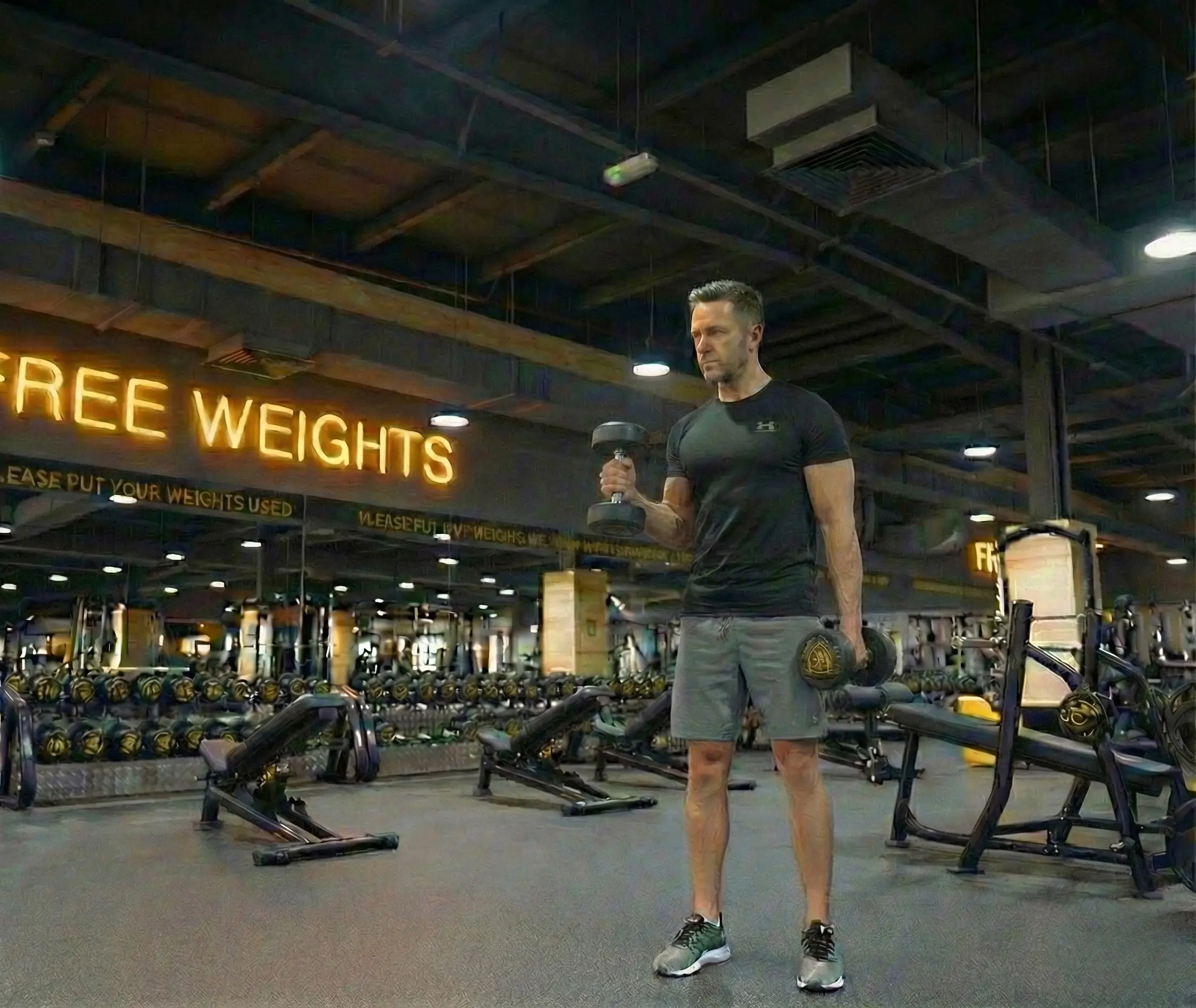
The dumbbell hammer curl is a classic arm-building exercise that targets the brachialis, brachioradialis, and biceps brachii using a strict neutral grip. Because your palms face inward, the hammer curl improves wrist stability, boosts grip strength, and keeps tension on the upper arms through the full range of motion. This makes it one of the strongest curl variations for upper-arm thickness, forearm development, and overall muscle growth.
The hammer curl reduces shoulder involvement and keeps the elbow joint stable, making it safer than heavy, sloppy bicep curls. It also helps correct left–right imbalances since each arm works independently. Whether you’re doing standing hammer curls, incline hammer curls, one-dumbbell hammer curls, or cable machine rope-attachment variations, the technique stays the same: a controlled curl, neutral wrist, and zero swinging.
How to Perform the Dumbbell Hammer Curl
-
Set the starting position by standing upright with a dumbbell in each hand, arms straight, palms facing inward, and knees slightly bent. Brace your core and keep your chest tall.
-
Keep your elbows tight to your torso and avoid bending your wrists. Maintain a neutral position during the entire curl.
-
Curl the dumbbells toward your shoulders, keeping the neutral grip throughout the movement. Focus on letting the brachialis and brachioradialis do most of the work.
-
Pause at the top while the biceps are fully flexed and squeeze hard for maximum tension.
-
Slowly lower the dumbbells back to the bottom of the curl, controlling the full movement and avoiding swinging.
-
Repeat for the desired reps while maintaining strict form.
GymNation Tip: If you start leaning back, swinging, or losing tension in the lower portion of the curl, your dumbbells are too heavy. Drop the weight for perfect form.
Personal Trainer Notes:
-
Elbows stay pinned to your body — drifting forward reduces activation.
-
Keep wrists neutral; no twisting during the curl.
-
Lift with slow, controlled motion for better muscle recruitment.
-
Squeeze at the top to hit the two heads of the biceps effectively.
-
Incline or cable hammer curls are great variations for deeper stretch and constant tension.
 WHATSAPP
 EMAIL
EMAIL
 SHARE VIA
Alternative Bicep Exercises

Dumbbell Alternate Biceps Curl
The Dumbbell Alternate Biceps Curl strengthens the biceps (biceps brachii) while improving balance and coordination between arms. Alternating sides allows full focus on each arm.

Cable Curl
The Cable Curl targets the biceps (biceps brachii) with constant tension throughout the movement. It’s excellent for controlled strength and shape development.

Barbell Curl
The Barbell Curl targets the biceps brachii, helping to build size and strength in the front of your upper arms. It’s a staple for arm development and grip strength. Perform it with control and full range of motion for best results.

Dumbbell Zottman Curl
The Dumbbell Zottman Curl targets both the biceps (biceps brachii) and forearms (brachioradialis) in one move. It builds balanced arm strength and control.

Barbell Preacher Curl
The Barbell Preacher Curl isolates the biceps (biceps brachii) and reduces shoulder involvement, making it perfect for focused arm growth. The preacher bench supports strict form and control.

Dumbbell Concentration Curl
The Dumbbell Concentration Curl focuses on isolating the biceps (biceps brachii) for maximum contraction and shape. It’s excellent for building definition and mind-muscle connection.

Dumbbell Incline Biceps Curl
The Dumbbell Incline Biceps Curl stretches and strengthens the biceps (biceps brachii) through a longer range of motion. It’s great for improving peak shape and flexibility.

Dumbbell Standing Biceps Curl
The Dumbbell Standing Biceps Curl targets the biceps (biceps brachii) and forearms (brachioradialis). It helps improve arm symmetry and muscle tone when done with strict form.

EZ Barbell Curl
The EZ Barbell Curl strengthens the biceps (biceps brachii) with reduced wrist strain thanks to the angled grip. It’s ideal for building strength and muscle mass with comfort.
Dumbbell Hammer Curl FAQs
They strengthen the brachialis, brachioradialis, and biceps brachii, helping you build bigger arms, stronger forearms, and better grip strength, all with less wrist strain thanks to the neutral grip.
Stand upright, keep elbows tight, curl with palms facing each other, pause at the top, and slowly lower the dumbbells with full control.
Hammer curls emphasise the brachialis and forearms, while standard bicep curls target the biceps brachii more directly. Using both builds complete upper-arm development.
Yes — strengthening the strongest flexor, the brachialis, pushes the biceps up, creating fuller upper-arm thickness.
Yes, as long as you maintain proper form without swinging. Controlled reps > heavy sloppy reps.
Absolutely. The neutral grip and simple movement make it beginner-friendly — start light and focus on control.
Try incline hammer curls, rope hammer curls on a cable machine, or one-arm hammer curls to fix imbalances and add variety.