

Cable Lateral Raise
Cable Lateral Raise Video Guide
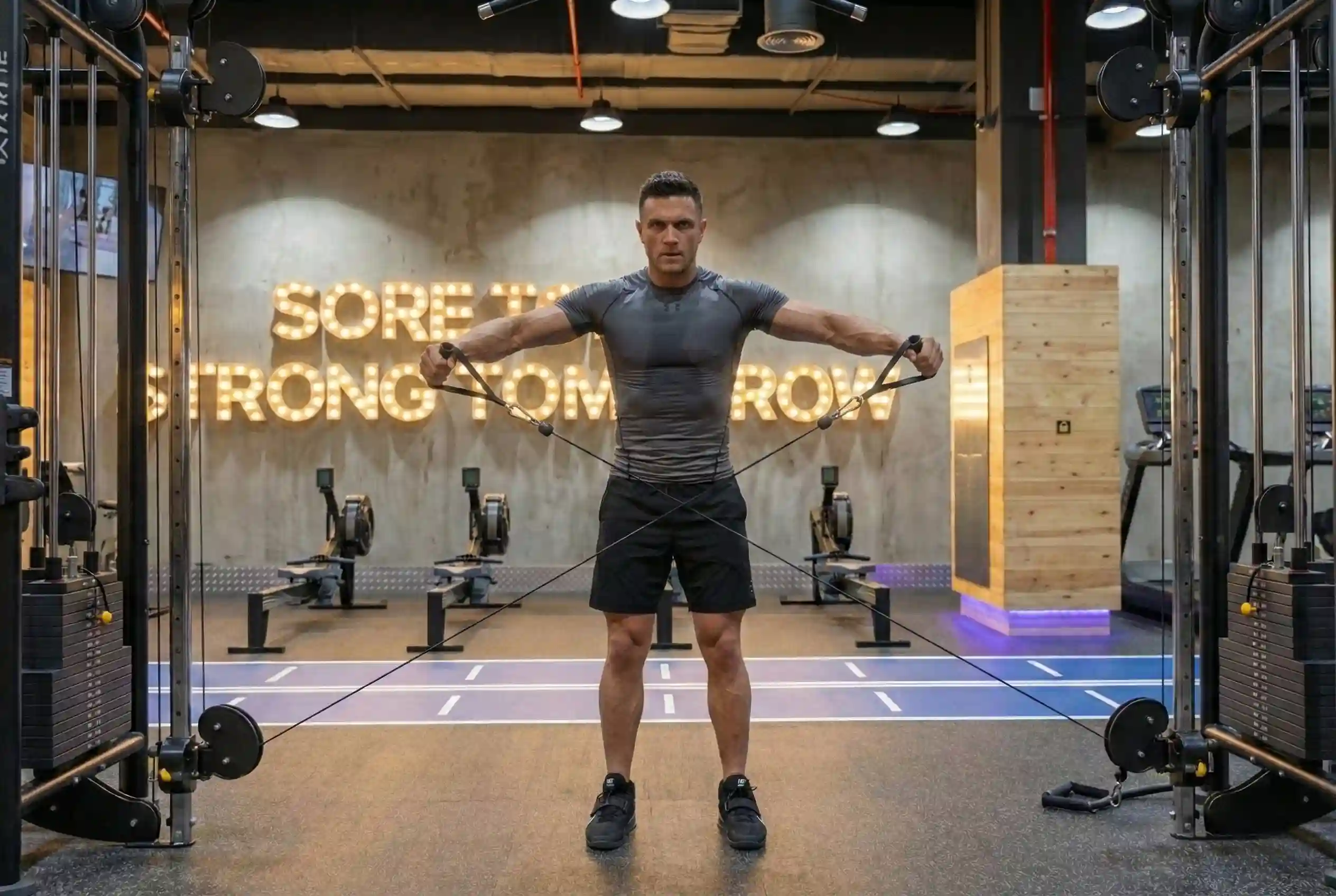
The Cable Lateral Raise is a lateral raise variation that targets the lateral deltoid and builds shoulder width, muscle thickness, and shoulder strength. Using a cable machine provides constant tension through the full range, improving muscle hypertrophy compared to free weights. This shoulder exercise helps develop the middle head of the deltoid muscle through a controlled movement pattern and consistent tension.
How to Perform the Cable Lateral Raise
-
Stand beside the cable machine in your starting position with feet shoulder width apart.
-
Grab the single-hand cable attachment with your outside hand, keeping a slight bend in the elbow.
-
Raise your arm to shoulder height in a straight line, lifting until it reaches parallel to the floor.
-
Slowly lower the weight back down with control, resisting the cable tension.
-
Repeat for the desired reps, then switch sides to perform the movement evenly.
GymNation Tip: Lead with your elbow, not your hand—if your trap starts shrugging, the weight’s too heavy and the delts have checked out.
Personal Trainer Notes:
-
Keep your shoulders down to avoid shoulder impingement.
-
Maintain a neutral wrist and palms facing in the start position.
-
Don’t swing — move in a controlled manner to target the lateral delts.
-
Pause briefly at shoulder level to increase intensity.
-
Great movement for muscle size when cables provide constant tension.
 WHATSAPP
 EMAIL
EMAIL
 SHARE VIA
Alternative Shoulder Exercises

Dumbbell Arnold Press II
The Dumbbell Arnold Press works all three heads of the deltoids while enhancing shoulder mobility. Rotating the wrists during the press improves stability and range of motion.

Barbell Clean and Press
The Barbell Clean and Press is a full-body movement that builds power through the shoulders, traps, and legs. It improves explosive strength, coordination, and overall athleticism. Proper form and timing are key for safety and performance.

Dumbbell Seated Shoulder Press
The Dumbbell Seated Shoulder Press develops overall shoulder strength across all three deltoid heads. Sitting provides stability and helps maintain correct form throughout the movement.

Dumbbell Seated Front Raise
The Dumbbell Seated Front Raise focuses on the front deltoids, helping build shoulder height and definition. Seated position ensures better control and less momentum.

Dumbbell Lateral Raise
The Dumbbell Lateral Raise targets the middle deltoids to build width and shoulder definition. It’s an isolation movement that enhances shape and symmetry.

Dumbbell Bench Seated Press
The Dumbbell Bench Seated Press strengthens the front and middle deltoids, with support from triceps and upper chest. It allows for better shoulder alignment and balance than a barbell press.

Barbell Standing Military Press
The Barbell Standing Military Press builds raw shoulder strength while engaging the core for stability. It’s a classic compound lift for powerful, defined shoulders.

Barbell Upright Row
The Barbell Upright Row builds strength in the shoulders, traps, and upper arms. It’s great for developing width and definition across the upper body when performed with strict form.

Cable Standing Face Pull
The Cable Standing Face Pull strengthens the rear deltoids, traps, and rotator cuff muscles. It’s key for shoulder health, posture, and balancing pressing work.

Barbell Seated Overhead Press
The Barbell Seated Overhead Press targets the shoulders (deltoids), triceps, and upper chest. Sitting eliminates leg drive, allowing strict focus on shoulder strength and stability.
Cable Lateral Raise FAQs
Yes. The cable lateral raise is an effective shoulder workout for isolating the lateral deltoid, improving muscle hypertrophy, and maintaining consistent tension. Many lifters prefer this to free weights due to the resistance profile of the pulley machine.
Stand with feet shoulder width apart, hold the cable attachment at your side, keep a slight bend in the elbow, raise to shoulder height, and slowly lower. This protects the shoulder joint and ensures proper form.
Often yes. Dumbbell upright raise variations lose tension at the bottom, but the cable stack keeps constant tension throughout the entire movement, maximising training efforts and intensity techniques.
No. The movement targets the lateral deltoid and middle deltoid, with minor anterior deltoid support. Triceps, chest, and upper back muscles are not primary muscle groups here.
A seated version can reduce body momentum and improve stability, making it useful for hypertrophy or when performing dead stop lateral raise variations.