


Dumbbell Lateral Raise
Dumbbell Lateral Raise Video Guide
The Dumbbell Lateral Raise is a lateral raise variation that targets the lateral deltoid and deltoid muscles, building defined shoulders and upper body width. Unlike free weights that sometimes reduce tension at the bottom, this exercise can create constant tension similar to a dumbbell lateral raise machine or cable lateral raises. With a slight bend in the elbows at shoulder width, it isolates a single muscle group, utilizes fewer muscles than presses, and focuses tension on the lateral delts for shoulder strength, symmetry, and steady muscle growth.
How to Perform the Dumbbell Lateral Raise
-
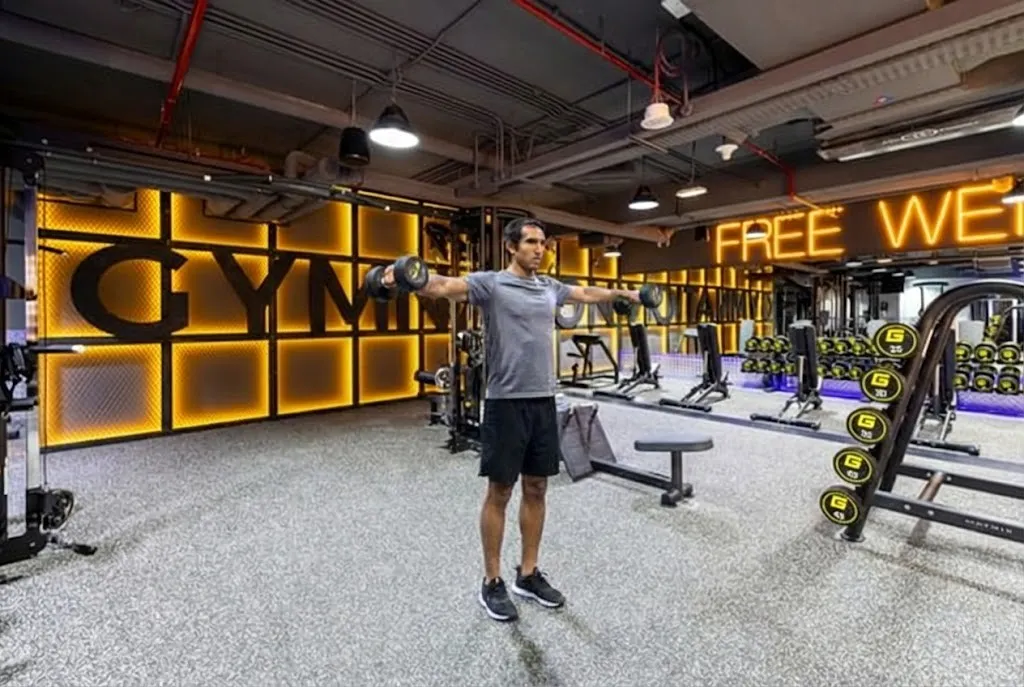
Start in the correct starting position: stand tall with feet flat, dumbbells by your sides, palms facing the body, upper arms relaxed, and a slight bend in the elbows.
-
Raise both arms laterally until the dumbbells reach shoulder height, keeping motion controlled and maintaining consistent tension through the entire range.
-
Pause briefly in the lengthened position to target the lateral deltoid.
-
Slowly lower the weights back to the starting position without swinging or reducing tension.
-
Repeat for smooth reps, keeping elbows slightly bent, core tight, and avoiding momentum.
GymNation Tip: Lift with your elbows, not your hands—stop just below shoulder height and keep the reps slow if you actually want delts, not shrug practice.
Personal Trainer Notes:
-
Keep shoulders down so rotator cuff tension stays safe.
-
Focus on lateral delts — not anterior deltoids or posterior fibres.
-
Light dumbbells and light weight produce better muscle groups activation and fewer reps lost to cheating.
-
Seated lateral raises are useful if balance or stability is limited.
-
Use constant tension and full range for defined shoulders and strong shoulder muscles.
-
Cable lateral raises or cable machine variations offer consistent tension if you struggle with free weights.
 WHATSAPP
 EMAIL
EMAIL
 SHARE VIA
Alternative Shoulder Exercises

Barbell Clean and Press
The Barbell Clean and Press is a full-body movement that builds power through the shoulders, traps, and legs. It improves explosive strength, coordination, and overall athleticism. Proper form and timing are key for safety and performance.

Dumbbell Seated Shoulder Press
The Dumbbell Seated Shoulder Press develops overall shoulder strength across all three deltoid heads. Sitting provides stability and helps maintain correct form throughout the movement.

Dumbbell Bench Seated Press
The Dumbbell Bench Seated Press strengthens the front and middle deltoids, with support from triceps and upper chest. It allows for better shoulder alignment and balance than a barbell press.

Dumbbell Arnold Press II
The Dumbbell Arnold Press works all three heads of the deltoids while enhancing shoulder mobility. Rotating the wrists during the press improves stability and range of motion.

Cable Lateral Raise
The Cable Lateral Raise isolates the middle deltoids for wider, more defined shoulders. Using cables keeps constant tension throughout the range of motion.

Barbell Standing Military Press
The Barbell Standing Military Press builds raw shoulder strength while engaging the core for stability. It’s a classic compound lift for powerful, defined shoulders.

Cable Standing Face Pull
The Cable Standing Face Pull strengthens the rear deltoids, traps, and rotator cuff muscles. It’s key for shoulder health, posture, and balancing pressing work.

Barbell Upright Row
The Barbell Upright Row builds strength in the shoulders, traps, and upper arms. It’s great for developing width and definition across the upper body when performed with strict form.

Dumbbell Seated Front Raise
The Dumbbell Seated Front Raise focuses on the front deltoids, helping build shoulder height and definition. Seated position ensures better control and less momentum.

Barbell Seated Overhead Press
The Barbell Seated Overhead Press targets the shoulders (deltoids), triceps, and upper chest. Sitting eliminates leg drive, allowing strict focus on shoulder strength and stability.
Dumbbell Lateral Raise FAQs
Yes. Dumbbell lateral raises directly target the lateral deltoid and deltoid muscles, isolating a single muscle group with fewer muscles involved than presses. When tension is kept through the entire range, lateral raises build strong, defined shoulders and improve shoulder strength across the upper body.
Cable lateral raises and cable lateral machine options provide more consistent tension from floor to shoulder height, especially in the lengthened position. Dumbbell lateral raises remain one of the best few exercises for lateral delts — and alternating both variations helps reduce injury risk, improve stability at the shoulder joint, and build strong shape.
Seated lateral raises limit momentum and keep movement strict. Standing lateral raises allow a natural arc and freer motion. Both variations use constant tension and target the same muscle groups. Choose based on starting position comfort, control, and shoulder height alignment.
Correct. Unlike free weights movements such as presses that involve anterior deltoids and upper arms support, the lateral raise utilizes fewer muscles, reduces tension leakage, and focuses on the lateral delts for growth. That’s the main difference — fewer muscles assisting means better targeting.
No. Light dumbbells with a slight bend and slow, full-range control build strong shoulder muscles, reduce injury risk, improve shoulder height stability, and keep tension where you want it. Go too heavy and you shift work to the arms, elbows, core, and anterior deltoids — losing benefits.
Cable lateral and cable machine setups maintain constant tension from the starting position to parallel shoulder height. Free weights lose tension low in the motion, while cables keep resistance on lateral delts and upper arms through the entire range. This offers consistent tension, defined shoulders, fewer reps wasted, and less momentum.