

Dumbbell Seated Front Raise
Dumbbell Seated Front Raise Video Guide
The Dumbbell Seated Front Raise is a fundamental weight training exercise that raises primarily target the anterior delts (front deltoids) to build shoulder height, strong shoulders, and controlled shoulder flexion. Sitting in a stable starting position removes momentum, improving proper form, shoulder stability, and constant tension at shoulder height. Unlike barbell front raise options, this isolation exercise keeps the focus on the shoulder joint, pectoralis major, trapezius muscles, and upper chest while reducing shoulder impingement, neck pain, and poor form mistakes. It fits naturally into upper body workout routines, bench presses, overhead press work, and lateral raise variations for full shoulder development and muscle growth.
How to Perform the Dumbbell Seated Front Raise
-
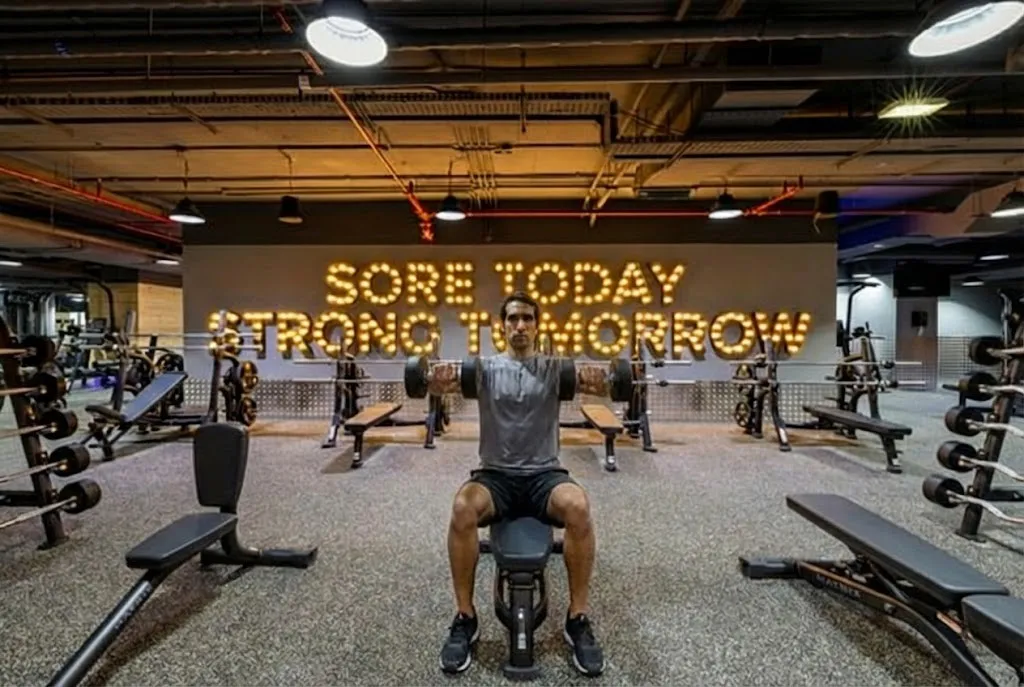
Sit upright on a bench in a neutral position, feet flat, dumbbells at your sides with palms facing down.
-
Keep a slight bend in the elbows and brace your core to stabilise the shoulder joint.
-
Raise one or both dumbbells straight in front until they reach shoulder level—arms straight, controlled motion, no swinging.
-
Pause briefly at the top to reinforce shoulder flexion and constant tension.
-
Slowly lower to the starting position, repeating strict reps or alternating arms as needed.
GymNation Tip: Stop at shoulder height and keep the lift slow—once you swing or go higher, the front delts clock out and your traps take over.
Personal Trainer Notes:
-
Keep your core tight to prevent leaning and protect the shoulder joint.
-
Maintain a neutral grip and don’t raise above shoulder height.
-
Use lighter weight at first to refine proper form and avoid shoulder injury.
-
Lead with the front deltoids, not momentum, neck, or lower back.
-
Gradually increase load as shoulder muscles adapt.
 WHATSAPP
 EMAIL
EMAIL
 SHARE VIA
Alternative Shoulder Exercises

Cable Lateral Raise
The Cable Lateral Raise isolates the middle deltoids for wider, more defined shoulders. Using cables keeps constant tension throughout the range of motion.

Barbell Standing Military Press
The Barbell Standing Military Press builds raw shoulder strength while engaging the core for stability. It’s a classic compound lift for powerful, defined shoulders.

Barbell Seated Overhead Press
The Barbell Seated Overhead Press targets the shoulders (deltoids), triceps, and upper chest. Sitting eliminates leg drive, allowing strict focus on shoulder strength and stability.

Cable Standing Face Pull
The Cable Standing Face Pull strengthens the rear deltoids, traps, and rotator cuff muscles. It’s key for shoulder health, posture, and balancing pressing work.

Dumbbell Seated Shoulder Press
The Dumbbell Seated Shoulder Press develops overall shoulder strength across all three deltoid heads. Sitting provides stability and helps maintain correct form throughout the movement.

Dumbbell Lateral Raise
The Dumbbell Lateral Raise targets the middle deltoids to build width and shoulder definition. It’s an isolation movement that enhances shape and symmetry.

Dumbbell Bench Seated Press
The Dumbbell Bench Seated Press strengthens the front and middle deltoids, with support from triceps and upper chest. It allows for better shoulder alignment and balance than a barbell press.

Dumbbell Arnold Press II
The Dumbbell Arnold Press works all three heads of the deltoids while enhancing shoulder mobility. Rotating the wrists during the press improves stability and range of motion.

Barbell Upright Row
The Barbell Upright Row builds strength in the shoulders, traps, and upper arms. It’s great for developing width and definition across the upper body when performed with strict form.

Barbell Clean and Press
The Barbell Clean and Press is a full-body movement that builds power through the shoulders, traps, and legs. It improves explosive strength, coordination, and overall athleticism. Proper form and timing are key for safety and performance.
Dumbbell Seated Front Raise FAQs
It raises primarily target the anterior deltoids, with secondary support from the upper chest (pectoralis major), trapezius muscles, lateral delts, and posterior delts. These muscle groups stabilise the shoulder joint during shoulder flexion and help build strength for pressing movements and everyday activities.
Yes. The seated dumbbell front position reduces momentum and forces the deltoid muscles to handle the full range with constant tension. This improves shoulder strength, stability, and control—especially useful after a current shoulder injury when performed correctly.
Sit with shoulder width posture, keep a slight bend in the elbows, raise to shoulder height only, avoid poor form like swinging back or shrugging, and slowly lower every rep. Maintain straight alignment, neutral grip, and smooth movement for best results.
Front raises work best with light weight or lighter dumbbells that allow precise control and full-range motion. Heavy loads increase injury risk, reduce constant tension, and shift focus away from the anterior deltoids.
A seated position offers more control, prevents cheating through hip drive, and improves isolation of the anterior delts. Standing variations have more involvement from other muscles and can add instability, especially when shoulder injury or poor form is present.