


Cable Pushdown
Cable Pushdown Video Guide
The cable pushdown is a classic tricep pushdown exercise used to build tricep muscles strength, muscle growth, and arm definition. Performed on a cable machine with a straight bar or rope attachment, this isolation exercise targets all three heads of the triceps—the long head, lateral head, and medial head—making it highly effective for balanced tricep development. For overall arm training, cable pushdowns are commonly paired with biceps work to ensure balanced upper-arm strength and muscle tone.
Because the cable provides constant tension throughout the entire movement, cable pushdowns place less stress on the elbow joint compared to many free-weight exercises, reducing the risk of injury. while still supporting hypertrophy and strengthening goals. With proper form, elbows close to the body, controlled movement, and a neutral spine, the cable pushdown strengthens the upper arms, improves muscle definition, and fits easily into any gym-based upper-body or arm workout.
How to Perform the Cable Pushdown
-
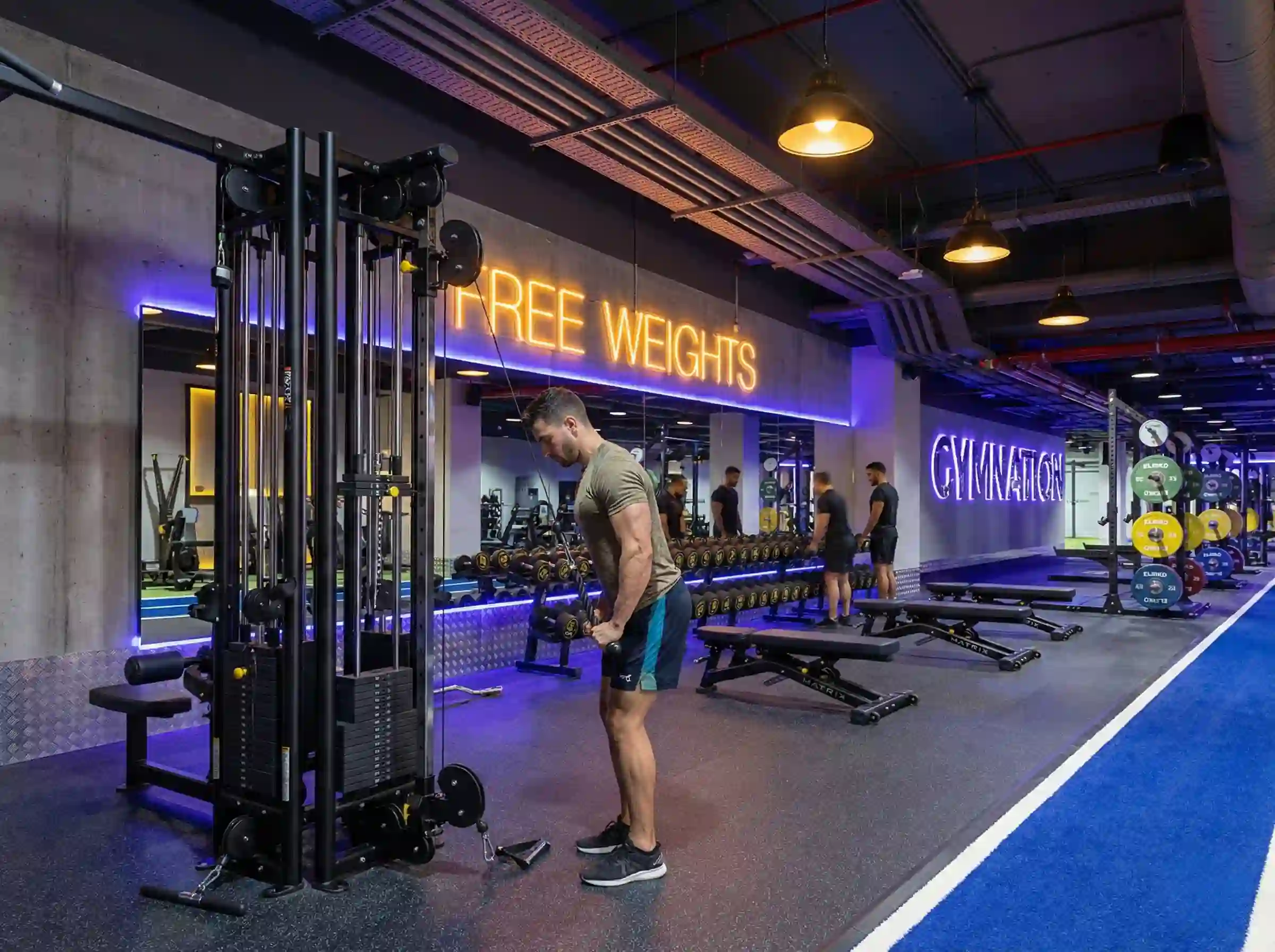
Attach a straight bar or rope attachment to the cable machine at a high pulley. Stand facing the cable machine in the starting position with feet shoulder-width apart, knees slightly bent, and core engaged.
-
Grip the bar with palms facing down, keep wrists straight, and set the shoulder blades down and back to stabilise the upper body.
-
Inhale, brace the core, and push the bar down by extending the elbows until the arms are fully extended.
-
Pause briefly at full extension to increase tension and place more emphasis on the tricep muscles.
-
Slowly return to the starting position with controlled motion, keeping the upper arms still throughout the entire movement.
GymNation Tip: Keep your elbows pinned to your sides and squeeze hard at the bottom—if your shoulders start moving, the triceps stop doing the work.
Personal Trainer Notes:
-
Keep elbows close to the body to maximise tricep activation and reduce shoulder involvement.
-
Maintain a neutral spine and avoid swinging the torso, hips, or knees.
-
Control the weights during both the pushdown and the return to the starting position.
-
Keep wrists straight to minimise stress on the elbow joint.
-
Focus on full extension at the bottom to fully engage all heads of the triceps.
-
Common mistakes include flaring the elbows, using too much weight, arching the back, or rushing the movement.
-
Strong tricep pushdowns can improve performance in pressing exercises by increasing tricep strength and stability.
-
At the bottom of the movement, actively contract the triceps to maximise muscle activation.
-
A resistance band can be used as an alternative if a cable machine is not available, provided it is securely attached.
 WHATSAPP
 EMAIL
EMAIL
 SHARE VIA
Alternative Tricep Exercises

Barbell Standing Overhead Triceps Extension
The Barbell Standing Overhead Triceps Extension builds power in the long head of the triceps and engages the core for stability. Standing version allows heavier loading and overall strength development.

Dumbbell Kickback
The Dumbbell Kickback isolates the triceps and develops control and definition. It’s ideal for finishing a triceps workout with focused tension and stability.

Dumbbell Standing Triceps Extension
The Dumbbell Standing Triceps Extension builds strength and stability through the long head of the triceps. Standing position engages the core and improves control.

Cable Pushdown (Rope Attachment)
The Cable Pushdown (with rope attachment) isolates the triceps, improving definition and endurance. The rope allows a natural wrist rotation for a stronger contraction at the bottom.

Cable Triceps Pushdown (V Bar)
The Cable Triceps Pushdown (V bar) targets all heads of the triceps while reducing wrist strain. The V-bar grip allows stronger contraction and stable positioning for controlled pressing.

Cable Overhead Triceps Extension (Rope Attachment)
The Cable Overhead Triceps Extension (rope attachment) targets the long head of the triceps for shape and definition. The cable keeps tension constant through the entire movement.

Barbell Seated Overhead Triceps Extension
The Barbell Seated Overhead Triceps Extension strengthens the long head of the triceps, improving upper-arm size and shoulder stability. Performing it seated enhances control and posture.

Barbell Lying Triceps Extension Skull Crusher
The Barbell Lying Triceps Extension, or Skull Crusher, isolates the triceps. It’s ideal for building size and strength in the back of the arms. Perform with control to protect your elbows.

Barbell Close Grip Bench Press
The Barbell Close Grip Bench Press targets the triceps (triceps brachii) while engaging the chest (pectorals) and shoulders (anterior deltoids). It’s an excellent compound exercise for building pressing power and arm definition.
Cable Pushdown FAQs
Cable pushdowns primarily target the triceps brachii, including the long head, lateral head, and medial head. The forearms and shoulders, as well as other muscles, assist slightly for stability.
Stand upright at the cable machine, grip the bar or rope attachment, keep elbows tucked close to your sides, and extend the arms downward with controlled movement.
Yes. A 40 kg cable pushdown is strong for many gym users if performed with full range of motion, strict form, controlled reps, and appropriate weights.
Yes. Four well-chosen tricep exercises are sufficient for muscle growth and tricep strength when performed with proper intensity, recovery, and as part of a balanced workout.
Both are effective. A straight bar allows heavier loads, while a rope attachment increases range of motion and can place more emphasis on the lateral head, especially when using an underhand grip .
Cable pushdowns build muscle mass and strength. Visible toning results from hypertrophy combined with consistent training and nutrition.
Yes. The cable’s smooth resistance places less stress on the elbow joint and shoulder blades than many free-weight tricep exercises.
Most lifters perform cable pushdowns for 8–15 reps per set to support hypertrophy, focusing on controlled movement and ensuring the arms are fully extended.
Yes. Exhale as you push the bar down and extend the arms, then inhale as you return to the starting position.
Using excessive weight, flaring the elbows, swinging the body, bending the wrists, and failing to reach full extension, as well as curling the wrists .