

Dumbbell Kickback
Dumbbell Kickback Video Guide
The dumbbell kickback is a classic triceps exercise used to isolate the triceps muscle with focused tension and strict control. Performed with light to moderate dumbbells, it targets the triceps through a full range of motion, making it effective for improving muscle definition, control, and mind–muscle connection. Dumbbell kickbacks are commonly placed toward the end of a triceps workout to fully fatigue the muscle after heavier compound exercises. While kickbacks are excellent for control and definition, they are less effective for building mass or very big triceps compared to heavier pressing or extension movements.
The primary muscles worked during the dumbbell tricep kickback are the triceps brachii, which consist of three heads: the long head, lateral head, and medial head. The long head is emphasised due to the shoulder position, while the lateral and medial heads assist to support balanced triceps development. Secondary muscles, including the rear delts, upper back, and core, help stabilise the torso and shoulder joint throughout the movement. Because the arm works against gravity in a hinged position, using lighter weight is necessary to maintain proper form and constant tension. Lower weight with strict control places less stress on the elbows and shoulders while still providing effective triceps work. Some lifters also use cables, an EZ bar, or other variations to increase load or change the resistance profile for different triceps exercises.
How to Perform the Dumbbell Kickback
-
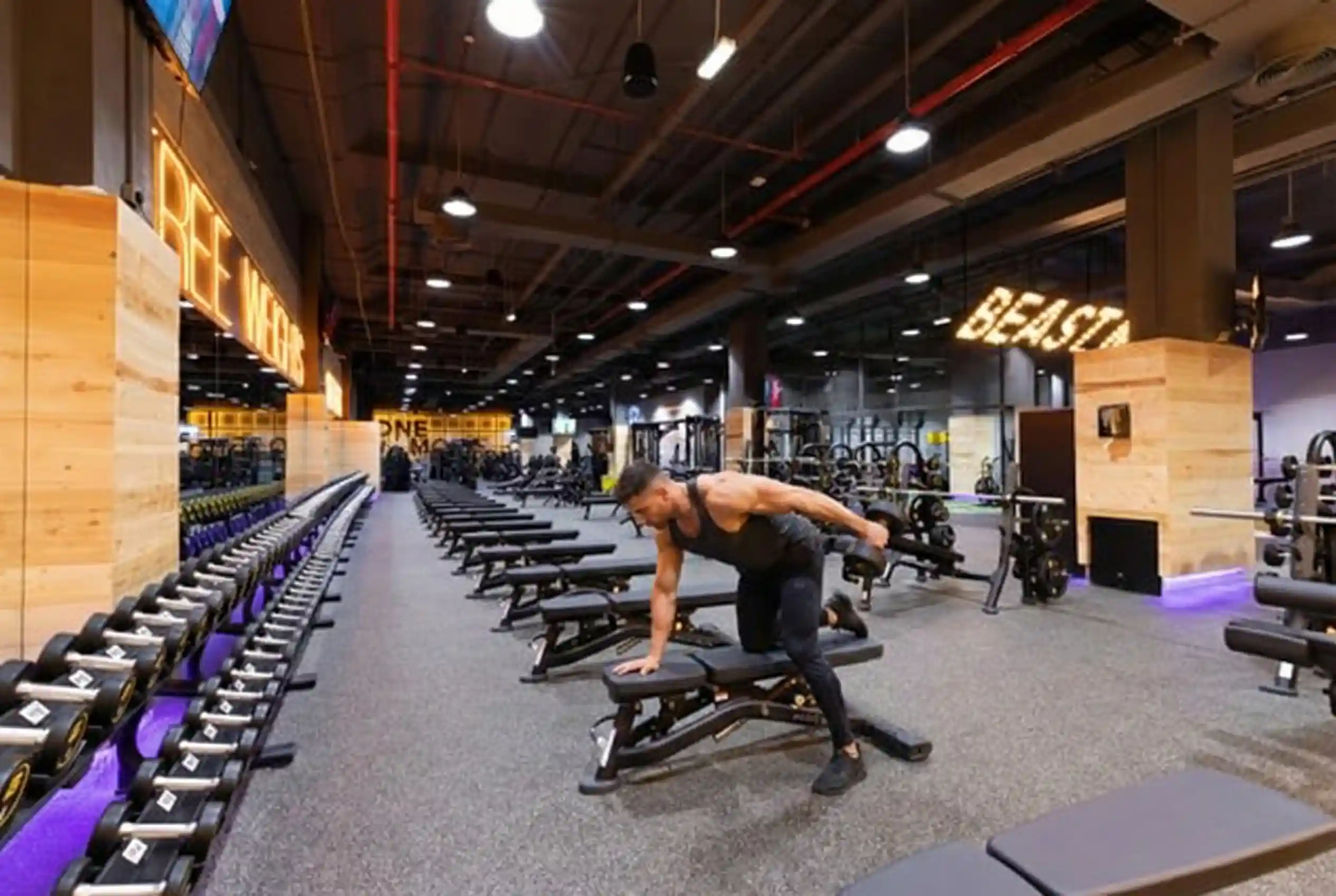
Hold a dumbbell in one hand and place the opposite knee and hand on a bench for support. Set the starting position with the torso hinged forward, spine neutral, hips and knees aligned, and feet stable on the floor.
-
Keep the upper arm stationary and parallel to the floor, with the elbow tucked close to the body. Bend the elbow to position the dumbbell under the shoulder.
-
Extend the arm straight back by fully extending the elbow until the arm reaches full extension. Focus on squeezing the triceps at the top.
-
Slowly lower the dumbbell back to the starting position with controlled motion, maintaining tension throughout the entire range.
-
Complete all reps on one arm before switching sides. Most lifters perform 10–15 reps per set.
GymNation Tip: Lock your upper arm parallel to the floor and squeeze hard at the top—if your elbow drifts or you start swinging, the triceps stop working and momentum takes over.
As a variation, the dumbbell kickback can also be performed standing, which increases stability demands and core engagement.
Personal Trainer Notes:
-
Keep the upper arm stationary and avoid swinging the weight to maintain triceps focus.
-
Use lighter weight to protect the shoulder joint and maintain control.
-
Emphasise full extension and a strong triceps squeeze at the top.
-
Control both the lifting and lowering phases to maximise tension.
-
Maintain a stable core and neutral torso throughout the movement.
-
Regularly review form to ensure proper technique and effective triceps activation.
 WHATSAPP
 EMAIL
EMAIL
 SHARE VIA
Alternative Tricep Exercises

Dumbbell Standing Triceps Extension
The Dumbbell Standing Triceps Extension builds strength and stability through the long head of the triceps. Standing position engages the core and improves control.

Barbell Close Grip Bench Press
The Barbell Close Grip Bench Press targets the triceps (triceps brachii) while engaging the chest (pectorals) and shoulders (anterior deltoids). It’s an excellent compound exercise for building pressing power and arm definition.

Cable Pushdown
The Cable Pushdown is a classic triceps builder that develops all three heads evenly. It’s perfect for strength, tone, and control.

Cable Overhead Triceps Extension (Rope Attachment)
The Cable Overhead Triceps Extension (rope attachment) targets the long head of the triceps for shape and definition. The cable keeps tension constant through the entire movement.

Cable Pushdown (Rope Attachment)
The Cable Pushdown (with rope attachment) isolates the triceps, improving definition and endurance. The rope allows a natural wrist rotation for a stronger contraction at the bottom.

Barbell Standing Overhead Triceps Extension
The Barbell Standing Overhead Triceps Extension builds power in the long head of the triceps and engages the core for stability. Standing version allows heavier loading and overall strength development.

Barbell Seated Overhead Triceps Extension
The Barbell Seated Overhead Triceps Extension strengthens the long head of the triceps, improving upper-arm size and shoulder stability. Performing it seated enhances control and posture.

Cable Triceps Pushdown (V Bar)
The Cable Triceps Pushdown (V bar) targets all heads of the triceps while reducing wrist strain. The V-bar grip allows stronger contraction and stable positioning for controlled pressing.

Barbell Lying Triceps Extension Skull Crusher
The Barbell Lying Triceps Extension, or Skull Crusher, isolates the triceps. It’s ideal for building size and strength in the back of the arms. Perform with control to protect your elbows.
Dumbbell Kickback FAQs
Dumbbell kickbacks primarily target the triceps brachii, especially the long head. The lateral and medial heads assist, while the rear delts and upper back act as secondary stabilising muscles.
Yes. When performed with strict form and lighter weight, kickbacks are effective for isolating the triceps, improving muscle definition, and enhancing control. They are best used as a finishing exercise.
Kickbacks can contribute to triceps growth, particularly when combined with heavier triceps exercises. They are most effective for hypertrophy through tension rather than maximal loading.
Hinge forward with the torso supported, keep the upper arm parallel to the floor and elbows tucked, then extend the arm fully back without using momentum.
Light to moderate weight is recommended. Heavy weight often leads to swinging and reduced triceps activation.
Both are effective. Dumbbells rely on gravity and control, while cable kickbacks provide constant tension. Using both variations can help target the triceps efficiently.