

Dumbbell Standing Triceps Extension
Dumbbell Standing Triceps Extension Video Guide
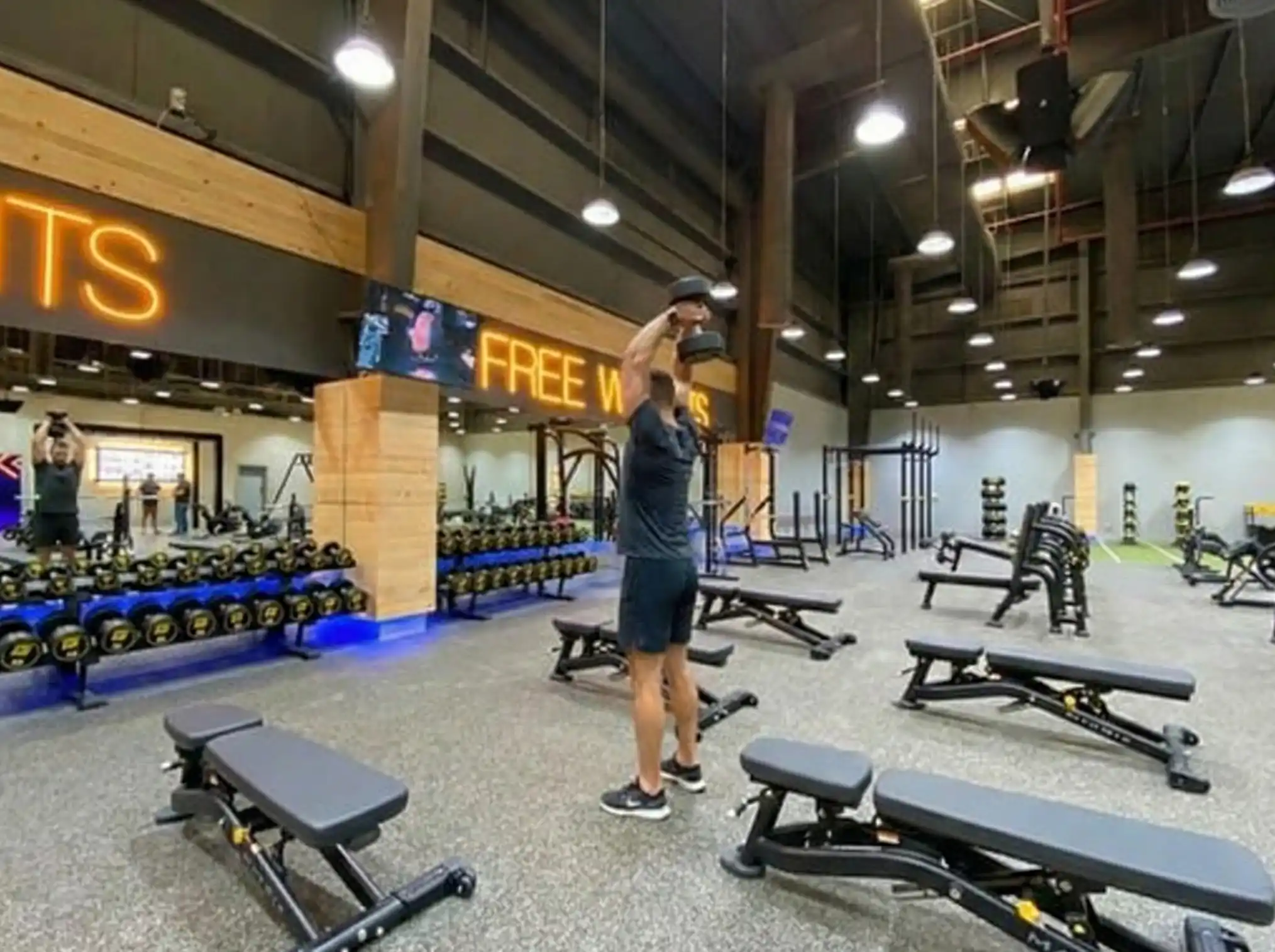
The dumbbell standing triceps extension is a classic dumbbell tricep extension exercise that targets the long head of the triceps through a large range of motion. Performed with a single dumbbell held overhead, this exercise places the upper arm in a position that maximises triceps stretch and tension, making it effective for building tricep strength, size, and upper-arm development. The standing position increases core engagement and stability, helping improve overall control during upper-body workouts. As a result, the triceps respond well with increased strength and muscle growth when this movement is performed consistently with proper form.
As one of the most effective tricep exercises for long-head activation, the dumbbell standing triceps extension complements presses, kickbacks, and other tricep exercises by training the muscle in a fully lengthened position. Using controlled motion and lighter to moderate weight helps reduce stress on the elbows and shoulders while maintaining constant tension on the triceps muscles. This exercise can be performed in the gym or at home, and training load may vary by age, experience, and fitness level. While the standing version challenges balance and stabilising muscles, performing the movement seated on a bench can provide more support and allow greater focus on tricep isolation.
A key point is keeping the upper arms as stationary as possible throughout the movement to maximise triceps activation and effectiveness.
How to Perform the Dumbbell Standing Triceps Extension
-
Stand upright with feet shoulder-width apart and knees slightly bent. Hold a single dumbbell overhead with both hands, palms facing upward, arms fully extended, and wrists aligned with the forearms in the starting position.
-
Keep the upper arms close to your head with elbows pointing forward and close together. Brace the core to maintain a stable torso and avoid arching the lower back.
-
Inhale and slowly lower the dumbbell behind your head by bending the elbows, keeping the upper arms stationary and maintaining control. A slight angle at the elbows is acceptable for comfort and tension.
-
Lower until you feel a stretch through the triceps, then extend the arms to raise the dumbbell back overhead. Press the dumbbell upward until the arms are straight at the top.
-
Repeat for all reps, focusing on smooth movement and a full range of motion.
GymNation Tip: Keep your elbows pinned in and ribs down—if your elbows flare or your lower back arches, the stretch leaves your triceps and the tension goes somewhere useless.
Personal Trainer Notes:
-
Keep elbows tucked and avoid flaring them outward.
-
Use a slight bend at the knees and engage the core for stability.
-
Slowly lower the dumbbell to increase time under tension.
-
Focus on the stretch at the bottom and full extension at the top.
-
Squeeze and flex the triceps hard at the top to enhance muscle activation.
-
Exhale as you extend the arms and lift the weight overhead.
 WHATSAPP
 EMAIL
EMAIL
 SHARE VIA
Alternative Tricep Exercises

Cable Triceps Pushdown (V Bar)
The Cable Triceps Pushdown (V bar) targets all heads of the triceps while reducing wrist strain. The V-bar grip allows stronger contraction and stable positioning for controlled pressing.

Dumbbell Kickback
The Dumbbell Kickback isolates the triceps and develops control and definition. It’s ideal for finishing a triceps workout with focused tension and stability.

Cable Pushdown (Rope Attachment)
The Cable Pushdown (with rope attachment) isolates the triceps, improving definition and endurance. The rope allows a natural wrist rotation for a stronger contraction at the bottom.

Cable Overhead Triceps Extension (Rope Attachment)
The Cable Overhead Triceps Extension (rope attachment) targets the long head of the triceps for shape and definition. The cable keeps tension constant through the entire movement.

Barbell Standing Overhead Triceps Extension
The Barbell Standing Overhead Triceps Extension builds power in the long head of the triceps and engages the core for stability. Standing version allows heavier loading and overall strength development.

Barbell Seated Overhead Triceps Extension
The Barbell Seated Overhead Triceps Extension strengthens the long head of the triceps, improving upper-arm size and shoulder stability. Performing it seated enhances control and posture.

Cable Pushdown
The Cable Pushdown is a classic triceps builder that develops all three heads evenly. It’s perfect for strength, tone, and control.

Barbell Lying Triceps Extension Skull Crusher
The Barbell Lying Triceps Extension, or Skull Crusher, isolates the triceps. It’s ideal for building size and strength in the back of the arms. Perform with control to protect your elbows.

Barbell Close Grip Bench Press
The Barbell Close Grip Bench Press targets the triceps (triceps brachii) while engaging the chest (pectorals) and shoulders (anterior deltoids). It’s an excellent compound exercise for building pressing power and arm definition.
Dumbbell Standing Triceps Extension FAQs
Yes. Standing dumbbell tricep extensions are effective for building tricep strength and muscle, particularly the long head, while also improving core stability.
Stand with feet shoulder-width apart, hold a single dumbbell overhead, slowly lower it behind your head by bending the elbows, then extend the arms back to the starting position with control.
No. A skullcrusher is performed lying on a bench or floor, while a tricep extension can be done standing, seated, or overhead. The movement pattern and stability demands differ.
Neither is strictly better. Standing tricep extensions engage more stabilising muscles, while seated versions reduce body movement and allow greater focus on the triceps.
Moderate weight works best. Using too much weight often leads to elbow flaring and reduced tension, while lighter weight allows better control and form.
It primarily targets the triceps muscles, especially the long head, with the shoulders, core, and upper-arm stabilisers assisting during the movement.