

Barbell Full Squat
Barbell Full Squat Video Guide
The Barbell Full Squat is a foundational compound movement that targets the glute muscles (gluteus maximus), quads, hamstrings, hips, and multiple muscle groups across the lower body. It builds lower-body strength, core strength, and total-body power. Starting from the standing position with feet shoulder width or feet hip width, the barbell squat allows lifters to use free weights for a strong foundation in any strength training routine.
A full squat develops muscle mass, improves overall fitness, reinforces proper squat form, and carries into everyday life movements. Whether using just the bar, working up to heavier weights, or training from a barbell rack, the full squat trains key muscles safely when performed with a neutral spine and correct mechanics.
How to Perform the Barbell Full Squat
-
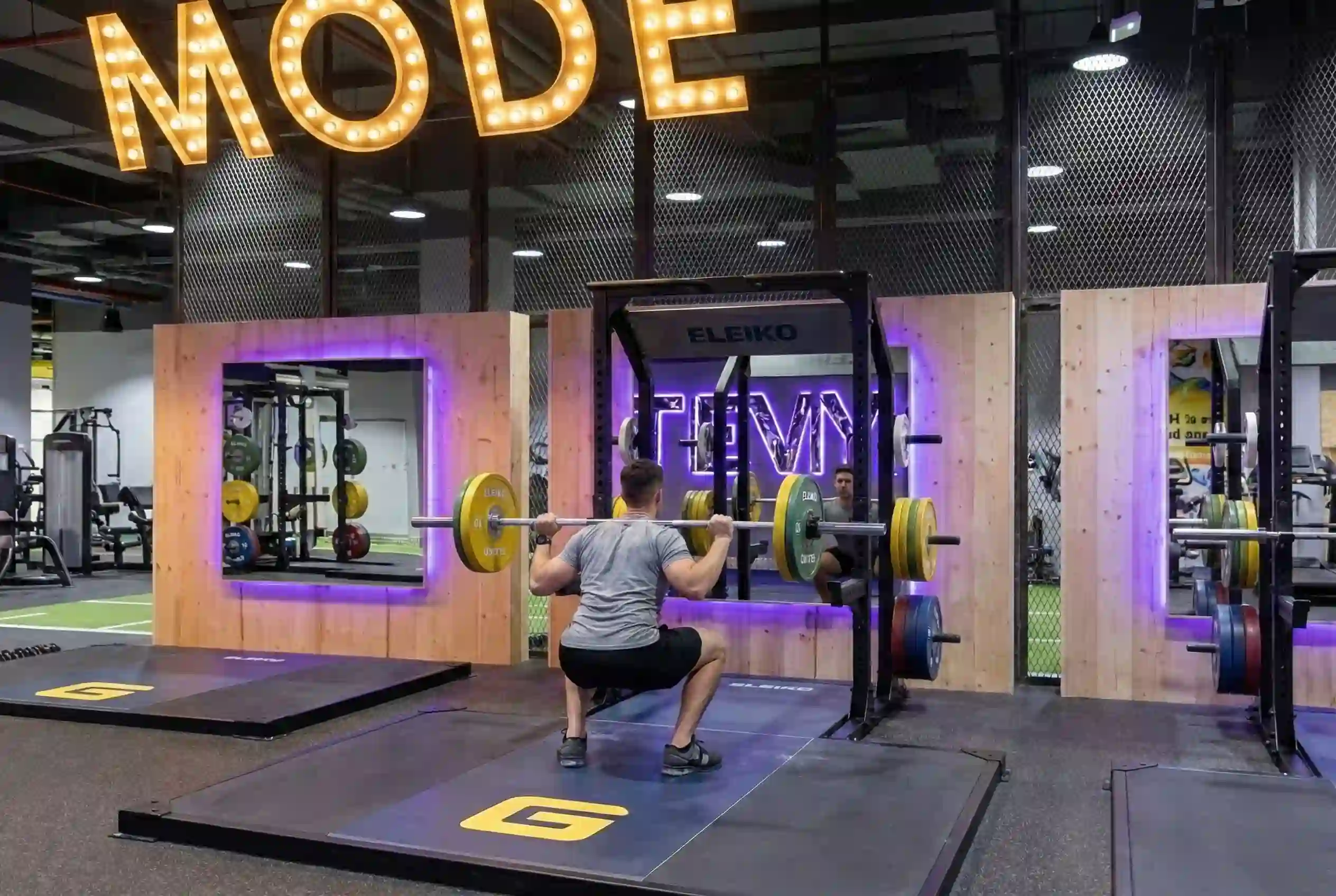
Stand with feet shoulder-width apart (hip width apart also works) and place the barbell across your upper back in the starting position.
-
Take a deep breath, brace your core muscles, keep your chest lifted, and maintain a neutral position.
-
Lower your hips into a deep squat, reaching proper squat depth where your thighs are parallel or below at the bottom of the squat.
-
Push through your heels, glutes, and hamstrings to return to standing — keep your knees and toes tracking together, not caving inward.
-
Move with control, keeping your body balanced and aligned through the entire squat.
GymNation Tip: Sit between your hips, not straight down—if your heels stay planted and your knees track with your toes, depth comes naturally without wrecking your lower back.
Personal Trainer Notes:
-
Keep your heels and feet directly grounded.
-
Maintain a neutral spine for safe loading.
-
Don’t let knees collapse — drive through the glutes.
-
Use the squat rack for safety when lifting heavier weights.
-
Warm up properly to reduce injury risk.
-
Keep your chest up and focus on clean mechanics for all reps.
-
Great for building a strong foundation in any strength training or conditioning routine.
 WHATSAPP
 EMAIL
EMAIL
 SHARE VIA
Alternative Glute Exercises

Dumbbell Lunge
The Dumbbell Lunge works the glutes (gluteus maximus), quadriceps, and hamstrings. It’s excellent for building leg strength, balance, and coordination while improving lower-body symmetry.

Kettlebell Split Squat
The Kettlebell Split Squat strengthens the glutes (gluteus maximus), quads, and hamstrings. It’s a stable, beginner-friendly way to develop single-leg strength and balance.

Landmine Rear Lunge
The Landmine Rear Lunge targets the glutes (gluteus maximus) and hamstrings while improving coordination and core stability. The landmine setup adds support for controlled motion.

Barbell Curtsey Lunge
The Barbell Curtsey Lunge works the glutes (gluteus medius and maximus) and inner thighs. The crossing movement improves hip stability and overall lower-body balance.

Dumbbell Bulgarian Split Squat
The Dumbbell Bulgarian Split Squat targets the glutes (gluteus maximus), hamstrings, and quads. Elevating the rear foot increases the range of motion and intensity on the working leg.

Barbell Lunge
The Barbell Lunge builds strength in the glutes (gluteus maximus), quads, and hamstrings. It’s a key movement for balance, coordination, and full lower-body power.

Dumbbell Step-up
The Dumbbell Step-up strengthens the glutes (gluteus maximus), quads, and hamstrings while improving coordination and stability. It’s ideal for functional lower-body strength.

Dumbbell Single Leg Split Squat
The Dumbbell Single Leg Split Squat strengthens the glutes (gluteus maximus), quads, and hamstrings while enhancing balance and stability. It’s ideal for unilateral strength and correcting imbalances.

Dumbbell Rear Lunge
The Dumbbell Rear Lunge targets the glutes (gluteus maximus) and hamstrings, placing less stress on the knees than a forward lunge. It’s great for improving hip stability and strength.
Barbell Full Squat FAQs
Set the barbell on your upper back at roughly shoulder height, take a deep breath, stand with feet feet shoulder width or feet hip width, brace your core, and lower into a deep squat until you hit proper squat depth. Keep a neutral spine, push through your heels, and return to the standing position with smooth form. Use a barbell rack for safe unracking and racking.
For many lifters following a beginner’s guide, 70 kg represents a strong sign of developing lower body strength, especially when done with proper form. Strength varies based on experience, but it’s a solid step toward increasing muscle mass and long-term fitness goals.
No. A set of 10 squats improves strength, activates key muscles, and builds the gluteus maximus, whereas walking improves heart health and overall health. Squats train muscle groups intensely; walking trains endurance. Both are valuable exercises, but not interchangeable.
Yes. A full squat enhances hip mobility, ankle mobility, core strength, and lower-body strength. It engages multiple muscle groups and improves movement patterns used in everyday life. With expert guidance and solid squat form, it’s safe and effective.
Smith machine squats offer more support but reduce stabiliser activation. Back squat variations with free weights demand more balance, use more muscles, and develop functional strength. Both can help build muscle mass, depending on your training style.
Yes — goblet squat and front squat variations target the same muscle groups but with different loading patterns. The barbell full squat allows for heavier loading and greater muscle mass development over time.
Rushing reps, letting knees cave, losing the neutral spine, using too much weight, or ignoring squat depth. These issues increase injury risk and reduce exercise effectiveness.