

Dumbbell Rear Lunge
Dumbbell Rear Lunge Video Guide
The dumbbell rear lunge is a lower-body strength exercise targeting the glutes, hamstrings, quadriceps, and supporting core muscles. Stepping backward into a reverse lunge reduces knee pain, improves balance, and increases glute activation compared to forward lunges. It’s a highly effective dumbbell lunge variation for building mobility, stability, and proper form in the deep lunge position while keeping the torso upright and the front leg working harder.
How to Perform the Dumbbell Rear Lunge
-
Start in a tall starting position, holding dumbbells at your sides.
-
Take a big step backwards with one foot, lowering until your back knee is above the floor.
-
Keep your front knee stacked over your front foot and maintain an upright torso.
-
Push through the front heel to return to standing.
-
Repeat all reps, then switch legs or alternate each rep.
GymNation Tip: Step back far enough to feel your glutes working—keep your torso tall and front heel grounded for maximum control.
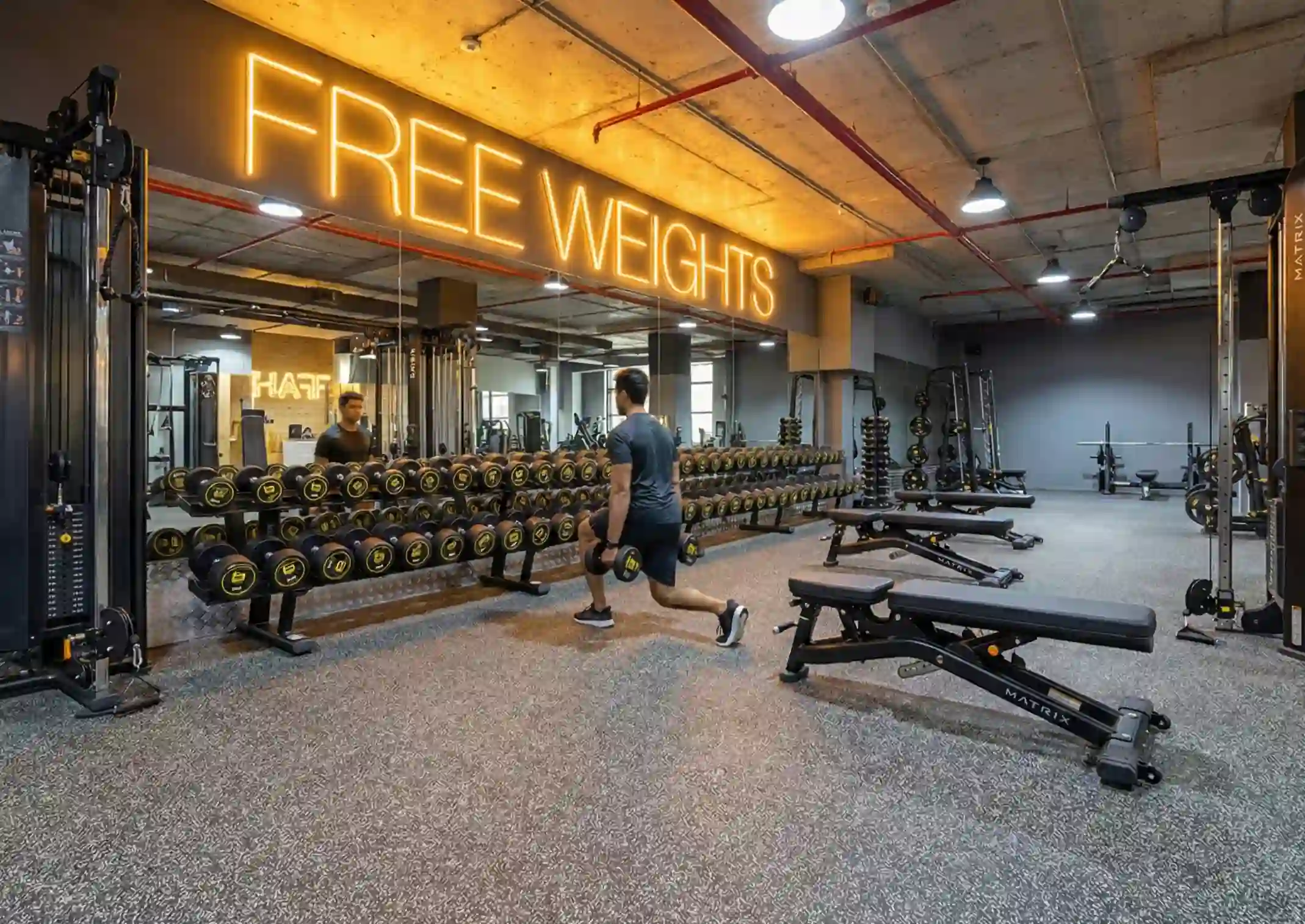
Personal Trainer Notes:
-
Keep your core engaged to maintain proper form.
-
Control the descent and avoid dropping the rear knee.
-
Keep toes and hips aligned to reduce discomfort or injury.
-
Drive through the front foot for maximum glute and hamstrings activation.
-
This variation works well with dumbbells, a kettlebell, or even bodyweight exercise progressions.
 WHATSAPP
 EMAIL
EMAIL
 SHARE VIA
Alternative Glute Exercises

Dumbbell Lunge
The Dumbbell Lunge works the glutes (gluteus maximus), quadriceps, and hamstrings. It’s excellent for building leg strength, balance, and coordination while improving lower-body symmetry.

Dumbbell Single Leg Split Squat
The Dumbbell Single Leg Split Squat strengthens the glutes (gluteus maximus), quads, and hamstrings while enhancing balance and stability. It’s ideal for unilateral strength and correcting imbalances.

Dumbbell Bulgarian Split Squat
The Dumbbell Bulgarian Split Squat targets the glutes (gluteus maximus), hamstrings, and quads. Elevating the rear foot increases the range of motion and intensity on the working leg.

Barbell Curtsey Lunge
The Barbell Curtsey Lunge works the glutes (gluteus medius and maximus) and inner thighs. The crossing movement improves hip stability and overall lower-body balance.

Landmine Rear Lunge
The Landmine Rear Lunge targets the glutes (gluteus maximus) and hamstrings while improving coordination and core stability. The landmine setup adds support for controlled motion.

Kettlebell Split Squat
The Kettlebell Split Squat strengthens the glutes (gluteus maximus), quads, and hamstrings. It’s a stable, beginner-friendly way to develop single-leg strength and balance.

Barbell Full Squat
The Barbell Full Squat targets the glutes (gluteus maximus), quads, and hamstrings. It’s a compound lift that builds total lower-body strength and power.

Barbell Lunge
The Barbell Lunge builds strength in the glutes (gluteus maximus), quads, and hamstrings. It’s a key movement for balance, coordination, and full lower-body power.

Dumbbell Step-up
The Dumbbell Step-up strengthens the glutes (gluteus maximus), quads, and hamstrings while improving coordination and stability. It’s ideal for functional lower-body strength.
Dumbbell Rear Lunge FAQs
A dumbbell reverse lunge targets the glutes, hamstrings, quadriceps, calves, and core. The backward step shifts load to the primary muscles in the hips while the supporting leg builds strength and stability. This makes the movement ideal for lower body training and improving unilateral balance.
A rear lunge (reverse lunge) involves stepping back rather than forward, keeping the torso upright, reducing pressure on the front knee, and helping maintain proper form. The backward motion increases hip flexion and glute engagement, making it a safer option for people with knee pain or limited mobility.
Yes — adding dumbbells increases resistance, helping the legs, glutes, and quads work harder. It improves unilateral strength, stability, balance, and overall muscle mass. Dumbbell lunges also help strengthen secondary muscle groups including the core and calves.
Often yes. The big step backwards creates more hip flexion, loading the gluteus maximus more effectively than a step forward. This makes reverse lunges one of the most effective lunge variations for glute growth and safer for the knees.