


Barbell Lunge
Barbell Lunge Video Guide
The Barbell Lunge is a weighted variation that targets the glutes (gluteus maximus), quadriceps, hamstrings, and supporting thigh muscles. As a core lower body movement, it builds strength, balance, knee stability, and single-leg control. Compared to squats, the barbell lunge places more tension on one leg, improving proper form, hip alignment, and unilateral power. Stepping forward with the front leg activates the entire foot, encourages an upright torso, and reinforces strong lunge mechanics for leg workouts, athletic training, and full-body balance.
How to Perform the Barbell Lunge
-
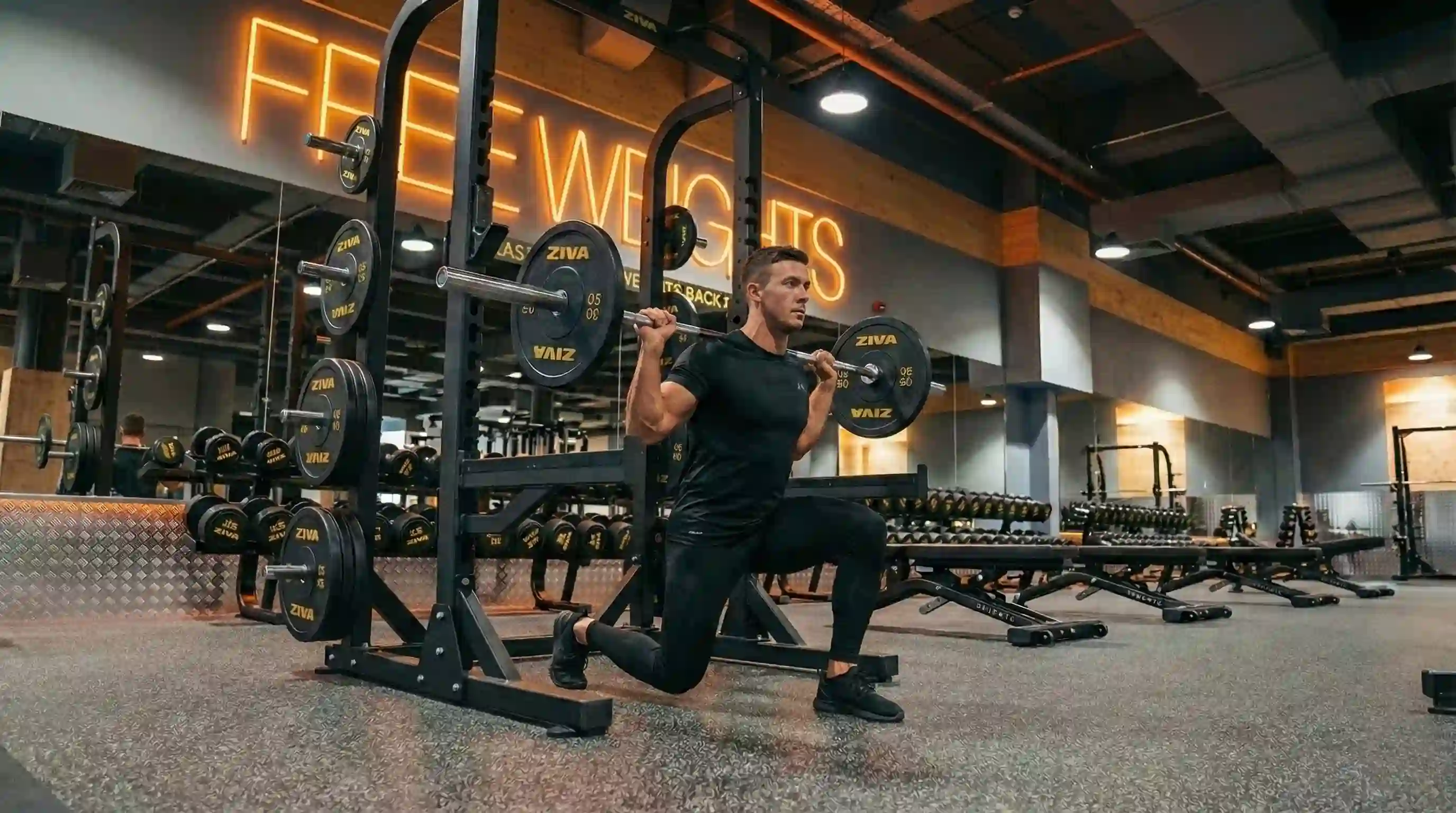
Stand in the starting position with the barbell resting across your upper back, feet shoulder width apart.
-
Step forward with one foot, taking a large step forward until both knees reach knee flexion at roughly 90 degrees.
-
Keep the front knee over the front foot, the shin vertical, and the rear knee lowering toward the floor.
-
Push through the heel of the front leg to return to standing.
-
Alternate legs or complete all reps on one leg, maintaining a steady rhythm and smooth movement throughout the exercise.
GymNation Tip: Take a step long enough to own the bottom—if your front heel stays planted and the bar stays stacked over your mid-foot, you’re lunging, not wobbling.
Personal Trainer Notes:
-
Keep your torso upright throughout each rep.
-
Ensure the front shin stays vertical to reduce injury risk.
-
Don’t let the back foot drift inward — stay width apart for stability.
-
Use a moderate load that allows controlled lunges, not rushed reps.
-
Engage the core to maintain balance during this lunge pattern.
 WHATSAPP
 EMAIL
EMAIL
 SHARE VIA
Alternative Glute Exercises

Kettlebell Split Squat
The Kettlebell Split Squat strengthens the glutes (gluteus maximus), quads, and hamstrings. It’s a stable, beginner-friendly way to develop single-leg strength and balance.

Landmine Rear Lunge
The Landmine Rear Lunge targets the glutes (gluteus maximus) and hamstrings while improving coordination and core stability. The landmine setup adds support for controlled motion.

Dumbbell Bulgarian Split Squat
The Dumbbell Bulgarian Split Squat targets the glutes (gluteus maximus), hamstrings, and quads. Elevating the rear foot increases the range of motion and intensity on the working leg.

Dumbbell Single Leg Split Squat
The Dumbbell Single Leg Split Squat strengthens the glutes (gluteus maximus), quads, and hamstrings while enhancing balance and stability. It’s ideal for unilateral strength and correcting imbalances.

Barbell Full Squat
The Barbell Full Squat targets the glutes (gluteus maximus), quads, and hamstrings. It’s a compound lift that builds total lower-body strength and power.

Dumbbell Step-up
The Dumbbell Step-up strengthens the glutes (gluteus maximus), quads, and hamstrings while improving coordination and stability. It’s ideal for functional lower-body strength.

Dumbbell Rear Lunge
The Dumbbell Rear Lunge targets the glutes (gluteus maximus) and hamstrings, placing less stress on the knees than a forward lunge. It’s great for improving hip stability and strength.

Barbell Curtsey Lunge
The Barbell Curtsey Lunge works the glutes (gluteus medius and maximus) and inner thighs. The crossing movement improves hip stability and overall lower-body balance.

Dumbbell Lunge
The Dumbbell Lunge works the glutes (gluteus maximus), quadriceps, and hamstrings. It’s excellent for building leg strength, balance, and coordination while improving lower-body symmetry.
Barbell Lunge FAQs
The barbell lunge strengthens the glutes, quads, hamstrings, hips, and core muscles. It improves coordination, balance, and single-leg strength more effectively than exercises using just bodyweight or basic dumbbell lunges. It’s a top choice for leg workouts and overall training progression.
Neither is “better”—they target different muscle groups.
-
Squats build global lower body strength and power.
-
Barbell lunges emphasise unilateral training, correcting imbalances and increasing stabilization demands on the front leg and back leg.
Most programmes include both for full development.
They require simultaneous balance, hip control, knee stability, and proper position of the front thigh and rear knee. The moderate load and extended movement pattern create more tension on each leg compared to bilateral lifts.
No single exercise spot-reduces fat. Lunges help increase muscle mass, improve conditioning, and support calorie burn — but fat loss requires nutrition and total-body training. Lunges strengthen the lower body, improve posture, and contribute to overall fitness.
Yes — beginners can start with just the bar, practising the starting position, step length, and proper form. Those not ready can begin with walking lunges, bodyweight lunges, or a dumbbell variation before moving to a barbell.