

Cable Seated Row
Cable Seated Row Video Guide
The cable seated row is a staple upper-body strength exercise designed to build the upper back, mid-back, and posterior chain muscles. It targets the lats (latissimus dorsi), rhomboids, rear delts, traps, and upper arm muscles while engaging the biceps, forearms, and core. Because the cable machine provides constant tension, the movement creates high muscle activation through the full range, helping correct posture, strengthen the shoulder blades, and improve upper-body pulling power.
Maintaining the correct starting position with knees slightly bent, spine straight, abs engaged, and shoulders down ensures proper form and protects shoulder health. With multiple grip options—neutral, wide grip, narrow grip, single-arm cable row, underhand—you can shift emphasis across different muscle groups and improve overall back development. This exercise suits all fitness levels and is one of the best movements for building strength, improving scapular retraction, and supporting other exercises such as bent-over rows, barbell rows, and overhead motions.
How to Perform the Cable Seated Row:
-
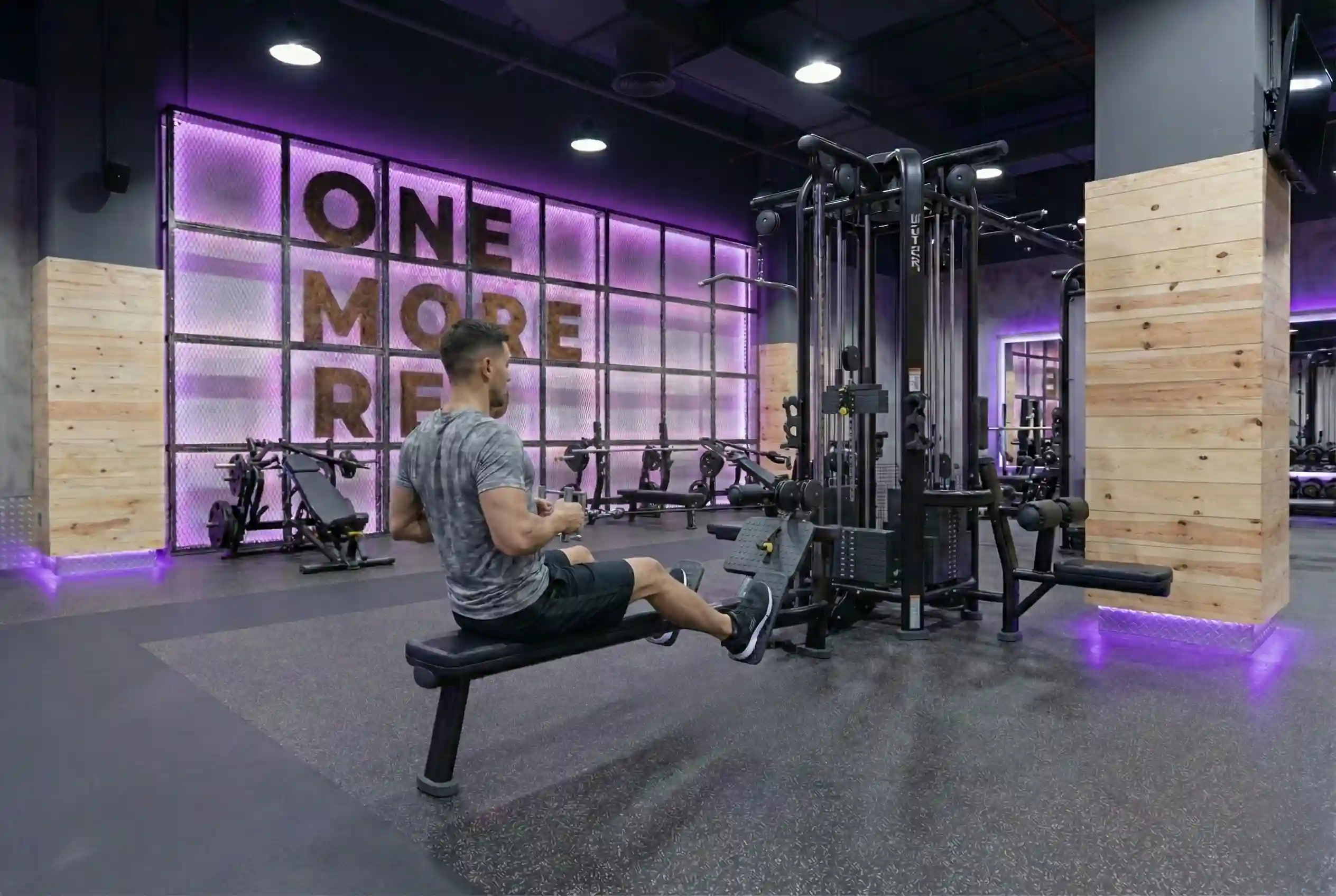
Sit upright on the cable machine with your feet braced, knees bent, and your torso tall. Keep a neutral position with your chest lifted, abs engaged, and shoulder blades down.
-
Grab the cable attachment (v-bar, wide grip, or standard grip) with straight arms in the starting position. Your palms may face neutral or underhand depending on grip.
-
Pull the handle toward your lower ribs by driving your elbows back, keeping them close to your sides for maximum mid-back muscle activation.
-
Squeeze your shoulder blades together at the end of the pull to reinforce proper scapular retraction and upper-back engagement.
-
Slowly return the handle to the start position, fully extending your arms while keeping your spine straight and avoiding torso swing.
-
Repeat using smooth, controlled movements and a full range of motion.
GymNation Tip: Keep your torso still, sit upright, maintain proper posture, keep the shoulder blades stable, avoid reduced range or leaning back, and stay in an optimal position throughout each rep.
Personal Trainer Notes:
-
Pull with your back, not your arms — think elbows back, not hands back.
-
Keep your shoulder blades down and chest up to maintain perfect form.
-
Control the eccentric phase; slowly lowering the handle builds the most muscle.
-
Avoid the common mistakes: rounding the back, flaring elbows, using too much weight, or rocking through the torso.
-
For better muscle activation, experiment with narrow grip, wide grip, neutral grip, or single-arm rowing variations.
-
If you struggle to keep proper posture or lose tension, switch to a lighter weight.
 WHATSAPP
 EMAIL
EMAIL
 SHARE VIA
Alternative Back Exercises

Barbell Deadlift
The Barbell Deadlift targets the lower back (erector spinae), glutes, hamstrings, and traps. It’s a total-body strength builder that improves posture and power.

Pull-up
The Pull-up is a classic compound exercise that builds the lats (latissimus dorsi), biceps, and traps. It increases upper-body strength and improves grip endurance.

Lever Back Extension
The Lever Back Extension targets the lower back (erector spinae), glutes, and hamstrings. It helps build spinal stability and hip strength when performed with control.

Dumbbell Bent Over Row
The Dumbbell Bent Over Row strengthens the lats (latissimus dorsi), rhomboids, and rear delts while engaging the core for stability. It’s ideal for balanced back development and correcting side-to-side imbalances.

Cable Pulldown
The Cable Pulldown builds the lats (latissimus dorsi) and upper back while involving the biceps and rear delts. It’s great for adding width and improving pull-up strength.

Cable Front Seated Row
The Cable Front Seated Row works the lats (latissimus dorsi), rhomboids, and rear delts. The constant cable tension helps improve posture and back muscle balance.

Wide Grip Pull-Up
The Wide Grip Pull-Up targets the outer lats (latissimus dorsi) for width and shape, while also engaging the traps and biceps. It helps create the V-taper look.

Barbell Bent Over Row
The Barbell Bent Over Row targets the lats (latissimus dorsi), mid-back (rhomboids), and rear delts (posterior deltoids). It builds strength, posture, and overall back thickness. Keep your torso stable and pull the bar under control for the best results.

Barbell Shrug
The Barbell Shrug isolates the upper traps (trapezius) and helps strengthen your neck and shoulders. It’s simple but highly effective for building upper-back definition.
Cable Seated Row FAQs
It targets the major muscle groups of the upper back, including the lats, rhomboid muscles, mid-back muscles, rear delts, traps, and supporting arm muscles such as the biceps and forearms. It also engages the core to keep the torso stable.
Sit upright with knees bent, spine straight, and shoulder blades down. Pull the handle toward your ribs while keeping elbows close. Squeeze at the end range, then slowly return to the starting position with full control.
Yes. It’s one of the best exercises for building upper back strength, improving posture, and reinforcing scapular retraction. The constant tension from the cable machine increases muscle activation across a significant portion of the range.
No. Leaning shifts tension away from the back muscles and reduces the effectiveness of the movement. Keep your upper body stable with minimal torso movement.
- Neutral grip = strong lat and mid-back emphasis.
- Wide grip = greater rear delt and upper back focus.
- Underhand = more biceps activation.
Rotate grips for balanced development.
Absolutely. Beginners can start with a light weight and standard grip, sit upright, and build strength progressively as proper form improves.