

Wide Grip Pull-Up
Wide Grip Pull-Up Video Guide
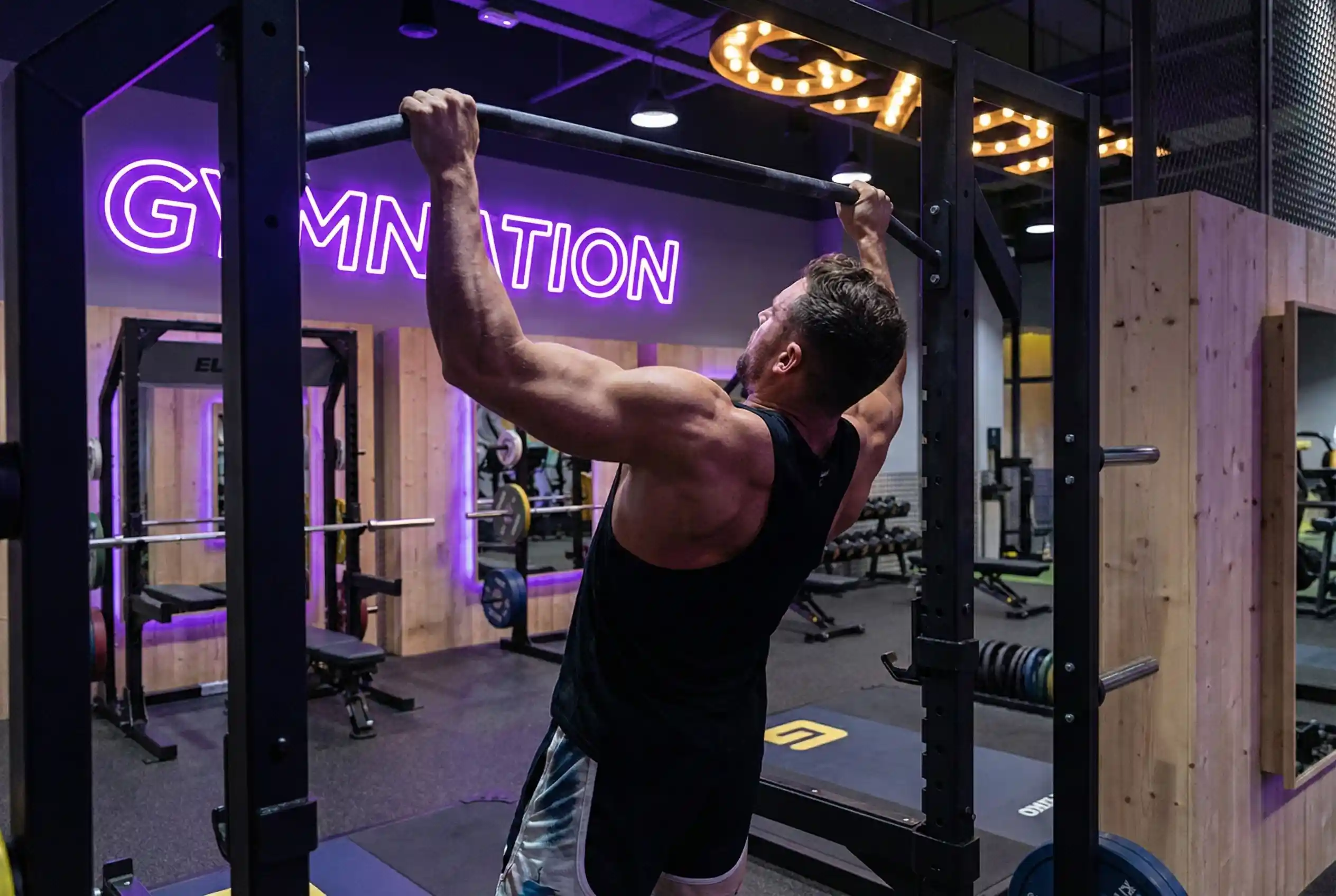
The wide grip pull up is an upper-body strength exercise performed on a pull up bar using an overhand grip wider than shoulder width. Compared to a standard pull up, the wider grip places more emphasis on the outer lats (latissimus dorsi) and teres major, helping build classic V-taper width. This variation also trains the upper back, upper traps, rhomboids, rear delts, biceps, forearms, and core, making it one of the best exercises for upper-body pulling strength.
Using a wide pronated grip reduces bicep assistance and increases lat activation, making wide grip pull ups harder than close grip pull ups, neutral grip pull ups, or chin ups. It also changes the pulling mechanics, requiring stronger scapular control and a stable torso. Neutral grip pull ups, close grip pull ups, and reverse-grip chin ups are ideal alternatives or progressions for anyone still building strength.
Band-assisted pull ups, negative pull ups, and controlled eccentrics help develop grip strength, pulling power, and proper form while maintaining the same movement pattern. Wide grip pull ups are challenging but extremely effective for developing upper-back width and total upper-body strength.
How to Perform the Wide Grip Pull-Up:
-
Start in the correct starting position by gripping the bar with an overhand grip wider than shoulder width. Hang with your arms fully extended, palms facing away, and your shoulder blades down.
-
Engage your core and keep your body weight still. Avoid swinging, bending your knees, or kicking upward.
-
Pull your chest toward the bar by driving your elbows down and out. Keep your shoulder blades pulling down and back.
-
Reach the top position when your chin clears the bar. Squeeze your upper back and lats at the top.
-
Slowly lower yourself to a full dead hang, extending your arms fully without losing tension.
-
Repeat for controlled reps, keeping every movement strict and maintaining proper form.
GymNation Tip: If strict reps are too difficult, use a resistance band, negative pull ups, or box-assisted pull ups while keeping full range and wide grip mechanics.
Personal Trainer Notes:
-
Avoid kipping or using momentum — strict reps build more strength and reduce risk.
-
Lead with your chest, not your chin.
-
Keep palms facing away and grip wider than shoulder width for proper wide-grip technique.
-
Fully extend at the bottom — partial reps limit back development.
-
Engage the core and glutes to stabilise your torso and prevent swinging.
-
Use neutral grip or close grip pull ups as easier alternatives, or to increase training volume.
 WHATSAPP
 EMAIL
EMAIL
 SHARE VIA
Alternative Back Exercises

Barbell Deadlift
The Barbell Deadlift targets the lower back (erector spinae), glutes, hamstrings, and traps. It’s a total-body strength builder that improves posture and power.

Cable Seated Row
The Cable Seated Row works the middle back (rhomboids, lats, and traps) with constant tension. It’s excellent for building a thicker, stronger back and improving posture.

Lever Back Extension
The Lever Back Extension targets the lower back (erector spinae), glutes, and hamstrings. It helps build spinal stability and hip strength when performed with control.

Barbell Bent Over Row
The Barbell Bent Over Row targets the lats (latissimus dorsi), mid-back (rhomboids), and rear delts (posterior deltoids). It builds strength, posture, and overall back thickness. Keep your torso stable and pull the bar under control for the best results.

Dumbbell Bent Over Row
The Dumbbell Bent Over Row strengthens the lats (latissimus dorsi), rhomboids, and rear delts while engaging the core for stability. It’s ideal for balanced back development and correcting side-to-side imbalances.

Pull-up
The Pull-up is a classic compound exercise that builds the lats (latissimus dorsi), biceps, and traps. It increases upper-body strength and improves grip endurance.

Cable Pulldown
The Cable Pulldown builds the lats (latissimus dorsi) and upper back while involving the biceps and rear delts. It’s great for adding width and improving pull-up strength.

Cable Front Seated Row
The Cable Front Seated Row works the lats (latissimus dorsi), rhomboids, and rear delts. The constant cable tension helps improve posture and back muscle balance.

Barbell Shrug
The Barbell Shrug isolates the upper traps (trapezius) and helps strengthen your neck and shoulders. It’s simple but highly effective for building upper-back definition.
Wide Grip Pull-Up FAQs
The wide grip pull up targets the outer lats, teres major, upper back, traps, rhomboids, biceps, forearms, and core. The wider grip emphasises lat width more than a standard pull up.
A wider grip reduces arm involvement, increases lat tension, and shortens the leverage, making each rep more demanding and requiring stronger back muscles.
A wide overhand grip is generally the hardest because it minimises bicep contribution and forces the lats and upper back to do most of the pulling.
Wide grip pull ups are superior for targeting outer-lat width, while standard pull ups allow more overall back strength and higher reps. Both are valuable for balanced training.
Use negative pull ups, band-assisted pull ups, isometric top holds, and grip-strength work. Train wide grip pull ups twice per week for consistent progress.
Yes. They strengthen the upper back, shoulder blades, and core, helping counter rounded shoulders and improving overall posture.
Beginners usually start with neutral grip pull ups, chin ups, assisted pull ups, or negative reps before progressing to strict wide grip work.
Aim for 3–4 sets of 5–10 strict reps. Once this becomes manageable, progress by adding weight with a dip belt or weighted vest.