

Pull-up
Pull-up Video Guide
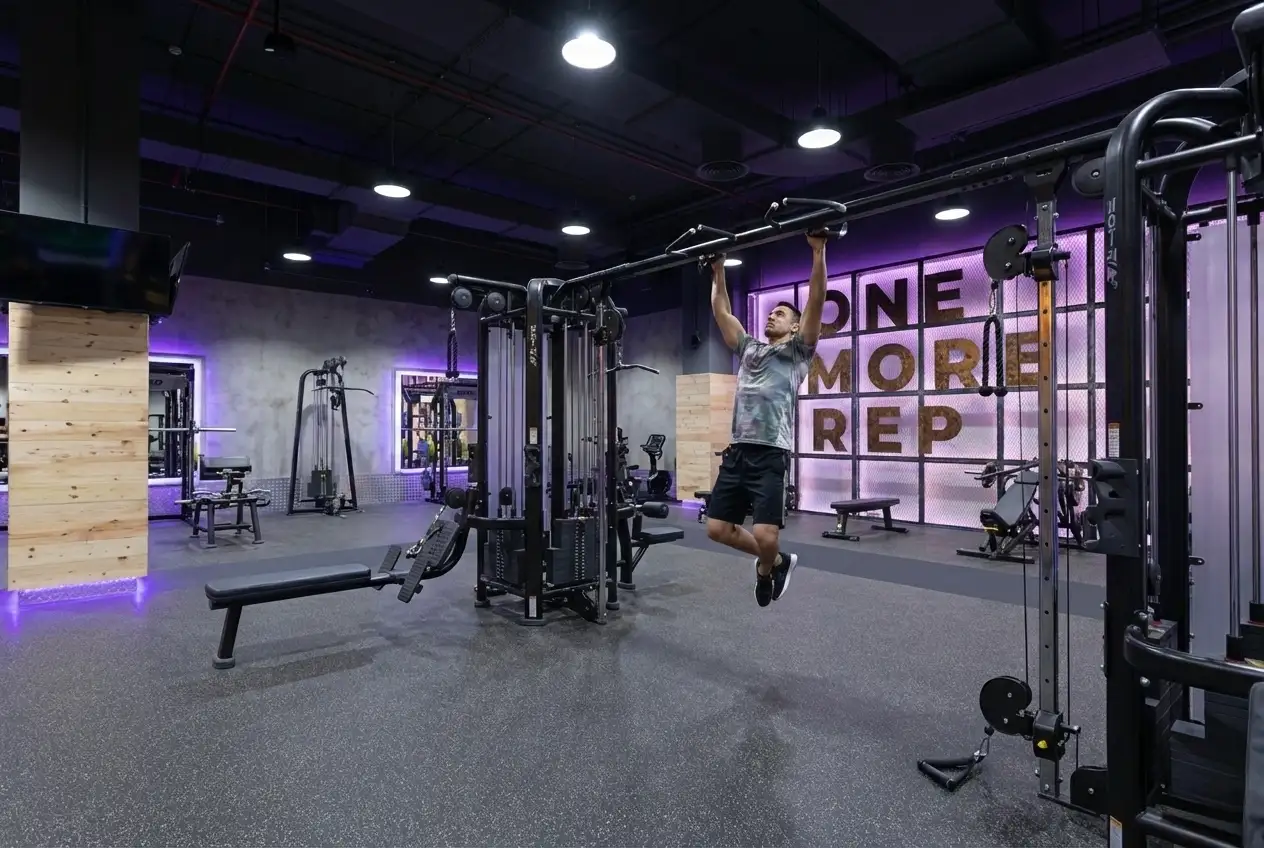
The pull-up is a classic upper-body strength exercise that builds serious upper body strength, targeting the lats, back muscles, biceps, rear delts, forearms, and core. Performed from a dead hang with arms extended on a bar using an overhand grip at roughly shoulder width, the pull up requires you to lift your full body weight through a full range of motion until your chin passes the bar. This makes the movement one of the most effective exercises for developing pulling power, grip strength, and total upper-body control.
The pull up also improves shoulder stability, arm strength, and midline engagement. If you cannot perform an unassisted pull up yet, progressions such as assisted pull-ups, band-assisted reps, controlled negatives, or using a resistance band help you build strength while maintaining the correct movement pattern. Whether you’re working toward your first strict rep, aiming to master the perfect pull up, or progressing to weighted variations, proper form and full control deliver the best results.
The movement can also be adapted with alternative grips, including hammer grip or chin-up (palms facing you), each shifting emphasis to slightly different muscle groups while improving overall pulling ability.
How to Perform the Pull-up:
-
Grip the pull-up bar with palms facing away, hands just outside shoulder width, and start from a dead hang with arms fully extended.
-
Engage your core and glutes to keep your body stable and avoid swinging.
-
Pull your chest toward the bar by driving your elbows down and back.
-
Lift until your chin rises above the bar while maintaining control.
-
Slowly lower your body back to the bottom with your arms extended and your shoulders engaged.
-
Repeat for strict reps, keeping a smooth movement pattern and full range of motion.
GymNation Tip: Keep your legs straight, avoid kipping unless intentional, maintain a stable hanging position, and keep your torso tight throughout the movement.
Personal Trainer Notes:
-
Avoid using momentum — no swinging or uncontrolled kip.
-
Think “elbows down” to keep the lats engaged during the pull.
-
Keep your shoulders pulled back and down; don’t shrug.
-
Use a resistance band or box for easier progression.
-
Chalk helps improve grip, but avoid relying on straps for beginners.
-
Maintain full range of motion: arms extended at the bottom, chest lifted at the top.
 WHATSAPP
 EMAIL
EMAIL
 SHARE VIA
Alternative Back Exercises

Lever Back Extension
The Lever Back Extension targets the lower back (erector spinae), glutes, and hamstrings. It helps build spinal stability and hip strength when performed with control.

Wide Grip Pull-Up
The Wide Grip Pull-Up targets the outer lats (latissimus dorsi) for width and shape, while also engaging the traps and biceps. It helps create the V-taper look.

Barbell Bent Over Row
The Barbell Bent Over Row targets the lats (latissimus dorsi), mid-back (rhomboids), and rear delts (posterior deltoids). It builds strength, posture, and overall back thickness. Keep your torso stable and pull the bar under control for the best results.

Barbell Deadlift
The Barbell Deadlift targets the lower back (erector spinae), glutes, hamstrings, and traps. It’s a total-body strength builder that improves posture and power.

Dumbbell Bent Over Row
The Dumbbell Bent Over Row strengthens the lats (latissimus dorsi), rhomboids, and rear delts while engaging the core for stability. It’s ideal for balanced back development and correcting side-to-side imbalances.

Cable Pulldown
The Cable Pulldown builds the lats (latissimus dorsi) and upper back while involving the biceps and rear delts. It’s great for adding width and improving pull-up strength.

Cable Seated Row
The Cable Seated Row works the middle back (rhomboids, lats, and traps) with constant tension. It’s excellent for building a thicker, stronger back and improving posture.

Cable Front Seated Row
The Cable Front Seated Row works the lats (latissimus dorsi), rhomboids, and rear delts. The constant cable tension helps improve posture and back muscle balance.

Barbell Shrug
The Barbell Shrug isolates the upper traps (trapezius) and helps strengthen your neck and shoulders. It’s simple but highly effective for building upper-back definition.
Pull-up FAQs
Pull ups work the lats, back muscles, biceps, rear delts, forearms, and core. They’re one of the best upper-body exercises for total pulling strength and upper body development.
Grab the bar with an overhand grip, keep your core tight, pull until your chin is above the bar, then lower with control until your arms are fully extended. Avoid swinging and keep your body stable.
Both use the same movement pattern, but pull-ups require lifting your entire body weight, making them more demanding. Pulldowns help build strength for beginners and allow more volume.
Use band-assisted pull ups, negatives, dead hangs, and grip-strength work. Reduce assistance over time until you can perform an unassisted pull up.
Beginners may start with 3–5 assisted reps; intermediates aim for 6–12 strict reps; advanced lifters can add weights or increase volume as technique improves.
Yes — consistent pull-ups build a wider back by strengthening the lats and improving V-taper appearance.
Not recommended. Train them 2–3 times per week to support recovery and avoid overuse injuries.
A chin up uses palms facing you and emphasises biceps more. A pull up uses palms facing away and targets the back muscles more heavily.