


Dumbbell Bent Over Row
Dumbbell Bent Over Row Video Guide
The dumbbell bent over row is a highly effective back exercise that targets the upper back, lats, rhomboids, rear delts, trapezius, and supporting upper arm and arm muscles. Unlike barbell variations, bent over rows with dumbbells allow each arm to move independently, helping fix imbalances, improve stability, and reinforce proper form. Because you hinge at the hips and maintain a spine neutral position, the exercise also trains the lower body, glutes, hamstrings, and core, making it one of the most complete upper-body pulling movements.
Using dumbbells offers a greater range of motion compared with barbell rows and lets you keep the shoulders square, the chest up, and the shoulder width stance consistent. Whether performed with palms facing in, using heavy weights for strength, or lighter weights for volume and control, the dumbbell bent over row builds serious back strength and improves posture. It’s suitable for all fitness levels, from beginners working with light dumbbells to advanced lifters handling heavier loads with strict technique.
How to Perform the Dumbbell Bent Over Row:
-
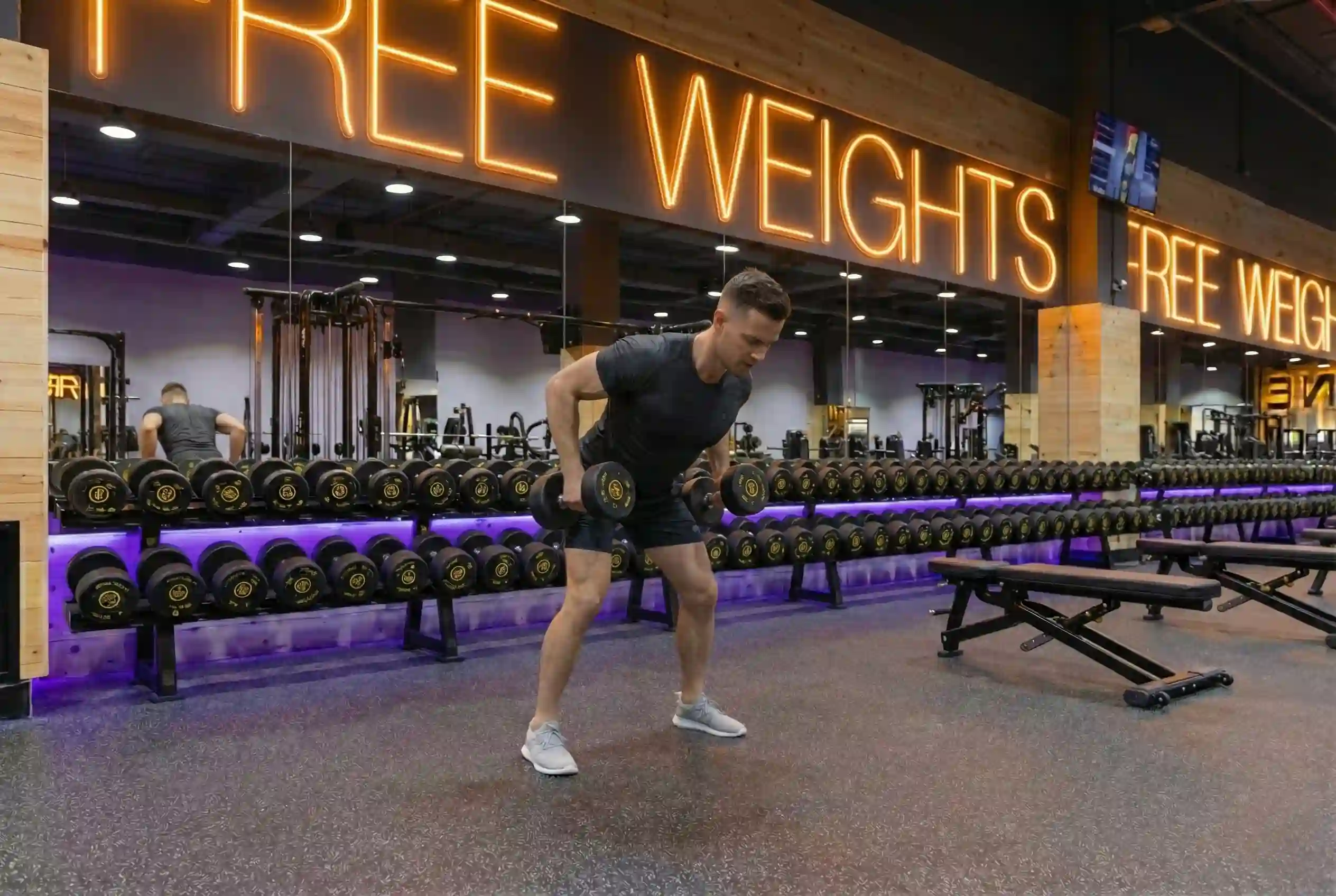
Set your starting position: Stand with feet shoulder width apart, hold a dumbbell in each hand, hinge your hips back, and lower your torso to roughly a 45° angle. Keep knees slightly bent, your spine straight, and your chest open.
-
Let the dumbbells hang beneath you with palms facing each other. Keep the shoulders down and your core braced.
-
Pull the dumbbells up toward your ribs by driving your elbows back. Keep your shoulders square and your torso stationary — avoid twisting or shifting weight.
-
Squeeze the shoulder blades and rhomboids at the top of the row to maximise muscle activation.
-
Slowly lower the dumbbells with control, maintaining tension and avoiding rounding through the back.
-
Repeat for the desired reps, keeping the same posture and movement pattern throughout.
GymNation Tip: Keep a neutral spine, avoid jerking, maintain balance by keeping your feet planted, and control the full range of motion from lift to lowering.
Personal Trainer Notes:
-
Keep your torso still — no swinging, twisting, or using momentum.
-
Lead each rep with your elbows, not your hands.
-
Maintain a spine neutral position to protect against lower back pain.
-
Use a full movement range — controlled lifting + slowly lowering maximises tension.
-
If grip fails before your back muscles, reduce the load or reset your hand position.
-
For stability issues, switch to a single-arm dumbbell row using a bench.
 WHATSAPP
 EMAIL
EMAIL
 SHARE VIA
Alternative Back Exercises

Cable Seated Row
The Cable Seated Row works the middle back (rhomboids, lats, and traps) with constant tension. It’s excellent for building a thicker, stronger back and improving posture.

Pull-up
The Pull-up is a classic compound exercise that builds the lats (latissimus dorsi), biceps, and traps. It increases upper-body strength and improves grip endurance.

Barbell Bent Over Row
The Barbell Bent Over Row targets the lats (latissimus dorsi), mid-back (rhomboids), and rear delts (posterior deltoids). It builds strength, posture, and overall back thickness. Keep your torso stable and pull the bar under control for the best results.

Barbell Deadlift
The Barbell Deadlift targets the lower back (erector spinae), glutes, hamstrings, and traps. It’s a total-body strength builder that improves posture and power.

Lever Back Extension
The Lever Back Extension targets the lower back (erector spinae), glutes, and hamstrings. It helps build spinal stability and hip strength when performed with control.

Cable Front Seated Row
The Cable Front Seated Row works the lats (latissimus dorsi), rhomboids, and rear delts. The constant cable tension helps improve posture and back muscle balance.

Wide Grip Pull-Up
The Wide Grip Pull-Up targets the outer lats (latissimus dorsi) for width and shape, while also engaging the traps and biceps. It helps create the V-taper look.

Cable Pulldown
The Cable Pulldown builds the lats (latissimus dorsi) and upper back while involving the biceps and rear delts. It’s great for adding width and improving pull-up strength.

Barbell Shrug
The Barbell Shrug isolates the upper traps (trapezius) and helps strengthen your neck and shoulders. It’s simple but highly effective for building upper-back definition.
Dumbbell Bent Over Row FAQs
They work the lats, rhomboids, rear delts, upper back, trapezius, upper arm, arm muscles, forearms, and the core that stabilises the body during the hinge.
Hinge at the hips with knees slightly bent, keep your spine straight, row toward your ribs, and slowly lower each rep. Keep shoulders square and avoid twisting.
Both work. A single-arm dumbbell bent over row improves stability and lets you focus on one side. A double dumbbell bent over row increases total load and saves time.
Yes. Strengthening the upper back, rhomboids, and trapezius helps pull the shoulders back and reduce slouching.
A little tension is normal due to the hinge, but sharp lower back pain means your hinge or load is off. Lighten the weight and reinforce your form.
Choose a weight you can control for 8–12 reps without losing form. Too heavy = swinging, rounding, or using momentum instead of the upper back.
Not better — different. Dumbbells give more range, allow unilateral training, and help correct imbalances. Barbells allow heavier loading.
Absolutely. Start with light dumbbells, learn to keep your spine neutral, and slowly increase weight as your form improves.