

Dumbbell Incline Fly
Dumbbell Incline Fly Video Guide
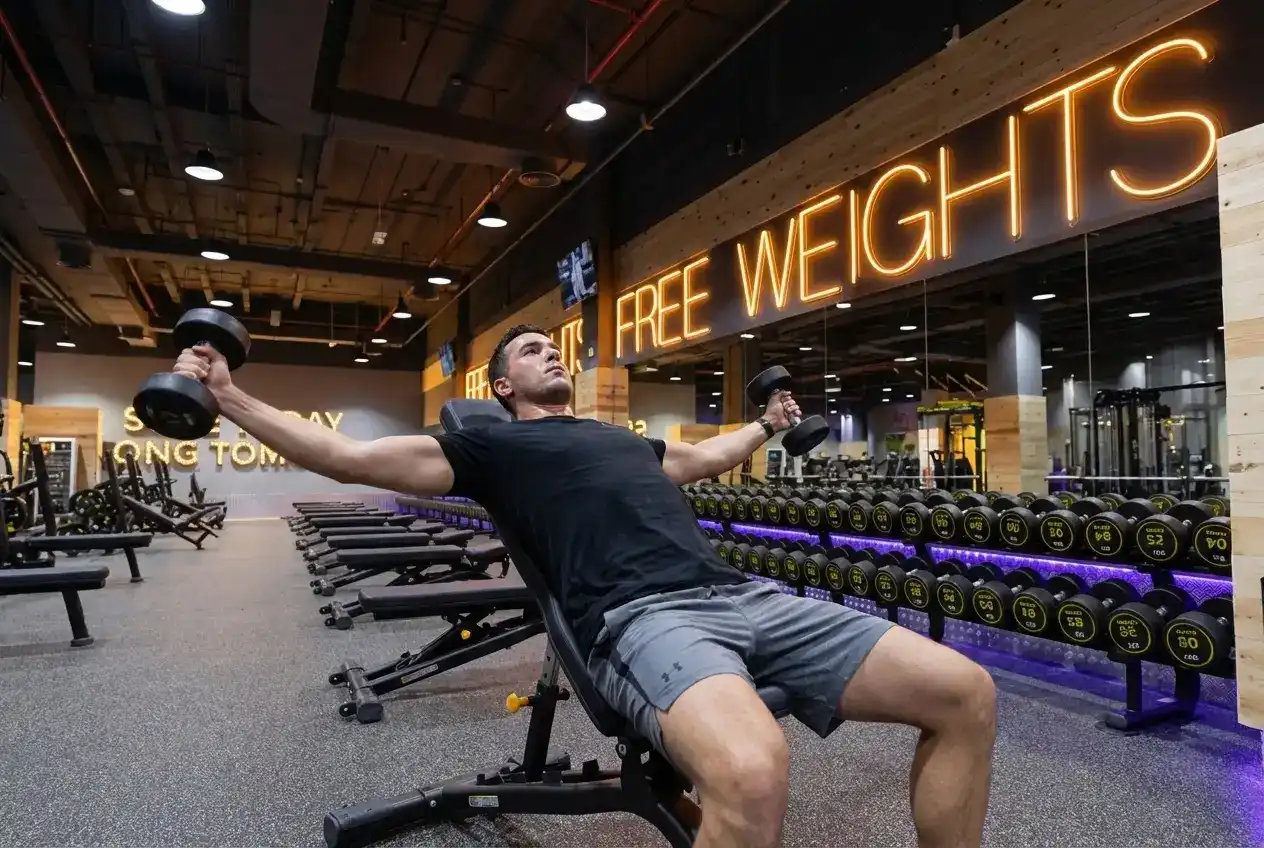
The dumbbell incline fly is a chest-focused exercise that targets the upper chest muscle group, with particular emphasis on the clavicular head of the pectoralis major. This movement also involves the shoulder muscles, front delts, and upper arms as stabilisers, enhancing the entire upper body . Performed on an incline bench or adjustable bench set between 30–45°, the incline dumbbell fly places the upper pecs under a deep stretch and sustained tension.
Compared to a flat dumbbell fly, the incline angle shifts more load to the upper chest muscles, improving upper-chest development, muscle definition, and chest flexibility. This makes the incline dumbbell fly a valuable addition to chest workouts where the goal is balanced chest development and improved activation of the upper region. Used alongside other chest exercises, it supports comprehensive chest training and long-term muscle growth.
The starting position begins with the dumbbells held above the chest, palms facing inward, elbows slightly bent, and shoulder blades retracted (scapular retraction). This stable setup supports proper form, improves control, and helps reduce injury risk. Lowering the dumbbells in a controlled arc and returning through the same full range of motion improves upper chest engagement and builds strength with lighter weights than pressing movements. While the triceps assist as stabilisers, the chest remains the primary mover throughout the exercise, engaging the muscle fibers effectively .
The incline dumbbell fly targets the upper chest and can also be performed unilaterally (one dumbbell at a time) to address strength imbalances and improve control. Variations such as the incline cable fly can further complement the movement by providing constant tension through a similar path.
How to Perform the Dumbbell Incline Fly:
-
Set an incline bench or adjustable bench to 30–45° and sit with dumbbells resting on your thighs.
-
Lie back and bring the dumbbells into the starting position above your chest with palms facing and elbows slightly bent. Keep your feet flat on the floor and maintain a stable torso throughout.
-
Slowly lower the dumbbells in a wide arc until you feel a strong stretch in the chest muscles. Lower only to chest level or slightly above—do not drop below the torso.
-
Squeeze the upper pecs and bring the dumbbells back together using controlled motion, not momentum.
-
Repeat for steady reps, maintaining consistent angle, motion, and control.
GymNation Tip: Start with lighter weights to master control and range of motion, ensuring to exhale properly during the lift . Heavy dumbbells reduce tension in the chest and increase injury and shoulder pain risk.
Personal Trainer Notes on Correct Form:
-
Keep shoulder blades tight and retracted at all times.
-
Maintain a slight bend in the elbows—never lock them out.
-
Focus on the upper chest, not arm or shoulder dominance.
-
Lower slowly to protect shoulder health and improve muscle activation.
-
Prioritise proper form over heavy weight for optimal chest development.
Common mistakes: feet lifting off the floor, lowering the dumbbells too deep, losing elbow position, or rushing the movement with your arms —all of which increase injury risk and reduce effectiveness.
 WHATSAPP
 EMAIL
EMAIL
 SHARE VIA
Alternative Chest Exercises

Cable Bench Press
The Cable Bench Press is a cable exercise that targets your pectorals. It also recruits the anterior deltoids and triceps to keep you stable and moving well from start to finish.

Dumbbell Bench Press
The Dumbbell Bench Press builds strength through the chest (pectorals), shoulders (anterior deltoids), and triceps. Using dumbbells allows greater range of motion and helps correct imbalances between sides.

Push-up
The Push-up is a bodyweight exercise that builds strength in the chest (pectorals), shoulders (deltoids), arms (triceps), and core (abdominals).

Chest Dip
The chest dip is one of the most effective upper-body body-weight exercises for building the chest muscles,

Cable Standing Fly
The cable standing fly is a highly effective chest exercise that isolates the chest muscles using constant tension from the cable machine.

Barbell Decline Wide Grip Press
The Barbell Decline Wide Grip Press is a barbell exercise that targets your pectorals. It also recruits the anterior deltoids and triceps to keep you stable and moving well from start to finish.

Barbell Wide Bench Press
The Barbell Wide Bench Press is a barbell exercise that targets your pectorals. It also recruits the anterior deltoids and triceps to keep you stable and moving well from start to finish.

Cable Crossover Variation
The Cable Crossover Variation is a cable exercise that targets your pectorals. It also recruits the anterior deltoids and triceps to keep you stable and moving well from start to finish.
Dumbbell Incline Fly FAQs
Yes. The incline dumbbell fly is one of the best exercises for isolating the upper chest. The incline angle places the pectoralis major under stretch and improves upper-chest activation.
A 30–35° incline is ideal, ensuring that your feet remain grounded . A steeper angle (around 45°) increases shoulder involvement and reduces chest emphasis.
Lower only until you feel a strong chest stretch. Excessive depth increases injury risk. Keep elbows slightly bent and fully controlled.
Neither is better—they target different regions. Incline fly emphasises the upper pecs, while flat fly targets more of the mid-chest.
Yes, particularly strength and control in the upper chest muscle fibres, including the clavicular head . They’re not a heavy press but support better performance in bench press and incline press movements.
Lighter weights are recommended. Proper form and controlled motion lead to better long-term chest development than rushing heavier loads.
Yes. An adjustable bench or improvised incline setup works as long as the angle is maintained and movement is controlled.