

Dumbbell Pullover
Dumbbell Pullover Video Guide
The dumbbell pullover is a classic chest exercise and upper-body movement performed on a flat bench that targets both the chest muscles (pectoralis major) and the back muscles, particularly the latissimus dorsi. The chest pullover variation specifically targets both the chest and back, making it a versatile addition to your routine. It is a unique dumbbell pullover exercise because it loads the shoulder joint through a long lever arm, placing the chest and lats under tension across a large range of motion.
Unlike pressing movements, the dumbbell pullover emphasises shoulder extension rather than elbow extension. This pullover movement pattern allows the chest muscles and latissimus dorsi to work together while the core muscles stabilise the body position on the bench. Slight changes in form can create an effective dumbbell pullover that targets different muscle groups, including the upper chest. The exercise is especially effective for developing muscle mass, improving muscle activation, and increasing stretch tolerance through the chest and upper back.
Primary muscles worked include the pectoralis major and latissimus dorsi—the largest muscle in the upper body. The upper arm bone (humerus) and upper arms play a key role in the movement, as their positioning determines muscle engagement. Secondary muscles include the long head of the triceps, serratus anterior, abdominal muscles, and other core stabilisers. The degree of elbow bend, arm path, and intent determine whether the movement is more chest-focused or lat-focused. A slightly straighter arm with a chest squeeze increases chest involvement, while a more bent arm and pulling intent shifts emphasis toward the lats.
The dumbbell pullover is commonly used as an accessory movement in chest or back training rather than a primary strength lift. It pairs well with bench presses, flyes, pull-ups, and rows. Variations such as the incline dumbbell pullover, single arm dumbbell pullover, and cable machine pullover allow you to adjust resistance, range of motion, and muscle emphasis based on shoulder mobility and training goals. The lat focused dumbbell pullover differs from the chest pullover by adjusting elbow positioning and body support to emphasize the lats. Using a single dumbbell is common for both chest and lat-focused variations.
Dumbbell pullover alternatives include resistance band pullovers and cable machine pullovers, which provide consistent tension and engage your core muscles for a challenging variation. Performing the exercise on a stability ball instead of a bench can further increase core strength and muscle activation. Lying on a decline bench while performing the dumbbell pullover can provide more range of motion and make the exercise more challenging.
For proper form, keep your arms straight, maintain a slight arch in your lower back, and hold a neutral position to ensure safety and effectiveness. Proper form and variation can optimize muscle growth in the chest and back. The exercise also engages your core muscles for stability, contributing to overall core strength.
The exercise requires good shoulder mobility; individuals with limited mobility or poor shoulder mobility should consult a professional before performing it. If you have limited mobility, consider starting with a floor pullover to limit the range of motion, or use alternatives like resistance band pullovers.
How to Perform the Dumbbell Pullover:
-
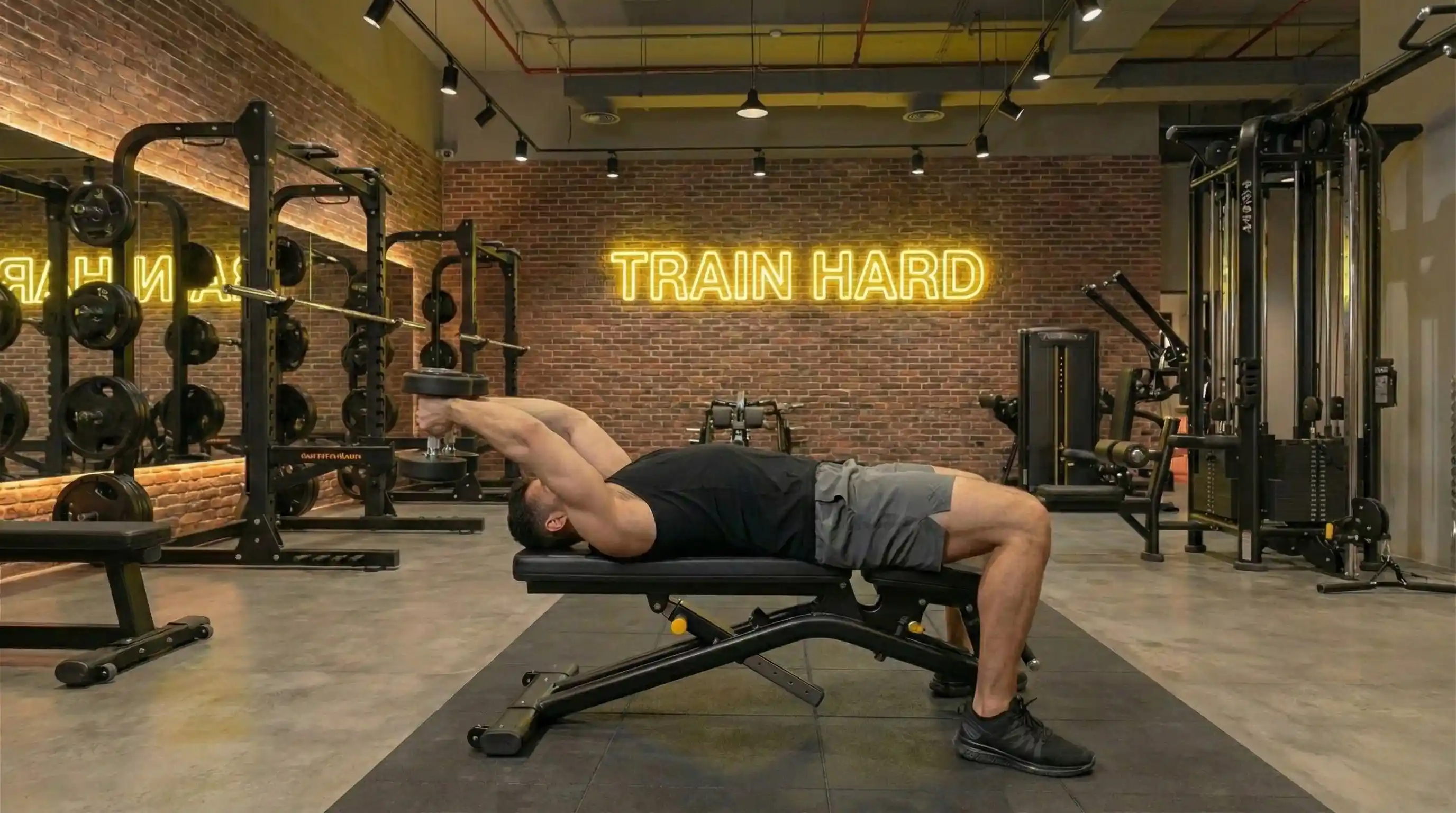
Lie flat on a weight bench with your head supported, feet flat on the floor, and knees bent. Hold one dumbbell with both hands, palms facing upward, gripping the inner plate or handle securely. Pay attention to wrist alignment and lower arm positioning to prevent strain—your wrists should remain neutral and your lower arms aligned with the dumbbell throughout the movement. Maintain a stable body position before initiating the movement. This exercise can also be performed with one arm for unilateral training to address muscle imbalances.
-
Extend your arms above the chest so the dumbbell is stacked over the shoulder joint. Keep your arms mostly straight with a slight bend in the elbows, ensuring both your upper arm and lower arm are aligned to follow the pullover movement pattern. Pull the shoulder blades gently down and back, keeping your upper back and shoulders firmly pressed against the flat bench for proper scapular stability. Maintain a neutral spine with a small, natural arch.
-
Brace the core muscles to improve core stability and prevent excessive arching. Your abdominal muscles should remain engaged throughout the movement, and your hips should be kept slightly lower than the bench to further engage the core and protect the spine.
-
Inhale as you slowly lower the dumbbell behind your head in a smooth, curved path, keeping your arms slightly bent. Keep your elbows in and avoid flaring them out to emphasize the pectoralis major during the exercise. Lower only as far as your shoulder mobility allows without discomfort or shoulder pain.
-
Pause briefly at the bottom to feel a greater stretch through the chest and latissimus dorsi, keeping tension on the muscles rather than the joints. If you experience pain in or around the shoulder area, stop the exercise immediately and consult a professional.
-
Exhale as you pull the dumbbell back to the starting position by engaging the chest muscles and back muscles. Return the weight above the chest without jerking, swinging, or bending the elbows further.
-
Control the complete range of motion and repeat for smooth, even repetitions using light to moderate weight. Heavier weight should only be used once proper form and shoulder control are consistent.
GymNation Tip: If you struggle to maintain proper form, you may be lifting too much weight and should reduce the load to decrease the risk of injury. New exercisers may want to try the pullover movement pattern with no weight before adding resistance to ensure safety and proper technique.
Personal Trainer Notes:
-
Keep the arms mostly straight with a consistent elbow angle
-
Use light weight until shoulder mobility and control are solid
-
Avoid positions where the back arches excessively, as this can indicate poor thoracic mobility and compromise safety
-
Move slowly to maximise muscle activation and stretch
-
Stop the range early if shoulder discomfort appears
-
Stop the exercise if you feel pain in or around the shoulder area, and consult a professional if needed
-
Focus on pulling with the chest and lats, not the triceps
-
If you have limited shoulder mobility, starting with a floor pullover can help limit the range of motion
 WHATSAPP
 EMAIL
EMAIL
 SHARE VIA
Alternative Chest Exercises

Cable Bench Press
The Cable Bench Press is a cable exercise that targets your pectorals. It also recruits the anterior deltoids and triceps to keep you stable and moving well from start to finish.

Dumbbell Bench Press
The Dumbbell Bench Press builds strength through the chest (pectorals), shoulders (anterior deltoids), and triceps. Using dumbbells allows greater range of motion and helps correct imbalances between sides.

Push-up
The Push-up is a bodyweight exercise that builds strength in the chest (pectorals), shoulders (deltoids), arms (triceps), and core (abdominals).

Chest Dip
The chest dip is one of the most effective upper-body body-weight exercises for building the chest muscles,

Dumbbell Fly
The Dumbbell Fly targets the chest (pectorals) while also involving the shoulders (anterior deltoids) and arms (biceps). It’s designed to stretch and contract the chest muscles through a wide range, improving flexibility and muscle tone.

Barbell Decline Bench Press
The Barbell Decline Bench Press targets the lower chest (lower pectorals) while also engaging the triceps and shoulders (anterior deltoids). The decline angle reduces shoulder strain and shifts more load to the lower pec fibres.

Barbell Bench Press
The Barbell Bench Press strengthens the chest (pectorals), shoulders (anterior deltoids) and arms (triceps). It’s one of the most effective upper-body lifts for building power and muscle size.

Incline Push-up
The Incline Push-Up is a bodyweight exercise that targets your pectorals. It also recruits the anterior deltoids and triceps to keep you stable and moving well from start to finish.
Dumbbell Pullover FAQs
Dumbbell pullovers primarily work the pectoralis major and latissimus dorsi. Secondary muscles include the long head of the triceps, serratus anterior, abdominal muscles, and other core stabilisers. Different pullover variations can target specific muscle groups, such as the upper chest, back (lats), and supporting core muscles, depending on form and equipment used.
It is both. A straighter arm and chest squeeze increases chest involvement, while a slightly bent arm and pulling intent emphasises the lats. Slight changes in form, such as adjusting the angle or movement, can also help target the upper chest.
Both, but many lifters feel it more in the lats—especially when focusing on pulling the dumbbell behind your head rather than pressing it upward.
They target the upper lats, chest muscles, and muscular attachments around the ribcage. The stretch is usually felt through the lats and pectorals.
Pullovers bias the upper and outer lats rather than the lower lats. Lower-lat development typically comes from vertical pulling exercises like pull-ups.
Yes. The classic dumbbell pullover is an excellent exercise for adding chest and lat stretch under load, improving shoulder mobility, and increasing upper-body muscle activation. It also supports muscle growth and core strength when performed with proper form and tension.
No. They do not expand the rib cage. They can improve chest appearance by increasing muscle mass, stretch tolerance, and posture.
No. Pullovers do not replace pull-ups for strength or full back development. They work best as a supplement.
Using too much weight, excessive elbow bending, arching excessively, rushing the stretch phase, and turning the movement into a triceps extension. Individuals with limited mobility or poor shoulder mobility may compensate by arching the spine or using improper form. For those with restricted range of motion, consider modifications such as lying on the floor or using alternative exercises.
No. Pullovers train the chest, lats, and serratus, while skull crushers isolate the triceps.
Use them as an accessory after pressing or pulling movements. Rotate variations such as incline dumbbell pullover, single arm dumbbell pullover, or cable machine pullover to manage shoulder mobility and maintain progress. Dumbbell pullover alternatives like resistance band pullovers, cable machine pullovers (which provide consistent tension and engage your core muscles), or using a stability ball or single dumbbell can help target similar muscle groups and accommodate different needs.