

Dumbbell Fly
Dumbbell Fly Video Guide
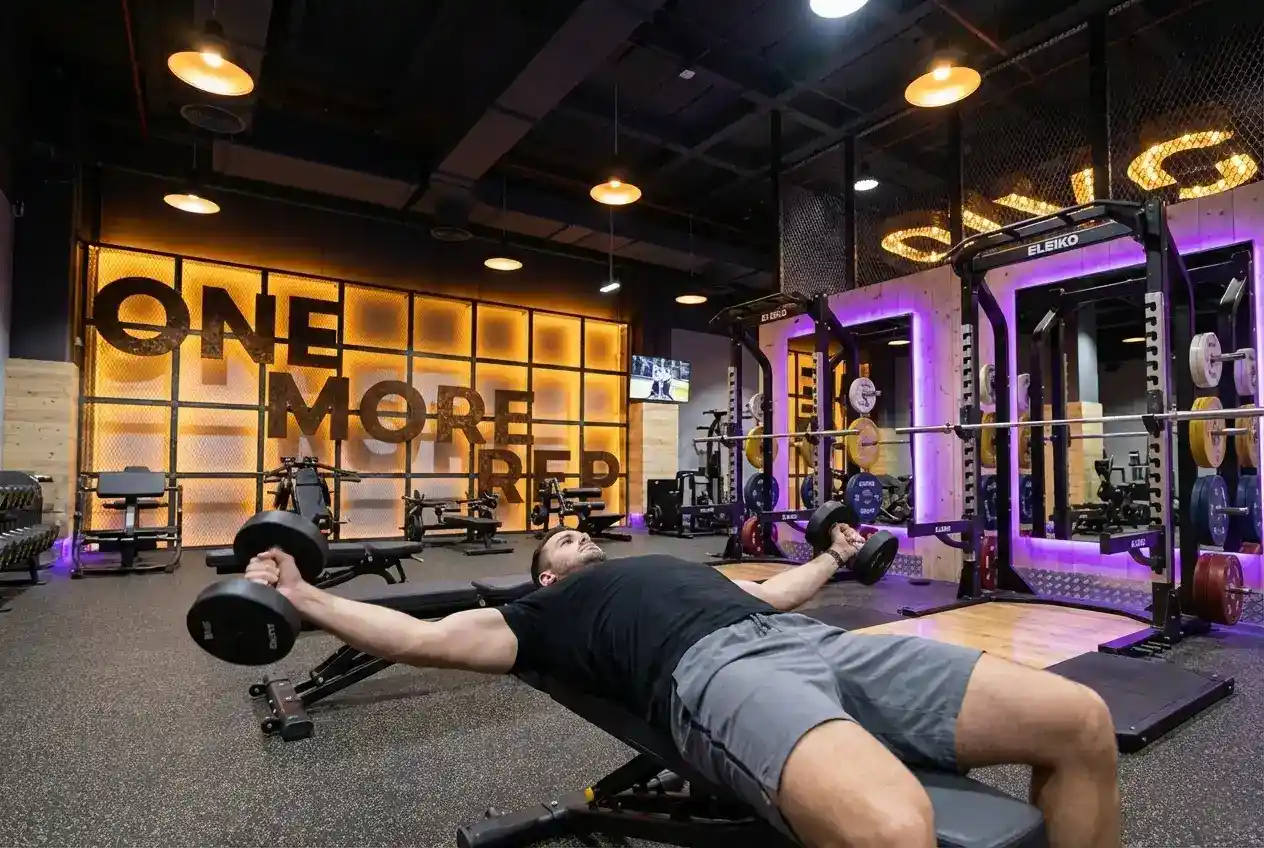
The dumbbell fly (also known as the dumbbell chest fly) is a chest-focused isolation exercise that stretches and contracts the pectoralis major through a long range of motion. Performed on a flat bench with palms facing and a slight bend in the elbows, the movement places greater emphasis on the chest than most pressing exercises. This makes it an effective accessory exercise for improving chest hypertrophy, muscle control, and mind–muscle connection.
The primary muscle worked in the dumbbell fly is the pectoralis major, with secondary involvement from the anterior deltoid and stabilising support from the serratus anterior, rotator cuff muscles, and scapular stabilisers. Because each dumbbell moves independently, both arms must control the weight throughout the movement, increasing muscular demand on the chest and shoulders. Unlike pressing exercises, the dumbbell fly trains shoulder horizontal adduction through an arc-style motion, allowing the chest to work through a deep stretch and powerful squeeze while the shoulder blades remain pinned to the bench.
This arc-style movement places tension on the chest through a larger portion of the range, particularly in the stretched position where gravity challenges the pecs most. As the arms move toward the body’s midline, tension stays on the chest rather than transferring to the triceps. This makes the dumbbell fly especially useful for building muscle, improving muscle activation, flexibility, and overall chest engagement.
The dumbbell fly can also be performed as an incline dumbbell fly, a decline variation, or on the floor to reduce the bottom range. Using a stability ball further increases core and abdominal engagement, while still maintaining the same movement pattern. These options make dumbbell flys a versatile and effective addition to most chest workouts.
How to Perform Dumbbell Fly
-
Starting position: Lie flat on a bench with feet firmly planted on the ground. Hold a dumbbell in each hand above the chest, palms facing each other, with a slight bend in the elbows.
-
Slowly lower the dumbbells outward in a wide arc while keeping the arms parallel to the floor. Inhale as you lower and maintain control as you reach a comfortable chest stretch.
-
Keep the shoulder blades stable against the bench as the arms move outward, maintaining consistent tension across the chest.
-
Lift the dumbbells back together using the pecs, exhale, and focus on squeezing the chest as the weights return above the midline.
-
Repeat each rep smoothly, keeping wrists neutral and elbow angle consistent to maximise chest activation.
GymNation Tip: Think of “hugging a large exercise ball.” This keeps the arc natural, reduces joint stress, and maintains tension throughout the entire rep.
Variation: A single-arm dumbbell fly can be used to challenge unilateral control and improve stability on each side.
Personal Trainer Notes
-
Keep elbows softly bent—never locked
-
Pin shoulder blades to the bench for shoulder stability
-
Use lighter weight to improve control and reduce injury risk
-
Avoid lowering past a safe, comfortable range
-
Focus on chest movement, not arm strength—the fly is not a press
 WHATSAPP
 EMAIL
EMAIL
 SHARE VIA
Alternative Chest Exercises

Dumbbell Incline Fly
The Dumbbell Incline Fly isolates the upper chest (clavicular pectorals) with support from the shoulders (anterior deltoids). It enhances muscle definition and helps develop upper chest control.

Barbell Incline Bench Press
The Barbell Incline Bench Press targets the upper chest (clavicular pectorals) and front shoulders (anterior deltoids), with support from the triceps. It’s ideal for developing shape and definition across the upper chest.

Barbell Bench Press
The Barbell Bench Press strengthens the chest (pectorals), shoulders (anterior deltoids) and arms (triceps). It’s one of the most effective upper-body lifts for building power and muscle size.

Smith Bench Press
The Smith Bench Press is a smith machine exercise that targets your pectorals. It also recruits the anterior deltoids and triceps to keep you stable and moving well from start to finish.

Dumbbell Pullover
The Dumbbell Pullover is a dumbbell exercise that targets your pectorals. It also recruits the anterior deltoids and triceps to keep you stable and moving well from start to finish.

Decline Push-Up
The Decline Push-Up is a bodyweight exercise that targets your pectorals. It also recruits the anterior deltoids and triceps to keep you stable and moving well from start to finish.

Cable Lying Fly
The Cable Lying Fly is a cable exercise that targets your pectorals. It also recruits the anterior deltoids and triceps to keep you stable and moving well from start to finish.
Dumbbell Fly FAQs
It primarily targets the pectoralis major, training the chest through a long stretch-to-squeeze range. The anterior deltoid assists with shoulder movement, while stabilising support comes from the serratus anterior, rotator cuff muscles, and scapular stabilisers throughout the movement.
They serve different purposes. The press develops strength, while the fly emphasises isolation, flexibility, and muscle shape.
Maintain a slight elbow bend, keep palms facing, stabilise the shoulder blades, and avoid excessive depth.
Start with 4–8 kg dumbbells and prioritise control and slow lowering.
-
Flat bench: overall chest
-
Incline dumbbell fly: upper chest / clavicular head
-
Decline: lower chest
Rotating variations improves balance and reduces imbalances.
Yes—when performed slowly with constant tension and a strong squeeze, it helps build strength and complements all pressing movements.
3–4 sets of 10–15 reps, focusing on controlled eccentrics.
Yes. Floor flys limit the bottom range and reduce shoulder stress, though they provide less stretch.
Yes. In the gym, cable machines and pec deck machines provide constant resistance and are effective alternatives for chest fly movements.