

Cable Incline Fly
Cable Incline Fly Video Guide
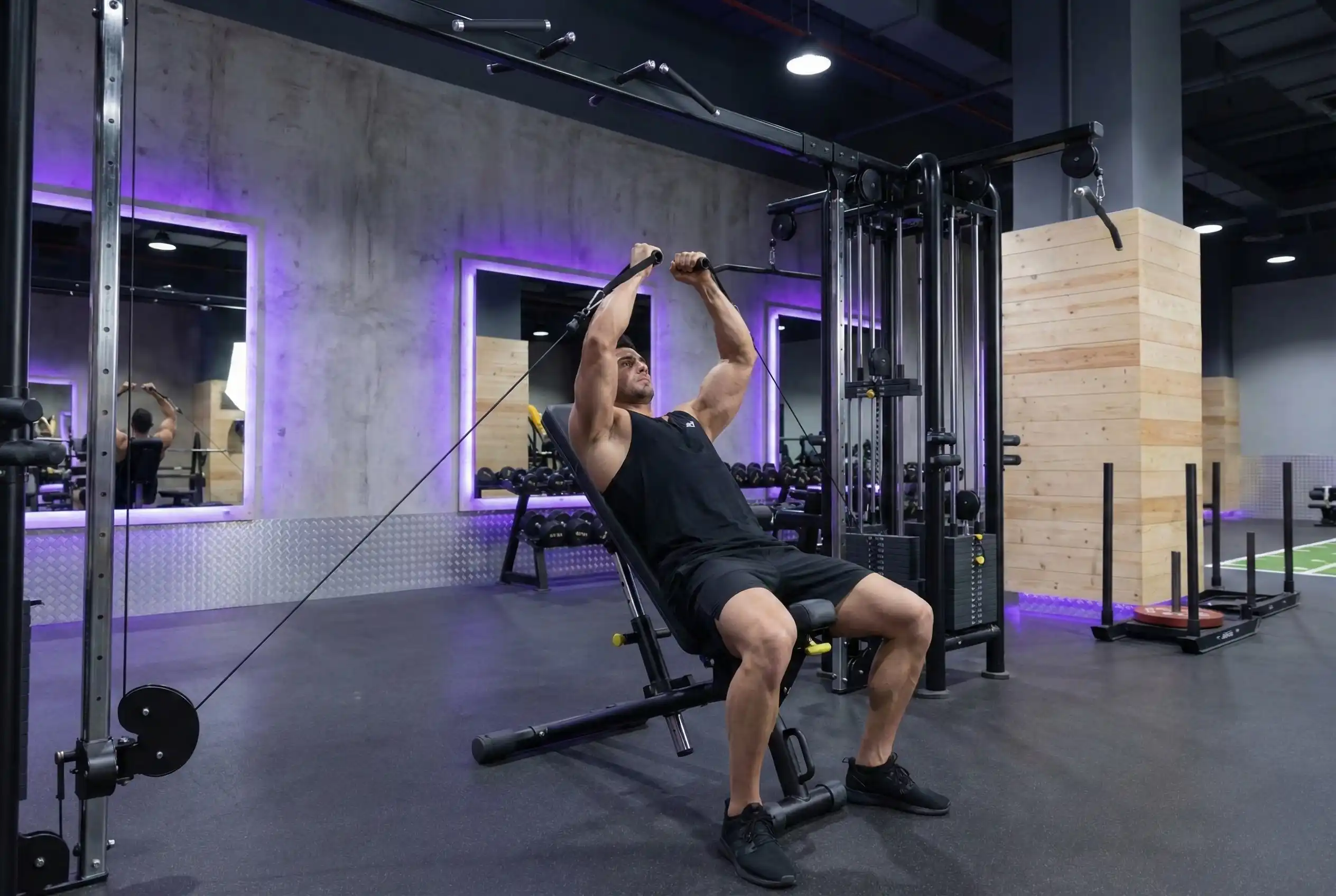
The cable incline fly is a cable chest exercise that primarily targets the upper chest, specifically the clavicular head of the pectoralis major. Performed on an incline bench using a cable machine, this movement emphasises chest adduction rather than pressing, making it a highly effective isolation exercise for chest development and hypertrophy.
Unlike pressing movements such as the bench press, incline bench press, or incline cable press, the cable incline fly maintains constant tension on the chest muscles throughout the entire range of motion. This consistent resistance improves muscle activation, control, and time under tension—key drivers of muscle growth. Cable resistance also removes the natural “rest point” found in free weights, increasing metabolic stress and muscular demand.
The incline angle shifts emphasis toward the upper chest while reducing lower-chest dominance. Most lifters find an incline of 20–30 degrees provides the best balance between chest activation and shoulder comfort. Steeper angles (closer to 45 degrees) tend to increase shoulder involvement and reduce chest contribution.
Secondary muscles include the anterior deltoids and biceps, which act as stabilisers, along with the core and shoulders, which help maintain posture and balance. Compared to dumbbells or a Smith machine, cables provide smoother resistance and allow a more controlled movement path, often making the exercise easier on the joints when performed with good posture and technique.
The cable incline fly is commonly used in upper-body workouts as a hypertrophy-focused movement, accessory lift, or finishing exercise after presses. It pairs well with flat bench and incline bench work for balanced chest development and is especially popular among lifters aiming to add size and shape to the upper chest.
How to Perform the Cable Incline Fly:
-
Set an incline bench to around 20–30 degrees and place it between two low cable pulleys on a cable machine. Attach handles to the bottom mounts so the resistance pulls upward and slightly inward.
-
Sit back on the bench with feet planted firmly on the floor for stability. Keep the hips steady and the core braced. Grab the handles with a firm grip, palms facing each other, and bring the handles to chest height.
-
Pull the shoulder blades down and back to maintain good posture. Keep the elbows slightly bent and wrists neutral. The bend in your elbows should remain consistent throughout the movement.
-
Inhale and raise the handles upward in a wide arc, moving in a controlled line toward the midline of your body. Focus on squeezing the upper chest as the hands come together above chest height. Avoid turning the movement into a press.
-
Pause briefly at the top, then slowly lower the handles back to the starting position under control. Maintain tension through the chest during the entire descent.
-
Perform smooth, controlled repetitions, prioritising posture, balance, and muscle engagement over heavy weight.
GymNation Tip: Standing cable flyes can be used as an alternative. Performing standing cable flyes with one foot slightly forward increases core engagement and balance demands.
Personal Trainer Notes:
-
Keep elbows slightly bent to protect the shoulder joints
-
Avoid excessive weight that causes swinging or loss of control
-
Maintain good posture with chest open and shoulders set
-
Control the eccentric phase to increase time under tension
-
Adjust bench angle slightly based on comfort and upper-chest feel
 WHATSAPP
 EMAIL
EMAIL
 SHARE VIA
Alternative Chest Exercises

Dumbbell Incline Fly
The Dumbbell Incline Fly isolates the upper chest (clavicular pectorals) with support from the shoulders (anterior deltoids). It enhances muscle definition and helps develop upper chest control.

Barbell Decline Bench Press
The Barbell Decline Bench Press targets the lower chest (lower pectorals) while also engaging the triceps and shoulders (anterior deltoids). The decline angle reduces shoulder strain and shifts more load to the lower pec fibres.

Smith Bench Press
The Smith Bench Press is a smith machine exercise that targets your pectorals. It also recruits the anterior deltoids and triceps to keep you stable and moving well from start to finish.

Cable Bench Press
The Cable Bench Press is a cable exercise that targets your pectorals. It also recruits the anterior deltoids and triceps to keep you stable and moving well from start to finish.

Barbell Decline Wide Grip Press
The Barbell Decline Wide Grip Press is a barbell exercise that targets your pectorals. It also recruits the anterior deltoids and triceps to keep you stable and moving well from start to finish.

Barbell Wide Bench Press
The Barbell Wide Bench Press is a barbell exercise that targets your pectorals. It also recruits the anterior deltoids and triceps to keep you stable and moving well from start to finish.

Dumbbell Pullover
The Dumbbell Pullover is a dumbbell exercise that targets your pectorals. It also recruits the anterior deltoids and triceps to keep you stable and moving well from start to finish.

Incline Push-up
The Incline Push-Up is a bodyweight exercise that targets your pectorals. It also recruits the anterior deltoids and triceps to keep you stable and moving well from start to finish.
Cable Incline Fly FAQs
The incline cable fly primarily targets the upper chest (clavicular head of the pectoralis major). Secondary muscles include the anterior deltoids, biceps, and core for stability.
Around 30 degrees is generally better. At 45 degrees, the shoulders tend to dominate, reducing upper-chest emphasis.
Incline movements don’t grow the entire chest more, but they are especially effective for developing the upper chest, which many lifters under-train.
Neither is strictly better. Incline flyes focus on the upper chest, while flat flyes provide more even chest stimulation. Using both supports balanced development.
Yes. Cable flyes are excellent for hypertrophy due to constant tension, controlled resistance, and strong stretch-to-contraction loading.
Yes—especially if you want better upper-chest shape, struggle to feel your chest during presses, or want joint-friendly isolation work.