

Hanging Leg Hip Raise
Hanging Leg Hip Raise Video Guide
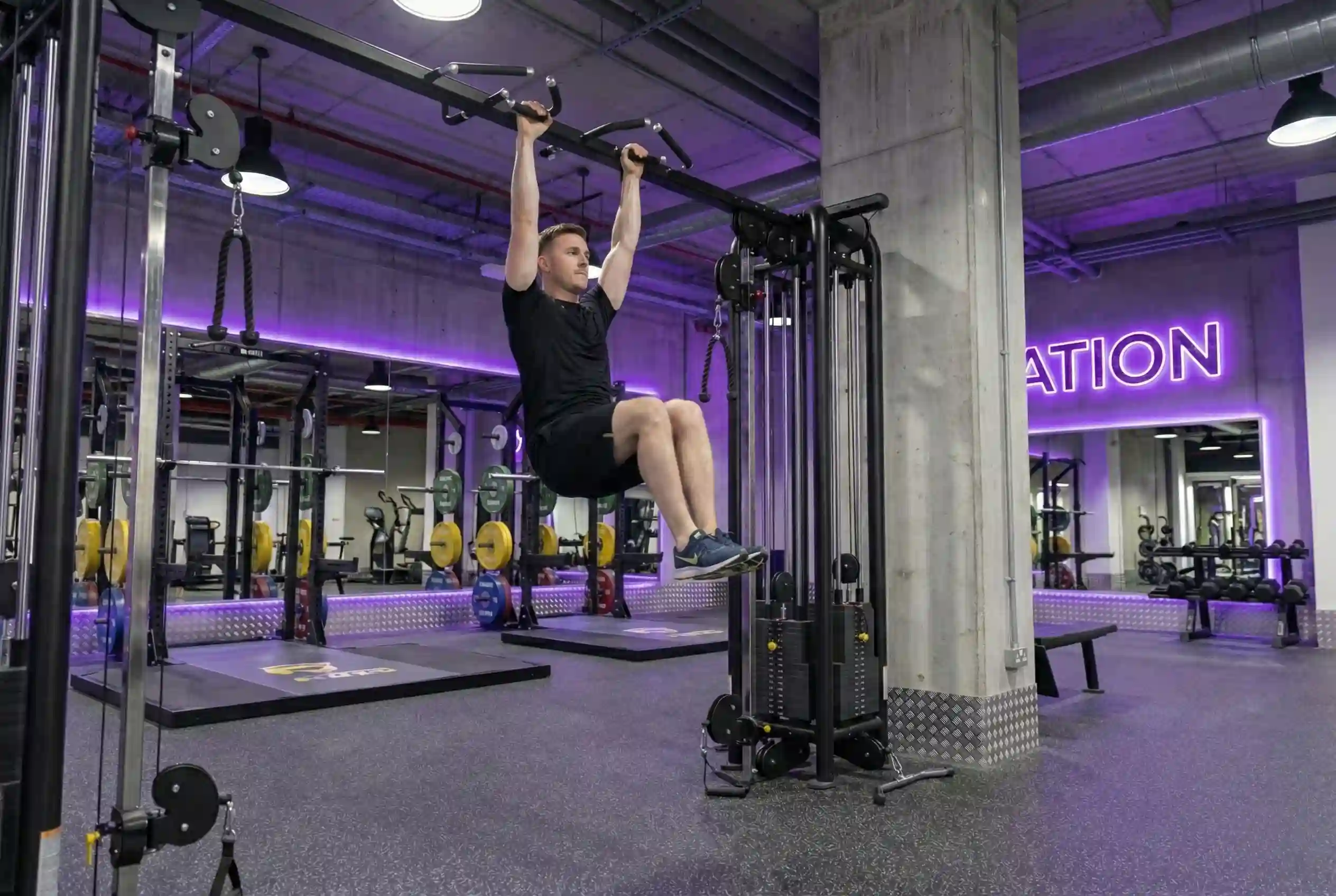
The hanging leg hip raise is one of the most advanced hanging leg raises variations, targeting the lower abs, hip flexors, abdominal muscles, and deep core muscles through controlled spinal flexion and posterior pelvic tilt. Unlike a standard hanging leg raise, which only lifts the legs to hip height, the hanging leg hip raise requires you to actively curl the pelvis upward, forcing the rectus abdominis—especially the lower portion—to contract harder.
Hanging from a pull up bar or chin-up bar places the upper body in a stable hanging position, activating the shoulder blades, lats, grip, and upper body for stability. This makes it an exceptional core workout for building a strong core, improving body control, and progressing toward harder skills such as toes to bar, strict leg lifts, v-ups, and advanced calisthenics.
This exercise fits all fitness levels. Beginners can use bent knees, intermediate lifters can raise straight legs, and advanced athletes can add ankle weights or tempo work. The key difference: a true hanging leg hip raise lifts the hips, not just the legs.
How to Perform the Hanging Leg Hip Raise:
-
Hang from a pull-up bar in a dead hang with an overhand grip, arms straight, legs together, and shoulder blades active. This starting position stabilises the core muscles and upper body.
-
Lift your legs to hip height using bent knees or straight legs, depending on mobility and strength.
-
From here, curl the hips upward, lifting the pelvis toward the rib cage. This is the essential hip flexion + spinal flexion component.
-
Pause briefly at the top to maximise tension in the abdominal muscles, especially the lower rectus abdominis.
-
Slowly lower by uncurling the hips first, then lowering the legs back into the hanging position without swinging.
-
Reset your body in a stable hang before repeating. Maintain proper form throughout.
GymNation Tip: If you start swinging, pause at the bottom before continuing. Add ankle weights or progress to straight-leg reps for a harder hanging leg raise exercise.
Personal Trainer Notes:
-
The goal is hips up, not just legs up.
-
Avoid swinging — controlled reps are essential for good form.
-
Keep the core engaged, ribs down, and shoulders tight.
-
Bent knees make the movement easier; straight legs increase difficulty.
-
Exhale as you curl.
-
Use straps if your grip fails before your abs.
-
A personal trainer can help identify common mistakes, improve technique, and teach alternative exercises like reverse crunch or captain’s chair work.
 WHATSAPP
 EMAIL
EMAIL
 SHARE VIA
Alternative Ab Exercises

Weighted Russian Twist (Legs Up)
This variation of the Russian Twist targets the obliques, rectus abdominis, and hip flexors. Elevating the legs increases core activation while the added weight boosts resistance.

Cable Vertical Pallof Press
The Cable Vertical Pallof Press strengthens the deep core stabilisers, including obliques and transverse abdominis. It’s excellent for anti-rotation strength and stability under tension.

Standing Wheel Rollout
The Standing Wheel Rollout is an advanced core movement that heavily activates the abs, shoulders, and lats. It builds serious core strength and stability when performed under control.

Front Plank
The Front Plank strengthens the entire core, including abs, obliques, lower back, and shoulders. It builds endurance and stability, key for balance and performance in all strength exercises.

Weighted Decline Sit-up
This advanced ab move targets the entire rectus abdominis while challenging stabilisers. Adding weight increases resistance, promoting stronger and more defined abs.

Hanging Toes to Bar
The Hanging Toes to Bar develops advanced core strength, flexibility, and control. It engages abs, hip flexors, and lats, making it a full upper-body challenge.

Cable Kneeling Crunch
The Cable Kneeling Crunch targets the entire rectus abdominis and obliques. Using the cable adds constant tension, ideal for developing core strength and definition. Maintain control throughout to avoid pulling with momentum.

Hollow Hold
The Hollow Hold is a bodyweight core exercise that builds isometric strength through the abs and hip flexors. It’s a key move for gymnasts and athletes aiming for superior core control.

Dead Bug
The Cable Kneeling Crunch targets the entire rectus abdominis and obliques. Using the cable adds constant tension, ideal for developing core strength and definition.
Hanging Leg Hip Raise FAQs
Yes. The hanging leg hip raise activates the hip flexors and lower abs through controlled pelvic tilt and spinal flexion, making it more effective than basic leg raises.
Both are useful:
-
Bent knees = easier pattern for beginners.
-
Straight legs = harder contraction, more core strength, and higher mobility demand.
Because you’re lifting both the legs and the hips in a hanging position. This requires strong abs, grip, shoulder stability, and full-body control.
Lift the legs first, then curl the pelvis upward. Lower slowly with full control. Avoid swinging and keep the movement focused on spinal flexion, not only hip flexion.
Yes. The hip-curling motion trains the entire rectus abdominis, including the hard-to-target lower section — essential for complete six pack muscle development.
Yes, when performed with good form and a core engaged. If you feel discomfort, regress to reverse crunch, leg lifts, or bent-knee variations.
Aim for 3–4 sets of 6–12 strict reps. Quality beats quantity.
Yes, but start with:
-
Reverse crunch
-
Bent-knee raises
-
Captain’s chair
-
Partial hanging knee raises
Progress toward straight-leg, strict reps as strength improves.