

Weighted Decline Sit-up
Weighted Decline Sit-up Video Guide
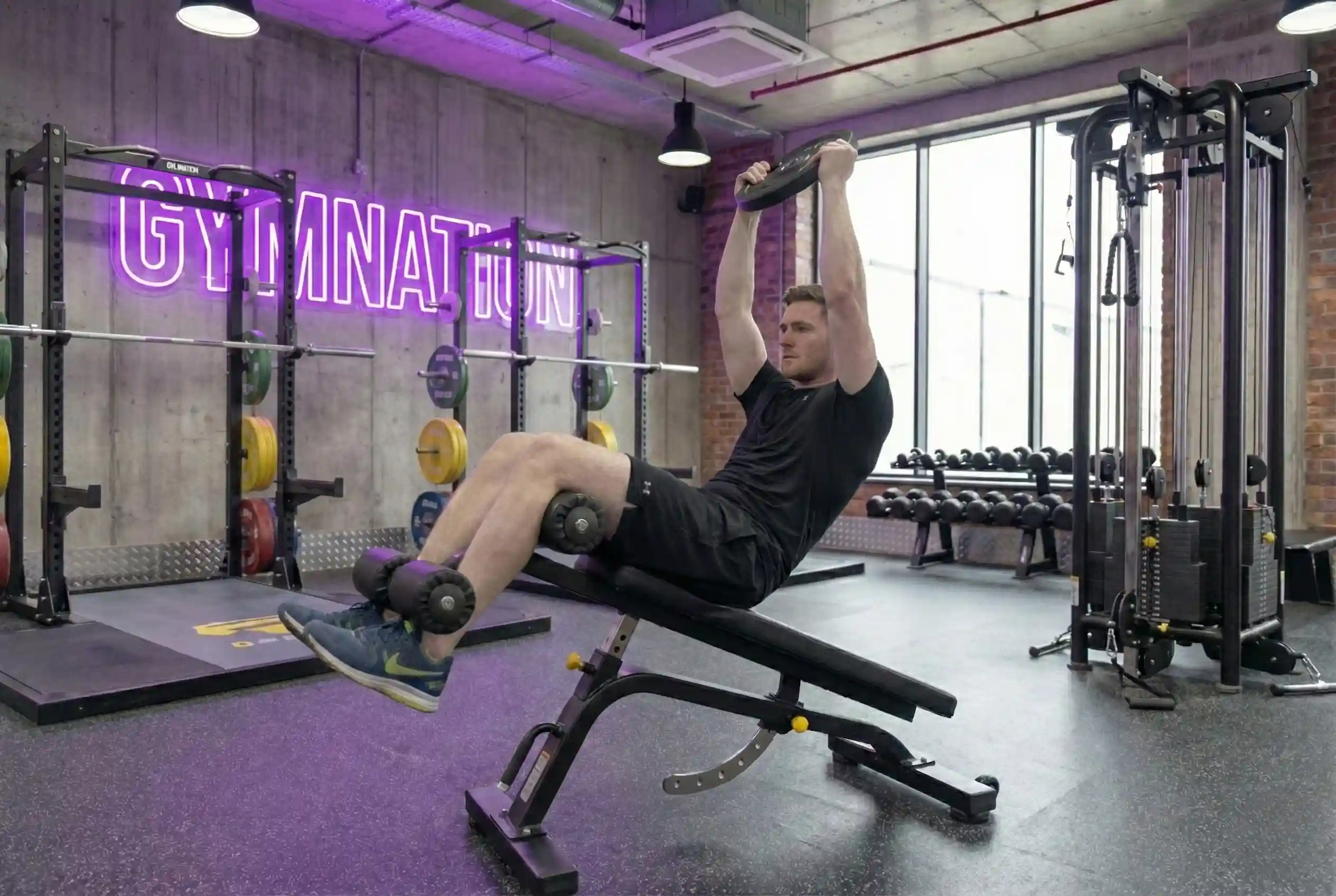
The weighted decline sit-up is a high-intensity core exercise performed on a decline bench to increase the range of motion and place greater tension on the abdominal muscles, especially the rectus abdominis. The decline bench increases difficulty compared with regular sit ups, forcing the core muscles, hip flexors, and deep stabilisers to work harder through a longer movement path.
Holding a weight plate, dumbbell, or medicine ball adds resistance, helping build stronger abs, improve hip flexion strength, and reinforce proper form for athletic training. This makes the weighted decline sit-up one of the best exercises for building a strong core, enhancing good posture, and developing more visible six-pack definition.
Beginners can start with unweighted decline sit-ups, while intermediate and advanced lifters can progress with more weight, tempo reps, or extended ranges of motion. Maintaining tension, avoiding momentum, and controlling every rep are essential for targeting the same muscles effectively without stressing the lower back.
How to Perform the Weighted Decline Sit-up:
-
Sit on a decline bench and hook your feet securely under the pads. Establish a strong starting position with your legs and hips locked in.
-
Hold a weight plate, dumbbell, or medicine ball at arm’s length or against your chest depending on your fitness level.
-
Slowly lower your torso toward the bench, keeping tension through the core, hip flexor muscles, and psoas major. Avoid relaxing at the bottom.
-
Curl your upper body back up by contracting the rectus abdominis, maintaining proper form without jerking or pulling with your neck.
-
Return to the same position at the top with control and repeat each rep with a smooth tempo.
GymNation Tip: If you feel strain in your neck, reduce load. If your hip flexors dominate, shorten the decline angle or try decline crunches instead. Slow reps deliver the best results.
Personal Trainer Notes:
-
Keep constant tension through the entire rep — never allow the core to relax.
-
Exhale as you slowly lift into the curl to improve abdominal activation.
-
Avoid using momentum, swinging, or rounding excessively through the spine.
-
Start light; only add more weight when you can maintain perfect form.
-
If your hip flexors take over, reduce the decline angle or slow the tempo.
-
A personal trainer can help correct early common mistakes and improve technique.
 WHATSAPP
 EMAIL
EMAIL
 SHARE VIA
Alternative Ab Exercises

Hanging Toes to Bar
The Hanging Toes to Bar develops advanced core strength, flexibility, and control. It engages abs, hip flexors, and lats, making it a full upper-body challenge.

Cable Vertical Pallof Press
The Cable Vertical Pallof Press strengthens the deep core stabilisers, including obliques and transverse abdominis. It’s excellent for anti-rotation strength and stability under tension.

Cable Kneeling Crunch
The Cable Kneeling Crunch targets the entire rectus abdominis and obliques. Using the cable adds constant tension, ideal for developing core strength and definition. Maintain control throughout to avoid pulling with momentum.

Weighted Russian Twist (Legs Up)
This variation of the Russian Twist targets the obliques, rectus abdominis, and hip flexors. Elevating the legs increases core activation while the added weight boosts resistance.

Standing Wheel Rollout
The Standing Wheel Rollout is an advanced core movement that heavily activates the abs, shoulders, and lats. It builds serious core strength and stability when performed under control.

Hanging Leg Hip Raise
The Hanging Leg Hip Raise strengthens the lower abs, hip flexors, and grip. It enhances core strength and control, improving performance in compound lifts and gymnastic movements.

Hollow Hold
The Hollow Hold is a bodyweight core exercise that builds isometric strength through the abs and hip flexors. It’s a key move for gymnasts and athletes aiming for superior core control.

Front Plank
The Front Plank strengthens the entire core, including abs, obliques, lower back, and shoulders. It builds endurance and stability, key for balance and performance in all strength exercises.

Dead Bug
The Cable Kneeling Crunch targets the entire rectus abdominis and obliques. Using the cable adds constant tension, ideal for developing core strength and definition.
Weighted Decline Sit-up FAQs
Yes — weighted decline sit-ups increase the range of motion and keep the abdominal muscles under tension longer than floor sit ups. The decline bench increases difficulty, making the exercise highly effective for building a stronger core and more defined six pack.
Sit on a decline bench, secure your feet, and hold a weight plate. Lower slowly, then curl back up by engaging the rectus abdominis while keeping proper form. Avoid pulling with your neck or using momentum.
Mainly the rectus abdominis, with strong involvement from the obliques, hip flexors, rectus femoris, psoas major, and other stabilising core muscles.
Yes. The added resistance increases activation, helping strengthen the core, improve posture, and build visible abdominal definition. Quality movement beats heavy weight.
For most people, yes. The decline bench increases the challenge by extending the range and keeping tension on the abs for longer. Beginners should master floor sit ups first.
No. Too much weight can overload the hip flexors, stress the lower back, and break proper form. Increase resistance gradually.
Aim for 3–4 sets of 10–15 reps. For endurance, use lighter weight and perform 15–20 slow reps.
Not recommended. Your core muscles need recovery. Train abs 2–3 times per week and combine decline sit-ups with planks, rollouts, and hanging leg raises.