

Hanging Toes to Bar
Hanging Toes to Bar Video Guide
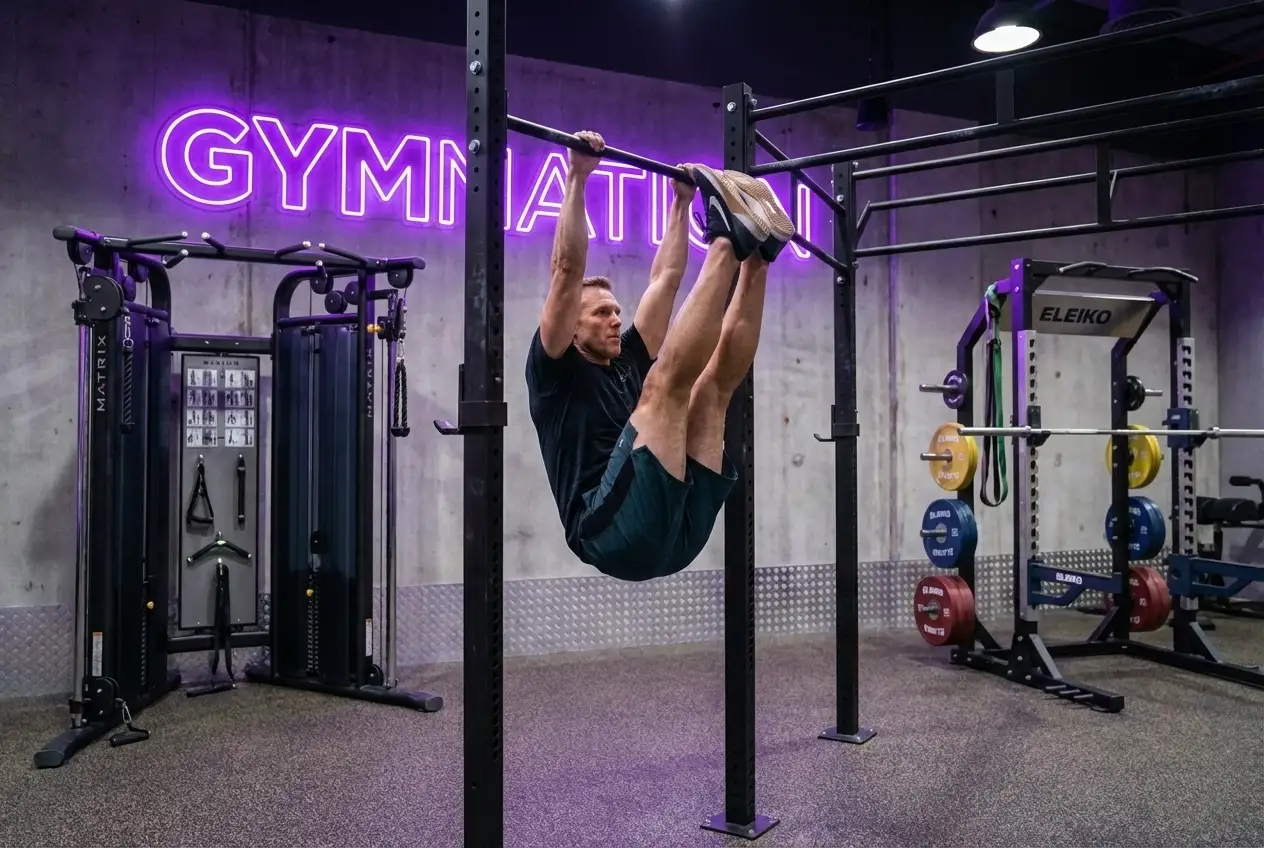
The hanging toes to bar is an advanced core exercise performed from a pull up bar, requiring strong core strength, hip flexors, straight-leg control, and full upper body strength. Unlike basic hanging leg raises, this movement demands lifting the toes all the way to the bar with straight legs, heavily engaging the rectus abdominis, lower abs, obliques, lats, shoulders, and grip strength.
Because the torso stays stable while the legs travel through a large range, the exercise trains spinal flexion, posterior pelvic tilt, and the deep core muscles responsible for midline stability. This makes it a key movement for functional fitness athletes, competitive fitness workouts, and CrossFit gymnastic skill.
It’s a natural progression after knee raises, hanging leg raises, and reverse crunch variations. The movement can be scaled for all levels: beginners can bend the knees, advanced athletes can perform strict reps or add volume for endurance. The goal is always the same — maintaining control, avoiding momentum, and keeping the core tight throughout the entire range of motion.
How to Perform the Hanging Toes to Bar:
-
Start from a dead hang with an overhand grip on the bar, hands at shoulder width. Engage the shoulders by pulling the shoulder blades down slightly (active hang).
-
Create a slight hollow position to prevent swinging and keep the core tight.
-
Raise your legs smoothly with straight legs, actively pulling with the hip flexors and lower abs.
-
Bring your toes to the bar, touching lightly while maintaining control through the upper body.
-
Lower under control, keeping tension through the whole core and avoiding kipping unless intentionally performing a kipping toes to bar variation.
-
Reset your hollow and arch positions before the next rep if needed.
GymNation Tip: If mobility or strength limits you, lift your legs as high as possible with knees slightly bent. Build strength through knee raises, active hangs, and strict hanging leg raises before progressing to full toes to bar.
Personal Trainer Notes:
-
Keep the movement strict — no swinging unless performing a kipping variation.
-
Maintain the hollow position throughout; avoid losing control in the lowering phase.
-
Strong lat activation helps stabilise the upper body.
-
If straight legs are too challenging, bend the knees to reduce leverage.
-
Exhale as you lift, inhale as you lower.
-
Build a solid base with leg raises, knee raises, and strict core work before attempting multiple reps.
-
Use straps during high rep sets if grip strength fails before the core.
 WHATSAPP
 EMAIL
EMAIL
 SHARE VIA
Alternative Ab Exercises

Weighted Decline Sit-up
This advanced ab move targets the entire rectus abdominis while challenging stabilisers. Adding weight increases resistance, promoting stronger and more defined abs.

Cable Vertical Pallof Press
The Cable Vertical Pallof Press strengthens the deep core stabilisers, including obliques and transverse abdominis. It’s excellent for anti-rotation strength and stability under tension.

Weighted Russian Twist (Legs Up)
This variation of the Russian Twist targets the obliques, rectus abdominis, and hip flexors. Elevating the legs increases core activation while the added weight boosts resistance.

Cable Kneeling Crunch
The Cable Kneeling Crunch targets the entire rectus abdominis and obliques. Using the cable adds constant tension, ideal for developing core strength and definition. Maintain control throughout to avoid pulling with momentum.

Standing Wheel Rollout
The Standing Wheel Rollout is an advanced core movement that heavily activates the abs, shoulders, and lats. It builds serious core strength and stability when performed under control.

Front Plank
The Front Plank strengthens the entire core, including abs, obliques, lower back, and shoulders. It builds endurance and stability, key for balance and performance in all strength exercises.

Hanging Leg Hip Raise
The Hanging Leg Hip Raise strengthens the lower abs, hip flexors, and grip. It enhances core strength and control, improving performance in compound lifts and gymnastic movements.

Hollow Hold
The Hollow Hold is a bodyweight core exercise that builds isometric strength through the abs and hip flexors. It’s a key move for gymnasts and athletes aiming for superior core control.

Dead Bug
The Cable Kneeling Crunch targets the entire rectus abdominis and obliques. Using the cable adds constant tension, ideal for developing core strength and definition.
Hanging Toes to Bar FAQs
They build powerful ab strength, stronger hip flexors, increased core engagement, and improved upper body strength. Because the exercise uses multiple muscle groups, it improves coordination, stability, and overall functional fitness.
The primary muscles are the rectus abdominis, lower abs, obliques, and hip flexors. Secondary muscles include the lats, shoulders, grip, and upper-body stabilisers that maintain the hanging position.
Yes — performing toes to bar through the entire range of motion strengthens the whole anterior chain. It’s one of the most effective hanging leg raise progressions for core strength and functional athletic performance.
It’s an advanced movement requiring straight-leg strength, active shoulder stability, controlled hip flexion, and strong grip. Most athletes master bent-knee raises first before progressing to the strict version.
Yes — consistent practice improves hamstring flexibility, hip flexion mobility, and active control in both the hollow and arch positions.
Typically due to poor scapular engagement. Keep the shoulder blades active, reduce swinging, and focus on maintaining proper form throughout the movement.
Aim for 3–4 sets of 6–12 reps, depending on technique and fitness level. Focus on maintaining control in the lowering phase rather than rushing reps.
Yes — with progressions. Start with knee raises, partial leg raises, or reverse crunch variations. Build up to hanging leg raises, then attempt partial toes to bar before performing full strict reps.