

Hollow Hold
Hollow Hold Video Guide
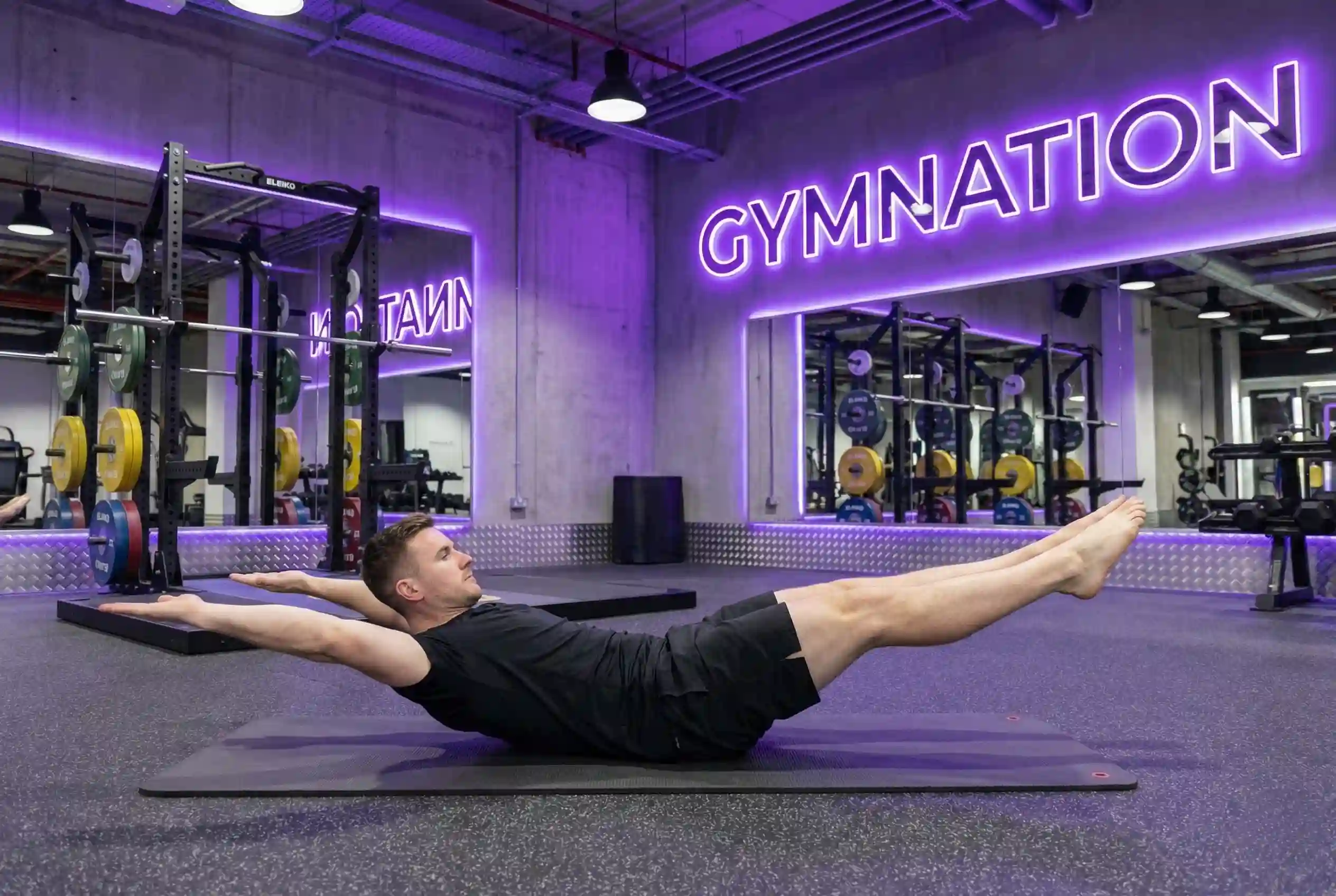
The hollow hold (also called the hollow body hold) is a foundational core exercise that develops isometric strength through the rectus abdominis, transverse abdominis, obliques, hip flexors, and deep stabilisers across the entire core. It is one of the most effective core exercises for teaching full-body tension and maintaining a strong hollow hold position with the shoulder blades lifted and the lower back pressed firmly into the floor.
Unlike traditional ab exercises, the hollow body shape trains the body to resist extension, maintain a neutral alignment, and create tension through multiple muscle groups at once. This transfers directly to movements like leg raises, pull ups, toes-to-bar, L-sits, handstands, and strength training where a strong core and stable midline are essential.
The hollow hold is suitable for all levels — beginners can use bent knees, arms forward, or shorter lever lengths, while advanced variations like the weighted hollow hold or full hollow body hold increase intensity. Maintaining good form matters more than long reps: even short static holds create significant core strength, prevent injury, and reduce lower back pain when performed correctly.
How to Perform the Hollow Hold:
-
Start by lying flat on your back on the floor or a mat with legs extended and arms overhead (starting position).
-
Lift your shoulder blades, arms, and legs a few inches off the ground while keeping the arms straight and legs extended.
-
Press your lower back firmly into the floor, avoid arching, and engage the abdominal muscles to create the hollow body shape.
-
Maintain full-body tension, keeping the belly button pulled down and the hollow shape steady.
-
Hold the hollow hold position, breathing steadily and maintaining neutral alignment for the entire hold.
GymNation Tip: If you lose tension or your lower back lifts, regress by bending the knees, keeping one leg down, or lowering the arms.
Personal Trainer Notes:
-
Keep your lower back glued to the floor — the defining cue of the hollow body hold.
-
Maintain full-body tension to work the entire core.
-
Avoid neck strain — keep a neutral head position.
-
Don’t let the legs drop or the ribs flare.
-
Short, perfect holds deliver better results than long holds with poor form.
-
Great for developing midline strength, stability, and control for both athletic movements and daily life.
 WHATSAPP
 EMAIL
EMAIL
 SHARE VIA
Alternative Ab Exercises

Hanging Toes to Bar
The Hanging Toes to Bar develops advanced core strength, flexibility, and control. It engages abs, hip flexors, and lats, making it a full upper-body challenge.

Weighted Decline Sit-up
This advanced ab move targets the entire rectus abdominis while challenging stabilisers. Adding weight increases resistance, promoting stronger and more defined abs.

Cable Vertical Pallof Press
The Cable Vertical Pallof Press strengthens the deep core stabilisers, including obliques and transverse abdominis. It’s excellent for anti-rotation strength and stability under tension.

Weighted Russian Twist (Legs Up)
This variation of the Russian Twist targets the obliques, rectus abdominis, and hip flexors. Elevating the legs increases core activation while the added weight boosts resistance.

Standing Wheel Rollout
The Standing Wheel Rollout is an advanced core movement that heavily activates the abs, shoulders, and lats. It builds serious core strength and stability when performed under control.

Cable Kneeling Crunch
The Cable Kneeling Crunch targets the entire rectus abdominis and obliques. Using the cable adds constant tension, ideal for developing core strength and definition. Maintain control throughout to avoid pulling with momentum.

Hanging Leg Hip Raise
The Hanging Leg Hip Raise strengthens the lower abs, hip flexors, and grip. It enhances core strength and control, improving performance in compound lifts and gymnastic movements.

Front Plank
The Front Plank strengthens the entire core, including abs, obliques, lower back, and shoulders. It builds endurance and stability, key for balance and performance in all strength exercises.

Dead Bug
The Cable Kneeling Crunch targets the entire rectus abdominis and obliques. Using the cable adds constant tension, ideal for developing core strength and definition.
Hollow Hold FAQs
A hollow hold is an isometric core exercise where you create a hollow body shape by lifting your legs, arms, and shoulder blades while keeping the lower back pressed into the floor. It trains the rectus abdominis, transverse abdominis, obliques, and hip flexors while improving stability across multiple muscle groups.
They train different patterns. A plank builds shoulder stability and anti-extension strength; the hollow hold builds full-body tension, lower-abs activation, and teaches control that improves pull ups, leg raises, and gymnastics skills.
Begin with 20–30 seconds, progressing to 45–60 seconds with good form. Maintain tension — don’t allow the lower back to arch.
Yes — it targets the upper and lower abs, hip flexors, obliques, and deep stabilisers, making it one of the best core-tension drills for a six pack and functional strength.
It requires simultaneous contraction of the abs, hip flexors, quads, arms, and back muscles while maintaining a rigid hollow shape. This makes it harder than most traditional ab exercises.
Yes — start with knees bent, arms forward, one leg lowered, or regressions like dead bugs. Progress by extending limbs further over time.
2–3 times per week as part of a core workout routine or conditioning block.
The hollow hold works the rectus abdominis, transverse abdominis, obliques, hip flexors, inner thighs, quads, and back muscles, engaging multiple muscle groups at once.
A progression where you add a small dumbbell or plate to increase tension across the whole core.
Yes, when performed with proper form. If you experience back pain or neck pain, reduce the lever length or consult a professional.