


Cable Decline Fly
Cable Decline Fly Video Guide
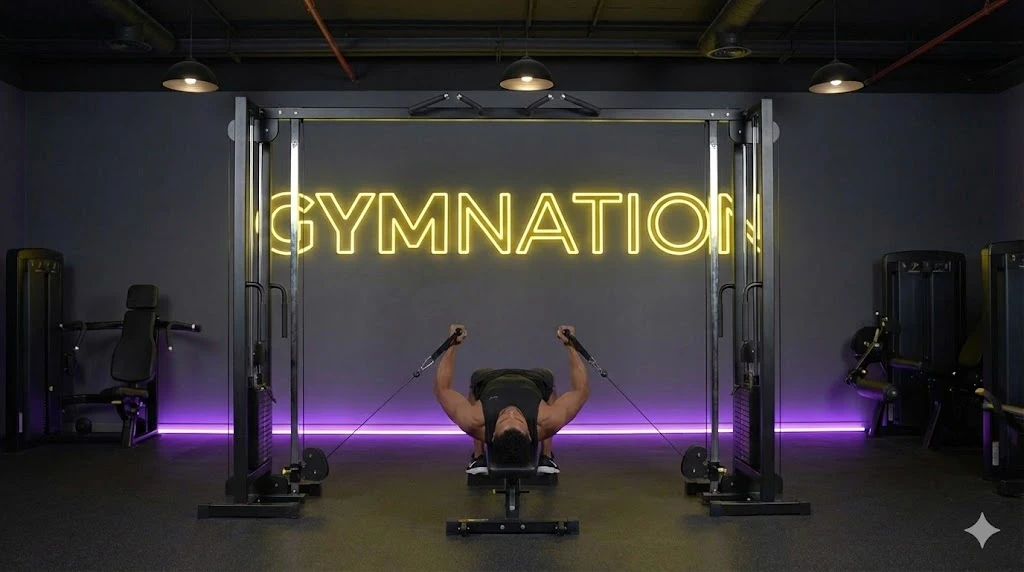
The cable decline fly is a chest isolation exercise performed on a cable machine that primarily targets the lower chest, specifically the sternal head of the pectoralis major. Unlike pressing movements, this fly movement emphasises chest adduction rather than elbow extension, keeping continuous tension on the chest muscles throughout the entire range of motion.
Because cables maintain resistance from the starting position to full contraction, the cable decline fly is highly effective for muscle activation, hypertrophy, and chest development. The decline angle shifts stress away from the shoulder joints and upper chest, allowing the lower chest to take on more of the workload while reducing excessive shoulder involvement. Secondary muscles—including the anterior deltoids, biceps, forearms, and core—assist to stabilise the body and maintain proper position.
This exercise is commonly programmed in chest workout routines as a finishing movement and pairs well with compound lifts such as the barbell bench press, incline presses, chest dips, and dumbbell fly variations. It can also be adapted for home workouts using resistance bands, which provide similar muscle engagement and constant tension when a cable machine is not available.
How to Perform the Cable Decline Fly:
-
Set the starting position by adjusting the pulleys to the highest setting on the cable machine. Stand centrally between the cable stacks and take one step forward into a staggered stance, placing one foot forward to improve balance and stability. Lean forward slightly to align your torso and prepare for the decline fly movement.
-
Grab the cable handles with palms facing inward and wrists neutral. Extend the arms out to your sides with a slight bend in your elbows, keeping the upper arms in line with the shoulders. Pull the shoulder blades down and back to stabilise the shoulder joints and maintain control.
-
Inhale and allow the arms to open outward in a wide, controlled arc. Keep tension on the chest as the arms move toward a fully extended position at the sides, avoiding excessive stretch or loss of posture.
-
Exhale and squeeze your chest to bring the handles downward and together in a smooth fly movement. Focus on chest adduction rather than pressing, bringing the hands together below chest level in a straight, controlled line.
-
Slowly return to the starting position under control, maintaining tension and a slight bend in the elbows. Repeat for smooth, even reps.
Personal Trainer Notes:
-
Maintain a slight bend in the elbows throughout the movement to protect the shoulder joints
-
Avoid turning the fly into a pressing motion
-
Use lighter resistance to maintain control and increase time under tension
-
Keep the core tight and body stable, especially in standing decline cable variations
-
Focus on slow eccentrics to maximise chest engagement
 WHATSAPP
 EMAIL
EMAIL
 SHARE VIA
Alternative Chest Exercises

Dumbbell Incline Fly
The Dumbbell Incline Fly isolates the upper chest (clavicular pectorals) with support from the shoulders (anterior deltoids). It enhances muscle definition and helps develop upper chest control.

Dumbbell Fly
The Dumbbell Fly targets the chest (pectorals) while also involving the shoulders (anterior deltoids) and arms (biceps). It’s designed to stretch and contract the chest muscles through a wide range, improving flexibility and muscle tone.

Barbell Incline Bench Press
The Barbell Incline Bench Press targets the upper chest (clavicular pectorals) and front shoulders (anterior deltoids), with support from the triceps. It’s ideal for developing shape and definition across the upper chest.

Barbell Bench Press
The Barbell Bench Press strengthens the chest (pectorals), shoulders (anterior deltoids) and arms (triceps). It’s one of the most effective upper-body lifts for building power and muscle size.

Smith Bench Press
The Smith Bench Press is a smith machine exercise that targets your pectorals. It also recruits the anterior deltoids and triceps to keep you stable and moving well from start to finish.

Dumbbell Pullover
The Dumbbell Pullover is a dumbbell exercise that targets your pectorals. It also recruits the anterior deltoids and triceps to keep you stable and moving well from start to finish.

Decline Push-Up
The Decline Push-Up is a bodyweight exercise that targets your pectorals. It also recruits the anterior deltoids and triceps to keep you stable and moving well from start to finish.

Cable Lying Fly
The Cable Lying Fly is a cable exercise that targets your pectorals. It also recruits the anterior deltoids and triceps to keep you stable and moving well from start to finish.
Cable Decline Fly FAQs
The decline cable fly primarily targets the lower chest, with secondary involvement from the anterior deltoids, biceps, forearms, and core for stabilisation. Research shows decline fly variations emphasise the lower pecs more than flat fly movements.
The decline angle shifts emphasis toward the lower chest by reducing shoulder dominance. Decline dumbbell bench press—using a barbell or dumbbells—is another effective option for increasing lower chest thickness and strength.
Cable flyes mainly work the chest muscles, while the front delts, biceps, and core assist with stability. Adjusting cable height changes which part of the chest is emphasised.
Set the pulleys high, maintain a bend in your elbows, bring the arms together in a controlled fly movement, squeeze the chest at the bottom, and slowly return under tension. Avoid excessive weight to maintain proper form.
Using too much weight, locking the elbows, turning the movement into a press, losing shoulder blade control, and rushing the eccentric phase.
There is no single best variation:
-
Low-to-high → upper chest
-
Mid-level → mid chest
-
High-to-low (decline) → lower chest
Rotating angles supports balanced chest development.
Cable flyes provide constant tension and smoother resistance, while dumbbell flyes offer a deeper stretch but less tension at the top. Both provide similar muscle engagement and work best together.
Flyes are excellent for isolation and hypertrophy, but maximal chest size is best achieved by combining flyes with pressing exercises using barbells or dumbbells.
Reverse cable flyes target the rear delts and upper back, supporting shoulder health rather than chest growth.
Effective alternatives include resistance bands, dumbbell flyes, machine pec deck, and decline dumbbell bench press. Resistance bands are the closest substitute, offering continuous tension similar to cables.
At home, you can use resistance bands for flyes, perform dumbbell flyes, or do incline push ups, which reduce load while targeting the lower chest, shoulders, and triceps.