

Dumbbell Incline Bench Press
Dumbbell Incline Bench Press Video Guide
The dumbbell incline bench press is a key upper-chest exercise that targets the upper chest muscles (clavicular head of the pectoralis major), anterior deltoids, and triceps while improving shoulder stability and pressing strength. Compared to the barbell press, the dumbbell version requires more stabilisation, typically uses less weight, and activates more supporting muscles, making it ideal for addressing strength imbalances and improving overall muscle engagement.
This is a compound exercise that works multiple muscle groups at once, including the upper chest, front delts, shoulders, and triceps. Using an incline bench set between 30–45° shifts the pressing movement upward so the upper pecs and supporting shoulder muscles work harder than during a flat bench press. Compared to the incline barbell press, the dumbbell version demands more stability and control, while the barbell allows heavier loading with less balance requirement. Increasing bench angle or resistance increases force demand, which can enhance muscle activation and strength gains when managed correctly.
The muscles worked by the dumbbell incline bench press include the clavicular head, anterior deltoids, shoulders, and triceps. Because each arm presses independently, the exercise helps correct left-right strength imbalances, improves stabilisation, and ensures both arms contribute equally to the movement. This makes it particularly effective for addressing a weaker side.
The independent path of two dumbbells allows a greater range of motion than barbell variations and encourages improved control throughout the lift. While this usually means lifting less weight, it enhances muscle activation and joint control. The incline dumbbell bench press can be adapted for muscle growth, strength, or endurance by adjusting load, reps, or bench angle, making it one of the best exercises for upper chest development.
Common mistakes include using excessive weight, losing shoulder blade control, or failing to engage stabilising muscles. Starting with manageable loads and prioritising proper form significantly reduces injury risk and improves long-term progress. Variations such as grip changes or bench-angle adjustments can further refine upper-chest focus.
How to Perform the Dumbbell Incline Bench Press:
These steps apply to the dumbbell incline bench press, incline dumbbell press, and incline dumbbell chest press.
-
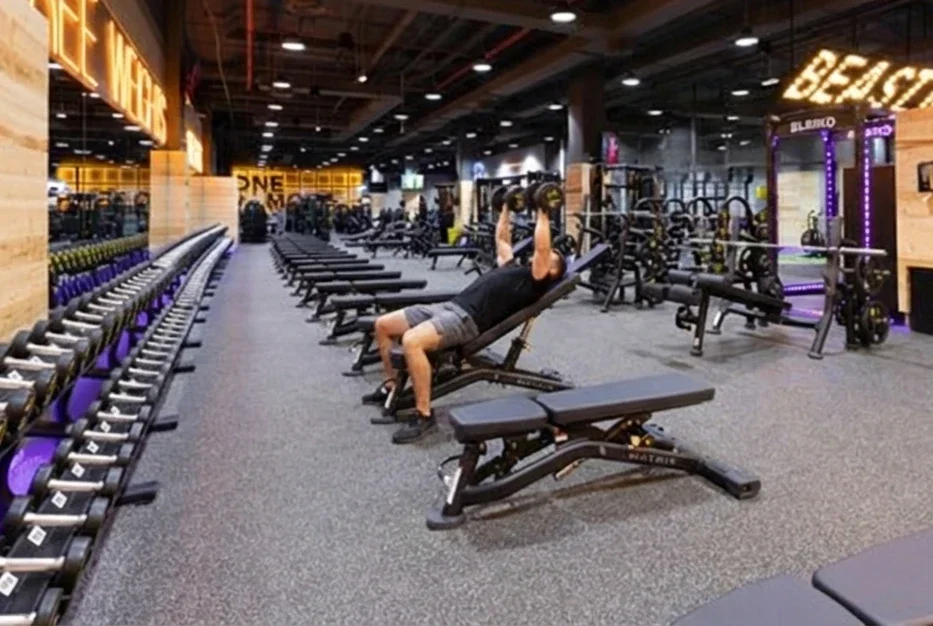
Set an incline or adjustable bench to 30–45° and sit with dumbbells resting on your thighs.
-
Lie back and bring the dumbbells to the starting position, holding them above your shoulders with palms facing forward.
-
Press both dumbbells upward until the arms are almost straight.
-
Slowly lower the weights until the elbows dip slightly below shoulder level, keeping elbows tucked.
-
Press through the same path, maintaining control and constant tension on the upper chest.
GymNation Tip: Keep shoulder blades retracted, wrists straight, and feet planted firmly to improve stability and proper form.
Personal Trainer Notes:
-
Maintain a consistent range of motion — no bouncing at the bottom
-
Keep dumbbells aligned over the chest, not drifting backward
-
Drive evenly through both arms to avoid compensations
-
Focus on upper-chest engagement, not simply lifting more weight
-
Ideal for chest day when prioritising the clavicular head of the pectoralis major
 WHATSAPP
 EMAIL
EMAIL
 SHARE VIA
Alternative Chest Exercises

Dumbbell Decline Bench Press
The Dumbbell Decline Bench Press focuses on the lower chest (pectorals) while engaging the triceps and shoulders (anterior deltoids). It helps shape and strengthen the lower pecs and improves pressing balance between sides. Keep your movements steady to maintain control.

Cable Decline Fly
The Cable Decline Fly is a cable exercise that targets your pectorals. It also recruits the anterior deltoids and triceps to keep you stable and moving well from start to finish.

Barbell Decline Bench Press
The Barbell Decline Bench Press targets the lower chest (lower pectorals) while also engaging the triceps and shoulders (anterior deltoids). The decline angle reduces shoulder strain and shifts more load to the lower pec fibres.

Smith Decline Bench Press
The Smith Decline Bench Press is a smith machine exercise that targets your pectorals. It also recruits the anterior deltoids and triceps to keep you stable and moving well from start to finish.

Dumbbell Decline Fly
The Dumbbell Decline Fly is a dumbbell exercise that targets your pectorals. It also recruits the anterior deltoids and triceps to keep you stable and moving well from start to finish.

Cable Middle Fly
The Cable Middle Fly is a cable exercise that targets your pectorals. It also recruits the anterior deltoids and triceps to keep you stable and moving well from start to finish.

Cable Low Fly
The Cable Low Fly is a cable exercise that targets your pectorals. It also recruits the anterior deltoids and triceps to keep you stable and moving well from start to finish.
Dumbbell Incline Bench Press FAQs
Yes — it’s one of the most effective chest exercises for upper-chest development. The incline angle loads the clavicular head while involving the anterior deltoids and triceps in a powerful pressing movement.
30–35° is optimal for upper-chest emphasis.
40–45° increases shoulder involvement with slightly less chest activation.
Primarily the upper pecs, with assistance from the sternal head, anterior deltoids, triceps, and stabilising upper-body muscles.
For many lifters, 20 kg dumbbells performed with strict form represents a solid intermediate strength level.
Neither is superior. Flat bench targets the mid-chest; incline prioritises the upper chest. Both should be included for complete chest development.
No. Touching reduces tension. Keep them slightly apart to maintain constant chest engagement.
-
Muscle growth: 3–4 sets of 8–12 reps
-
Strength: 4–5 sets of 4–6 reps