

Smith Decline Bench Press
Smith Decline Bench Press Video Guide
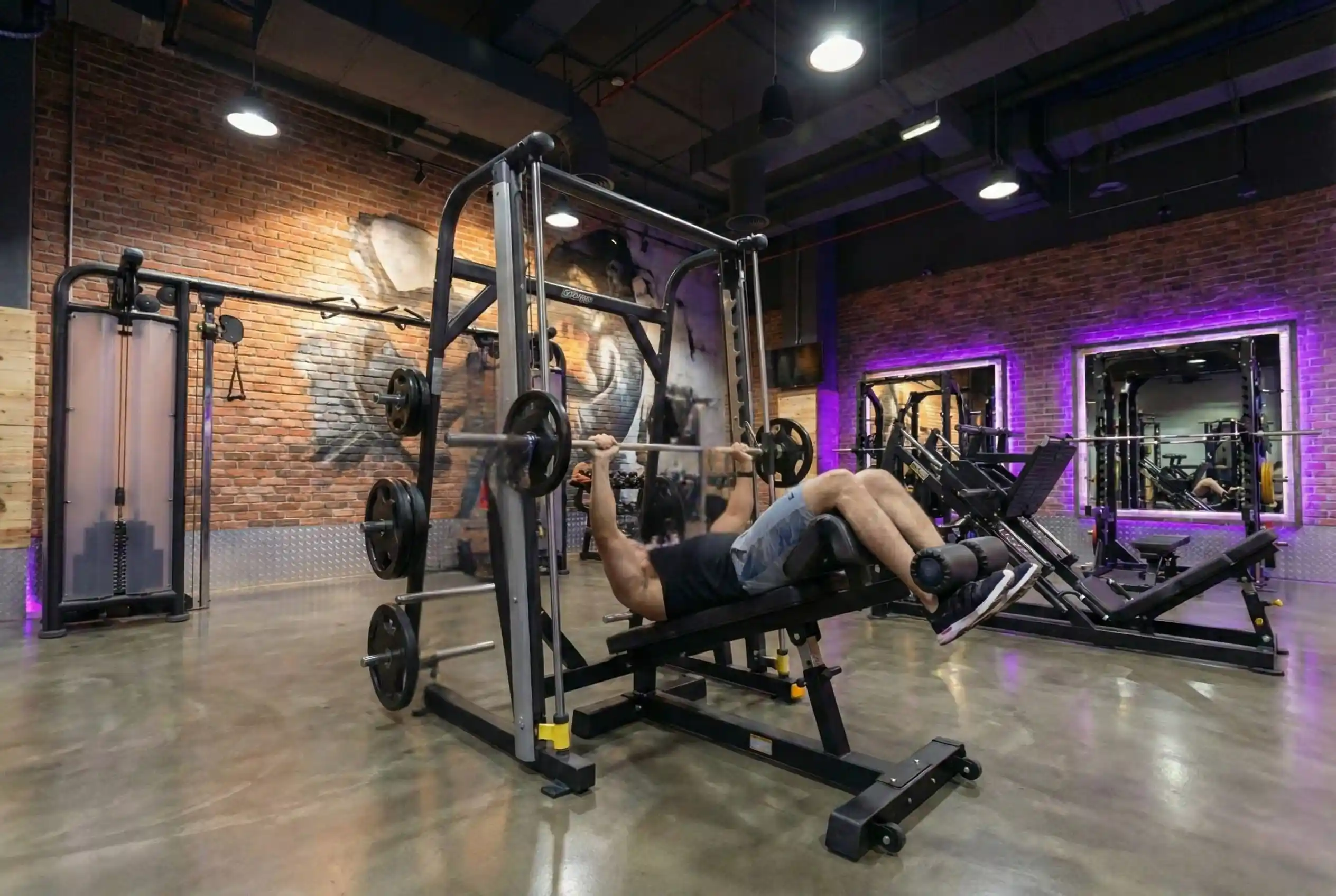
The Smith decline bench press is a compound chest exercise performed on a Smith machine using a decline bench position. It primarily targets the lower chest muscles, specifically the sternal head of the pectoralis major, while also engaging the triceps and anterior deltoids as secondary muscles. The decline position shifts pressing emphasis away from the shoulders and toward the chest, making this variation popular for lifters seeking lower-chest development with reduced shoulder strain.
Because the Smith machine uses a fixed bar path, the Smith decline bench press allows for controlled reps, consistent bar positioning, and safer training close to failure without a spotter. Compared to a free-weight decline bench press, stabiliser muscle demand is lower, which can help lifters focus on chest tension, controlled tempo, and hypertrophy rather than balance.
The Smith decline bench press is often included alongside flat bench, incline bench press, dips, and high-to-low cable work in chest-focused training programs. While it should not fully replace free-weight pressing for strength development, it is an effective variation for building muscle, increasing volume, and targeting the lower chest with precision.
How to Perform the Smith Decline Bench Press:
-
Set the decline bench under the Smith machine so your feet are secured and your head is positioned slightly lower than your hips. Lie back with your head supported, core braced, and feet locked into the foot pads.
-
Grip the Smith machine bar with an overhand grip at about shoulder width. Pull your shoulder blades down and back into the bench to stabilise the shoulders and create a strong pressing base.
-
Unrack the bar and inhale as you slowly lower it in a controlled motion toward the lower portion of the chest. Keep the elbows slightly tucked and wrists stacked over the forearms.
-
Pause briefly at the bottom to maintain tension through the chest muscles. Avoid bouncing the bar or relaxing at the lowest point.
-
Exhale and press the bar upward along the fixed path until the arms are extended but not locked out. Focus on squeezing the pecs rather than pushing with the shoulders.
-
Control the descent on each rep and repeat for smooth, even repetitions using proper form and manageable weight.
Personal Trainer Notes:
-
Align the bench so the bar tracks naturally over the lower chest
-
Keep shoulder blades pinned to protect the shoulders
-
Maintain a controlled tempo, especially on the lowering phase
-
Avoid flaring the elbows or locking out aggressively
-
Reduce load if joint discomfort appears
 WHATSAPP
 EMAIL
EMAIL
 SHARE VIA
Alternative Chest Exercises

Dumbbell Fly
The Dumbbell Fly targets the chest (pectorals) while also involving the shoulders (anterior deltoids) and arms (biceps). It’s designed to stretch and contract the chest muscles through a wide range, improving flexibility and muscle tone.

Smith Bench Press
The Smith Bench Press is a smith machine exercise that targets your pectorals. It also recruits the anterior deltoids and triceps to keep you stable and moving well from start to finish.

Cable Lying Fly
The Cable Lying Fly is a cable exercise that targets your pectorals. It also recruits the anterior deltoids and triceps to keep you stable and moving well from start to finish.

Cable Crossover Variation
The Cable Crossover Variation is a cable exercise that targets your pectorals. It also recruits the anterior deltoids and triceps to keep you stable and moving well from start to finish.

Push-up
The Push-up is a bodyweight exercise that builds strength in the chest (pectorals), shoulders (deltoids), arms (triceps), and core (abdominals).

Dumbbell Incline Bench Press
The Dumbbell Incline Bench Press works the upper chest (clavicular pectorals), shoulders (anterior deltoids), and triceps. It helps improve upper chest definition and balance between sides while building pressing power.

Dumbbell Decline Fly
The Dumbbell Decline Fly is a dumbbell exercise that targets your pectorals. It also recruits the anterior deltoids and triceps to keep you stable and moving well from start to finish.

Cable Low Fly
The Cable Low Fly is a cable exercise that targets your pectorals. It also recruits the anterior deltoids and triceps to keep you stable and moving well from start to finish.
Smith Decline Bench Press FAQs
Yes. A decline bench press can be safely performed on a Smith machine using a decline bench or by angling the bench correctly under the bar.
Yes. It’s effective for lower-chest hypertrophy, controlled loading, and training close to failure with less shoulder strain than flat or incline pressing.
It primarily targets the lower chest (sternal head of the pectoralis major), with assistance from the triceps and anterior deltoids.
Yes. The Smith machine is suitable for bench pressing, especially for hypertrophy, controlled reps, and solo training without a spotter. It is not a direct replacement for free-weight benching.
No. Smith machine bars vary by manufacturer and typically weigh between 6–15 kg. Always check the machine label.
Only standard Olympic barbells weigh 20 kg. Smith machine bars and fixed bars often weigh less.
It counts on that specific machine, but it does not equal a 225 lb free-weight bench press due to reduced stabilisation and possible counterbalance.
Most people are stronger on decline because the range of motion is shorter, shoulder involvement is reduced, and chest mechanics are more favourable.
No. Alternatives include dips, high-to-low cable flyes, decline push-ups, and ring push-ups.
Reduced stabiliser activation, limited carryover to free-weight strength, and potential joint stress if bench position or bar path is incorrect.
Yes. Some Smith machines have an angled bar path. The bench must be positioned so the bar moves naturally over the chest, not toward the neck or stomach.