

Dumbbell Decline Fly
Dumbbell Decline Fly Video Guide
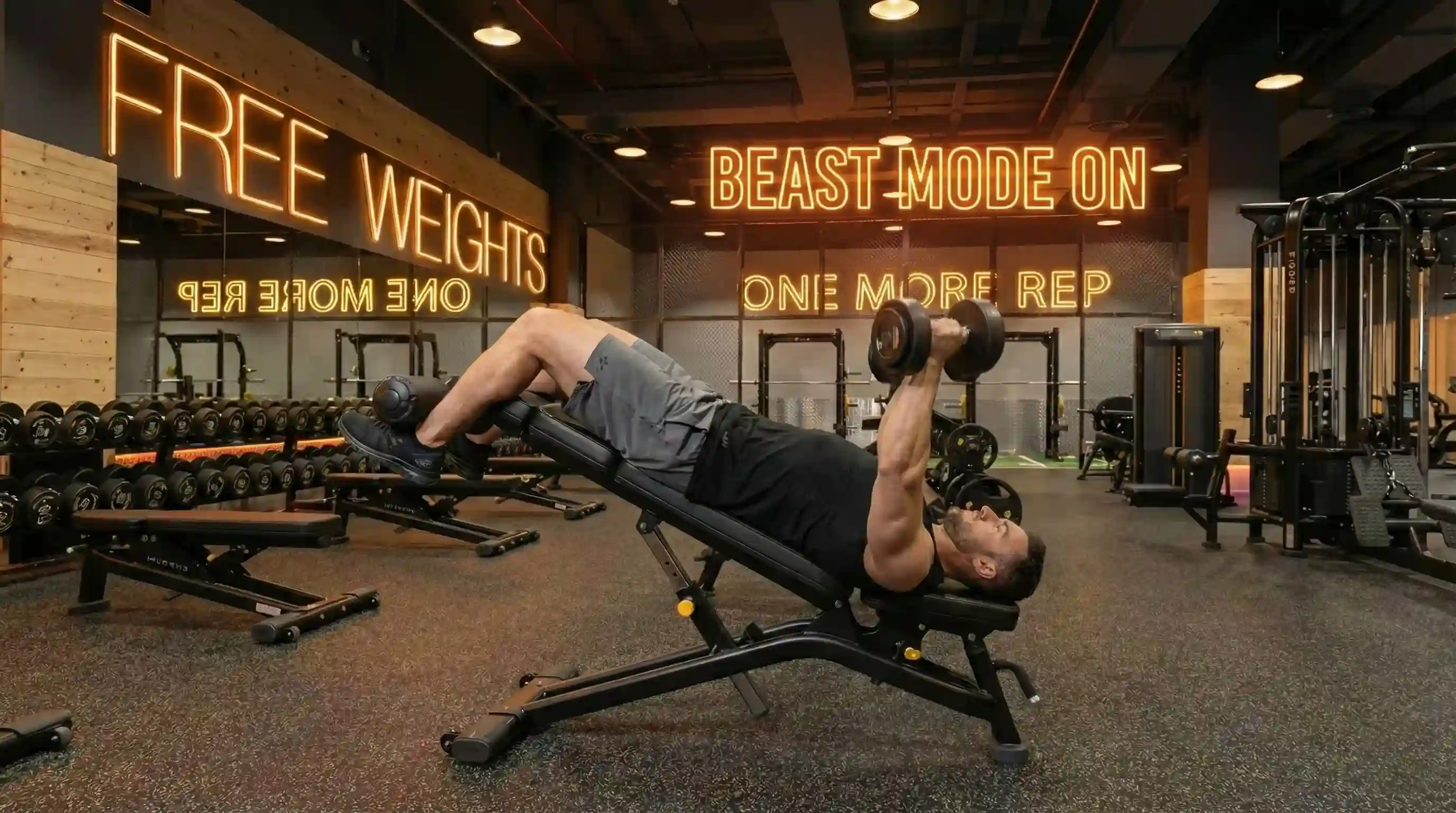
The dumbbell decline fly is a chest isolation exercise performed on a decline bench that primarily targets the lower chest muscles, specifically the sternal head of the pectoralis major. By using dumbbells rather than a cable machine, this movement allows for a deep stretch and a wide arc motion, making it effective for chest development, muscle definition, and improving mind–muscle connection.
Compared to flat bench or incline dumbbell fly variations, the decline angle shifts more emphasis toward the lower chest, while often reducing shoulder strain for many lifters. Because this exercise focuses on chest adduction rather than pressing, it is best used as an accessory movement after bench presses or other compound chest exercises rather than as a primary strength builder.
Secondary muscles involved include the anterior deltoids, biceps, forearms, and triceps, which act as stabilisers. Proper shoulder retraction, controlled tempo, and maintaining a slight bend in the elbows are essential to prevent upper back pain and reduce stress on the shoulder muscles. When performed with lighter weights and correct form, the dumbbell decline fly is an effective exercise for building lower-chest thickness while minimising injury risk.
This movement is commonly included in strength training and hypertrophy programs, particularly in home gym setups where a cable machine may not be available. Dumbbell fly variations such as the flat bench fly, incline fly, and decline fly each target different portions of the chest, allowing for balanced chest development when rotated correctly.
How to Perform the Dumbbell Decline Fly:
-
Set the starting position by lying back on a decline bench with your feet firmly secured and planted on the ground for maximum stability. Hold one dumbbell in each hand with palms facing each other, arms extended above the chest at shoulder level.
-
Pull the shoulder blades down and back to stabilise the upper back. Keep the head supported on the bench and maintain tension through the upper body before initiating the movement.
-
With elbows slightly bent, inhale and slowly lower the dumbbells outward in a wide arc. Keep the same arc motion throughout the descent and lower until you feel a deep stretch in the lower chest muscles.
-
Avoid letting the elbows drop excessively below shoulder level or changing the elbow angle, as this increases stress on the shoulder joint and biceps.
-
Exhale and bring the dumbbells back together above the chest using the same arc motion, focusing on squeezing the lower chest rather than pushing with the arms.
-
Control the movement through the full range, maintain constant tension, and repeat for smooth, controlled repetitions.
GymNation Tip: Choose a weight that allows you to maintain proper form and control throughout the exercise. Using an appropriate weight helps prevent injury and ensures effective muscle engagement.
Personal Trainer Notes:
-
Maintain a slight bend in the elbows at all times
-
Use lighter weights to prioritise control and muscle growth
-
Always use less load than you would for pressing exercises to help prevent injury and maintain proper form
-
Focus on stretch and contraction, not lifting heavier load
-
Keep shoulder blades retracted to protect the shoulders
-
Avoid turning the fly into a press
-
Move slowly to maximise tension and chest activation
 WHATSAPP
 EMAIL
EMAIL
 SHARE VIA
Alternative Chest Exercises

Barbell Incline Bench Press
The Barbell Incline Bench Press targets the upper chest (clavicular pectorals) and front shoulders (anterior deltoids), with support from the triceps. It’s ideal for developing shape and definition across the upper chest.

Smith Decline Bench Press
The Smith Decline Bench Press is a smith machine exercise that targets your pectorals. It also recruits the anterior deltoids and triceps to keep you stable and moving well from start to finish.

Smith Bench Press
The Smith Bench Press is a smith machine exercise that targets your pectorals. It also recruits the anterior deltoids and triceps to keep you stable and moving well from start to finish.

Cable Decline Fly
The Cable Decline Fly is a cable exercise that targets your pectorals. It also recruits the anterior deltoids and triceps to keep you stable and moving well from start to finish.

Dumbbell Decline Bench Press
The Dumbbell Decline Bench Press focuses on the lower chest (pectorals) while engaging the triceps and shoulders (anterior deltoids). It helps shape and strengthen the lower pecs and improves pressing balance between sides. Keep your movements steady to maintain control.

Chest Dip
The chest dip is one of the most effective upper-body body-weight exercises for building the chest muscles,

Dumbbell Incline Fly
The Dumbbell Incline Fly isolates the upper chest (clavicular pectorals) with support from the shoulders (anterior deltoids). It enhances muscle definition and helps develop upper chest control.

Push-up
The Push-up is a bodyweight exercise that builds strength in the chest (pectorals), shoulders (deltoids), arms (triceps), and core (abdominals).

Dumbbell Bench Press
The Dumbbell Bench Press builds strength through the chest (pectorals), shoulders (anterior deltoids), and triceps. Using dumbbells allows greater range of motion and helps correct imbalances between sides.
Dumbbell Decline Fly FAQs
The decline dumbbell fly primarily targets the lower chest, specifically the sternal head of the pectoralis major. Decline dumbbell flyes work the lower chest and stability muscles, and the exercise requires less weight than pressing movements, making it ideal for higher repetitions and muscle hypertrophy. Secondary muscles include the shoulders, biceps, and forearms for stability.
Yes. Decline dumbbell flyes are effective for lower-chest hypertrophy, especially when used after bench presses or other compound chest exercises.
Yes. The decline angle places more emphasis on the lower chest, making decline flyes and decline bench presses effective for developing that area.
Incline flyes emphasise the upper chest, flat flyes target the mid-chest, and decline flyes focus on the lower chest. Each variation serves a specific purpose.
Dumbbell flyes provide a deeper stretch, while cable flyes offer constant tension. Both are effective and work best when combined. Dumbbells force each side to work independently, helping to correct strength imbalances between the left and right sides.
Flyes can improve muscle definition and chest development, but maximum size and strength are best achieved by combining flyes with pressing movements. The fly motion provides a greater range of motion and stretch than presses, which is important for muscle hypertrophy.
When performed with proper shoulder retraction, controlled tempo, and appropriate load, decline flyes can be more shoulder-friendly than flat or incline flyes for some lifters. Dumbbell fly variations can be performed on benches, stability balls, or the floor, and using less weight allows for higher repetitions and reduced injury risk.