

Cable Low Fly
Cable Low Fly Video Guide
The cable low fly is a cable chest exercise that primarily targets the upper chest, with particular emphasis on the clavicular head of the pectoralis major. Performed on a cable machine with the pulleys set low, this low-to-high cable fly follows the natural fibre direction of the upper chest, placing more emphasis on that portion compared to mid- or high-cable variations. The cable low fly is suitable for beginners because it is easy to learn and incorporate into training programs.
Unlike pressing movements, the cable low fly focuses on chest adduction rather than elbow extension. This allows the chest muscles to stay under constant tension through the entire range of motion, improving muscle activation, control, and hypertrophy. Compared to the dumbbell fly, the cable low fly provides more consistent resistance and greater stability, reducing the risk of losing control at the bottom of the movement. Because the resistance comes from cables rather than free weights, there is no true “rest point” at the top or bottom of the movement.
Secondary muscles include the anterior deltoids, biceps, and core, which help stabilise the shoulders and torso throughout the motion. When performed correctly, the cable low fly is relatively joint-friendly and places less strain on the shoulder joint and rotator cuff than heavier presses or poorly controlled dumbbell flyes.
The cable low fly is commonly used in chest training as an accessory or finishing exercise, pairing well with incline presses, flat bench work, or other upper-chest movements. This exercise is a variation of the chest fly and can be performed in the gym using a cable machine. It is especially useful for lifters who struggle to feel their upper chest during presses or want more precise control over resistance and movement. There are different ways to incorporate the cable low fly into a workout routine, such as using it for warm-ups, supersets, or finishers.
How to Perform the Cable Low Fly:
-
Before you begin, check your cable height, handle placement, and overall setup to ensure proper alignment and safety. Use a load that allows full control through the entire range of motion.
-
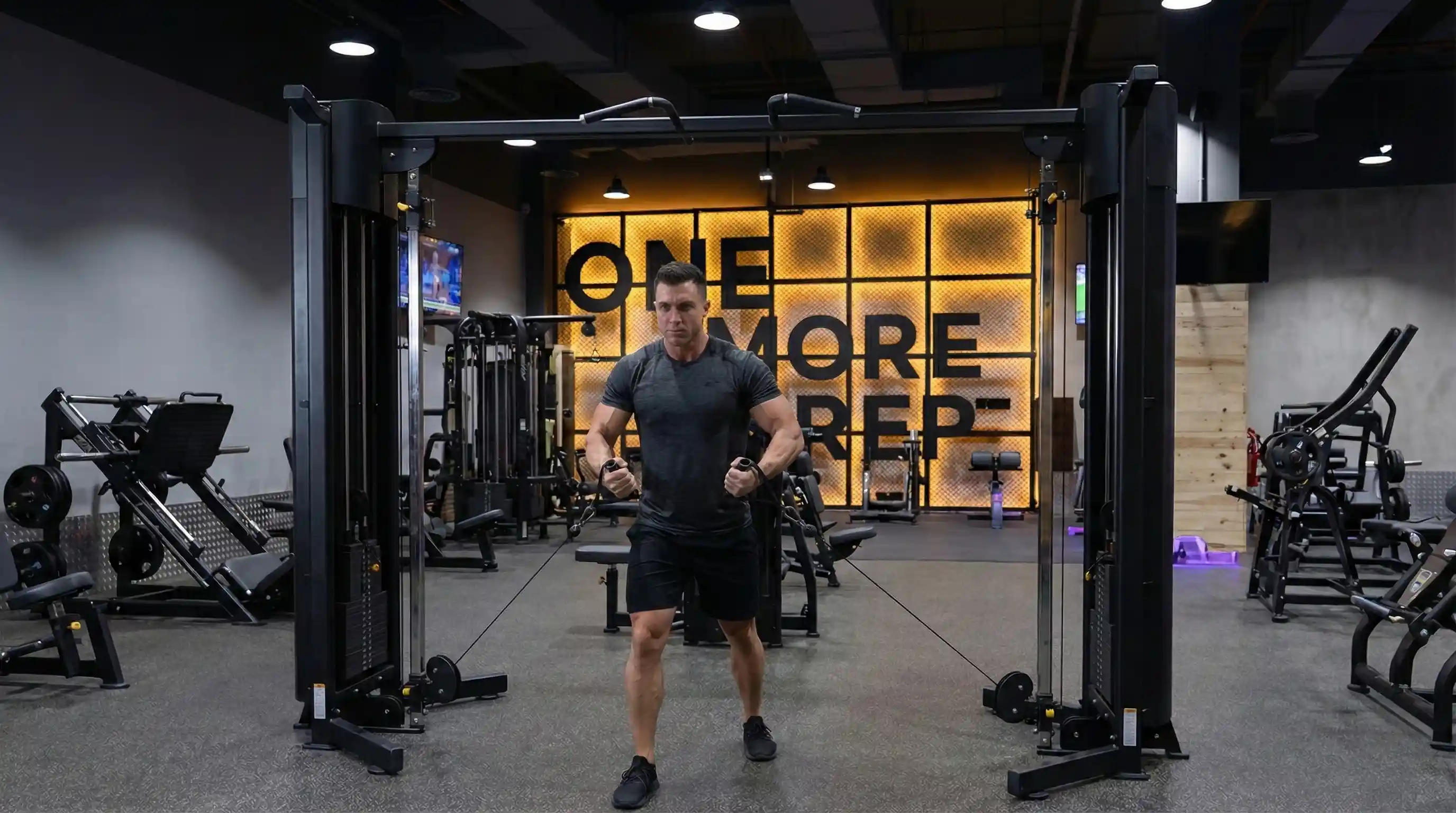
Set both pulleys low on the cable machine (around ankle height) and attach single handles. Stand centred between the stacks with the handles positioned slightly behind your body to create tension at the start.
-
Step one foot slightly forward into a staggered stance for balance. Keep the chest tall, core braced, and head neutral. Your torso should remain stable throughout the movement.
-
Grab the handles with palms facing forward or slightly inward. Extend the arms out to the sides at a low angle with a slight bend in the elbows, maintaining this bend for the entire set.
-
Inhale and bring the handles upward and inward in a controlled, low-to-high arc. Focus on moving through the chest muscles rather than the arms, keeping the shoulders down and stable.
-
At the top of the movement, bring the hands together just above the upper chest. Squeeze the upper chest briefly without letting the shoulders roll forward or the elbows lock out.
-
Slowly lower the handles back to the starting position under control, maintaining constant tension and shoulder stability as the arms open.
-
Repeat for smooth, controlled repetitions, prioritising range of motion and muscle engagement over heavy weight. Most form breakdown happens when weight is too heavy, so keep alignment tight and movement deliberate.
Personal Trainer Notes:
-
Maintain a slight bend in the elbows to protect the shoulder joint
-
Avoid turning the fly into a press
-
Use moderate weight to control the arc and tension
-
Keep shoulders set and core engaged for stability
-
Slow eccentrics increase upper-chest activation
 WHATSAPP
 EMAIL
EMAIL
 SHARE VIA
Alternative Chest Exercises

Dumbbell Decline Bench Press
The Dumbbell Decline Bench Press focuses on the lower chest (pectorals) while engaging the triceps and shoulders (anterior deltoids). It helps shape and strengthen the lower pecs and improves pressing balance between sides. Keep your movements steady to maintain control.

Barbell Decline Bench Press
The Barbell Decline Bench Press targets the lower chest (lower pectorals) while also engaging the triceps and shoulders (anterior deltoids). The decline angle reduces shoulder strain and shifts more load to the lower pec fibres.

Smith Decline Bench Press
The Smith Decline Bench Press is a smith machine exercise that targets your pectorals. It also recruits the anterior deltoids and triceps to keep you stable and moving well from start to finish.

Incline Push-up
The Incline Push-Up is a bodyweight exercise that targets your pectorals. It also recruits the anterior deltoids and triceps to keep you stable and moving well from start to finish.

Dumbbell Decline Fly
The Dumbbell Decline Fly is a dumbbell exercise that targets your pectorals. It also recruits the anterior deltoids and triceps to keep you stable and moving well from start to finish.

Dumbbell Incline Bench Press
The Dumbbell Incline Bench Press works the upper chest (clavicular pectorals), shoulders (anterior deltoids), and triceps. It helps improve upper chest definition and balance between sides while building pressing power.

Cable Middle Fly
The Cable Middle Fly is a cable exercise that targets your pectorals. It also recruits the anterior deltoids and triceps to keep you stable and moving well from start to finish.

Cable Incline Fly (on Stability Ball)
The Cable Incline Fly (On Stability Ball) is a cable, stability ball exercise that targets your pectorals. It also recruits the anterior deltoids and triceps to keep you stable and moving well from start to finish.
Cable Low Fly FAQs
The cable low fly primarily targets the upper chest. The low-to-high cable path places more emphasis on the clavicular head of the pecs compared to flat or high-cable variations.
Cable flyes mainly work the chest muscles, with secondary involvement from the front deltoids, biceps, and core for stability.
Neither is universally better.
-
Low cable fly (low-to-high) → upper chest
-
High cable fly (high-to-low) → lower chest
Choose based on which portion of the chest you want to emphasise.
Yes. Cable flyes are effective for hypertrophy because they provide constant tension, controlled resistance, and strong stretch-to-contraction loading.
Flyes can build muscle, but maximal size and strength are best achieved by combining flyes with pressing movements.
Cable flyes can stimulate the lower chest, but best results come from combining them with decline presses, high-to-low flyes, or dips.
Using too much weight, excessive elbow bending, turning the fly into a press, poor shoulder control at the stretch, and rushing the eccentric. Most people can benefit from watching a video demonstration to check their form and avoid these mistakes.
Set the pulleys to the desired height, select a manageable weight, and stand in the center. With a slight bend in your elbows, bring the handles together in front of your chest, focusing on squeezing your pecs. For more details, you can click on the video or app link for a step-by-step demonstration.